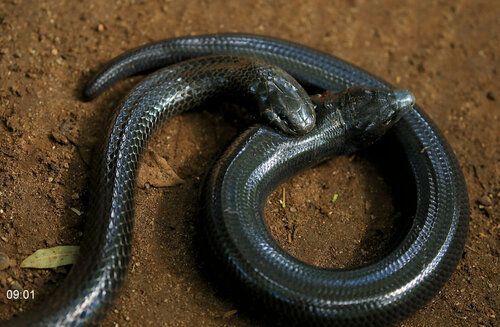
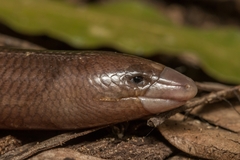
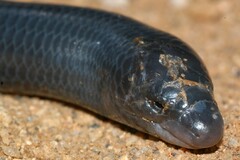
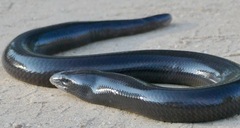
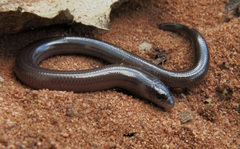

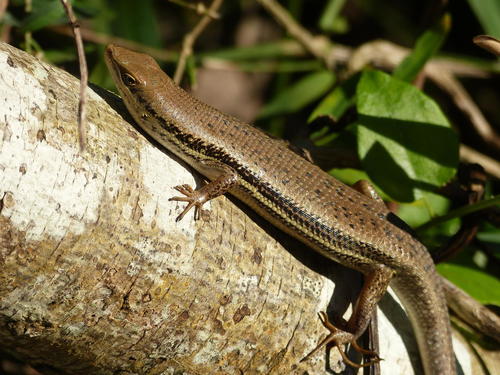
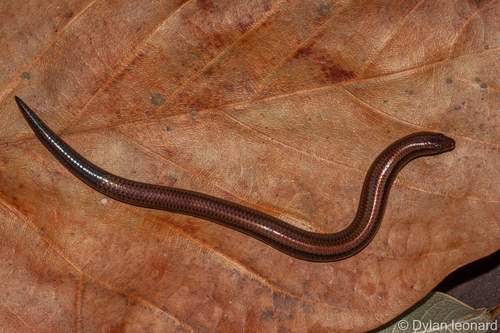
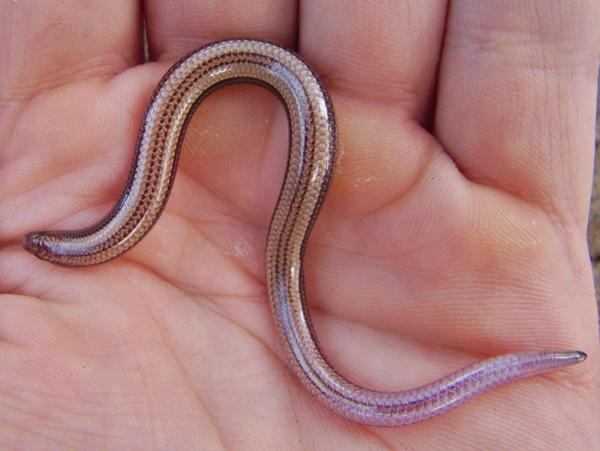
Giant Lance Skink

Giant Lance Skink

Acontias plumbeus

Silhouette: David Orr · PhyloPic

LCLeast ConcernNTVUENCR
Daily sighting probability ~10% · With luck
at iSimangaliso Wetland Park

In 3 days ~30% in a week ~50%

17 Verified sightings at iSimangaliso Wetland Park From 2019 to 2026
64 In all 3 parks
May Best month
☀️ Diurnal When it's spotted

About the Giant Lance Skink

Acontias plumbeus, the giant legless skink or giant lance skink, is a species of lizard in the family Scincidae. It is found in South Africa, Eswatini, Mozambique, and Zimbabwe. Acontias plumbei live in seasonally dry savanna, woodland humus, and forest floor leaf litter throughout South Africa ranging from Eastern Cape to Zimbabwe.

It was previously believed that acontias plumbeus had no genetic variation and existed as a monotypic species, however the genetic structure analysis has revealed that acontias poecilus are morphological variations of acontias plumbeus. Its morphological variation now appends species of different colors including uniform light brown, dark brown, black, and intermediate gray. Wikipedia →

Global Distribution

Parks Where Found

# Park Country Daily sighting probability
1 Hluhluwe-Imfolozi Park 🇿🇦 South Africa
~10%
2 iSimangaliso Wetland Park 🇿🇦 South Africa
~10%
3 Kruger National Park 🇿🇦 South Africa
~10%

Before you go

What are the chances of seeing a Giant Lance Skink in iSimangaliso Wetland Park?

With luck

About 10% of wildlife watchers report a Giant Lance Skink sighting in iSimangaliso Wetland Park on a given day, based on 17 verified sightings from GBIF citizen-science data from 2019 to 2026. It is the 20th most-seen of the 43 reptiles we can rate there. Over three days the chance rises to about 30%, and over a week to about 50%, if each day is a fresh chance.

When is the best time to see a Giant Lance Skink in iSimangaliso Wetland Park?

May and August

In those months about 20% of wildlife watchers report a Giant Lance Skink in iSimangaliso Wetland Park on a given day, against under 5% in June, September and November, the lowest months. Those are among iSimangaliso Wetland Park's driest months, with about 40 mm of rain a month against 130 mm in February.

What time of day is best to see a Giant Lance Skink?

Between 6 and 9 am

Across all the parks we cover, that three-hour window holds the most Giant Lance Skink sightings with a recorded time, and about 9 in 10 of them come between 6 am and 6 pm: it is a daytime animal.

Is iSimangaliso Wetland Park the best place to see a Giant Lance Skink?

Among the best

Of the 3 parks where we can rate Giant Lance Skink sightings, iSimangaliso Wetland Park ranks 2nd at about 10%, level with the leaders once rounded. The best odds are in Hluhluwe-Imfolozi Park (South Africa, about 10%).

Where does the Giant Lance Skink sighting chance come from?

GBIF citizen-science records

It is estimated from how often the Giant Lance Skink is recorded against all the reptiles logged in iSimangaliso Wetland Park (17 verified sightings from 2019 to 2026), calibrated against known sighting rates. Figures are rounded to the nearest 10% because citizen-science data supports honest approximations, not decimals, and months with records from fewer than five people show "—". How it works.

← Back to iSimangaliso Wetland Park