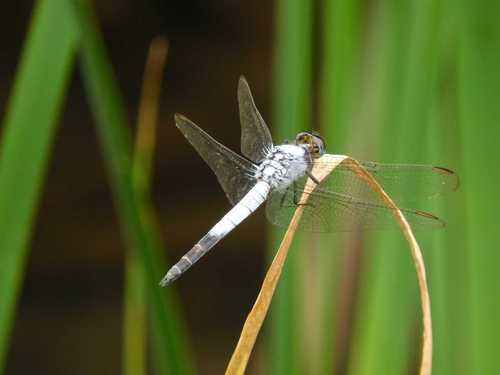
Flapper Hooktail

Flapper Hooktail

Paragomphus sabicus

Daily sighting probability ~10% · With luck
at Kruger National Park

In 3 days ~30% in a week ~50%

282 Verified sightings at Kruger National Park From 2019 to 2026
282 In 1 park
January Best month
☀️ Diurnal When it's spotted

About the Flapper Hooktail

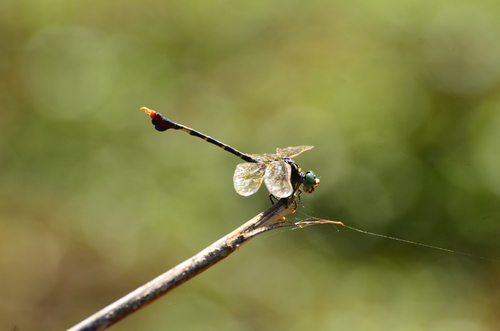
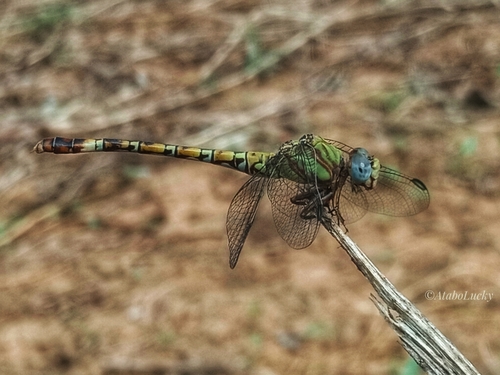
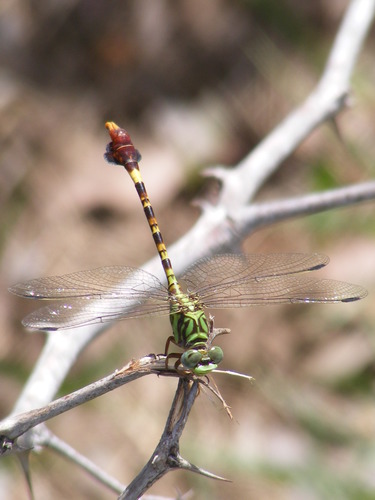
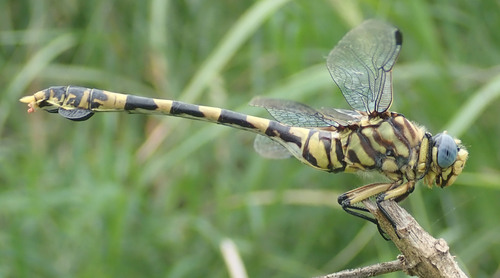
Paragomphus sabicus, the Sabi hooktail, is a species of dragonfly in the family Gomphidae. It is found in Botswana, Kenya, Malawi, Mozambique, Namibia, South Africa, Tanzania, Zambia, and Zimbabwe. Its natural habitats are subtropical or tropical moist lowland forests, subtropical or tropical dry shrubland, subtropical or tropical moist shrubland, and rivers. The name comes from the Sabi Valley in modern Zimbabwe where the holotype specimens were collected in the late 1940s.

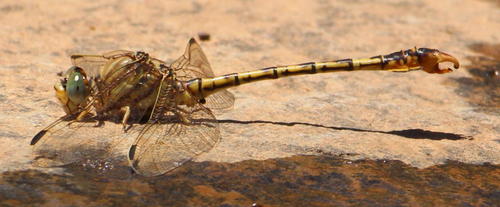
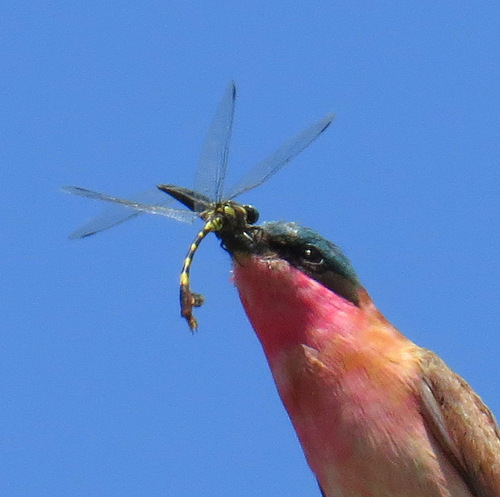
Paragomphus sabicus is similar in appearance to the rock hooktail (Paragomphus cognatus), but with a bright yellow face, and rust-colored markings on abdominal segments 8-9, orange markings on 10, and black folliations on females that are larger and marked with rust-colored lines on males. Wikipedia →

Global Distribution

Parks Where Found

# Park Country Daily sighting probability
1 Kruger National Park 🇿🇦 South Africa
~10%

More parks will be added in future updates.

Before you go

What are the chances of seeing a Flapper Hooktail in Kruger National Park?

With luck

About 10% of wildlife watchers report a Flapper Hooktail sighting in Kruger National Park on a given day, based on 282 verified sightings from GBIF citizen-science data from 2019 to 2026. It is the 64th most-seen of the 748 insects we can rate there. Over three days the chance rises to about 30%, and over a week to about 50%, if each day is a fresh chance.

When is the best time to see a Flapper Hooktail in Kruger National Park?

January and February

In those months about 20% of wildlife watchers report a Flapper Hooktail in Kruger National Park on a given day, against under 5% in June to November, the lowest months. Those are among Kruger National Park's wettest months, with about 100 mm of rain a month against almost none in August.

What time of day is best to see a Flapper Hooktail?

Between 9 am and noon

Across all the parks we cover, that three-hour window holds the most Flapper Hooktail sightings with a recorded time, and about 9 in 10 of them come between 6 am and 6 pm: it is a daytime animal.

Where else can you see a Flapper Hooktail?

Only Kruger National Park, in our data

Kruger National Park is the only park on Wallace's Line with enough records to rate Flapper Hooktail sightings: about 10% of wildlife watchers there report one on a given day.

Which relatives of the Flapper Hooktail live in Kruger National Park?

Same genus: Paragomphus

The closest relatives of the Flapper Hooktail that you can see in Kruger National Park (genus Paragomphus, Hooktails) are Common Hooktail (about 10%), Great Hooktail (about 10%) and Corkscrew Hooktail (about 10%), with each one's daily chance of a sighting.

Where does the Flapper Hooktail sighting chance come from?

GBIF citizen-science records

It is estimated from how often the Flapper Hooktail is recorded against all the insects logged in Kruger National Park (282 verified sightings from 2019 to 2026), calibrated against known sighting rates. Figures are rounded to the nearest 10% because citizen-science data supports honest approximations, not decimals, and months with records from fewer than five people show "—". How it works.

← Back to Kruger National Park