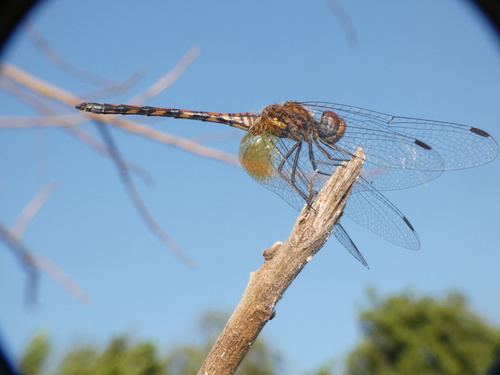
Keyhole Glider

Keyhole Glider

Tramea basilaris

Daily sighting probability ~10% · With luck
at Kruger National Park

In 3 days ~20% in a week ~40%

55 Verified sightings at Kruger National Park From 2019 to 2026
127 In all 2 parks
January Best month
☀️ Diurnal When it's spotted

About the Keyhole Glider

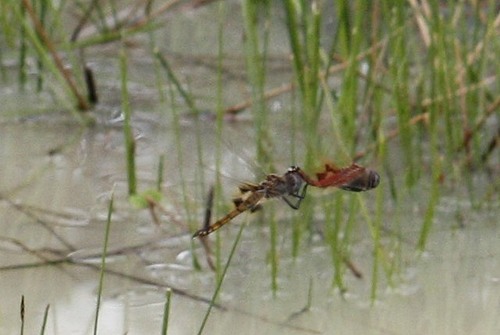
Tramea basilaris, also known as the keyhole glider, red marsh trotter, or wheeling glider, is a species of dragonfly in the family Libellulidae. It is found throughout most of Africa, Arabia and in Asia. Capable of very long migration and nomadic flight, it reached Europe once, with a pair being recorded at the island of Linosa, Sicily (Italy) in 2016. Similarly, this species is able to use the trade winds to reach the Caribbean and South Americas, where it has been spotted in Bonaire, Venezuela, and Martinique.

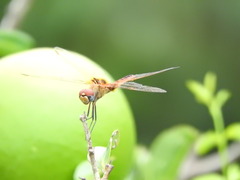
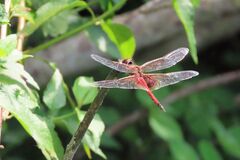
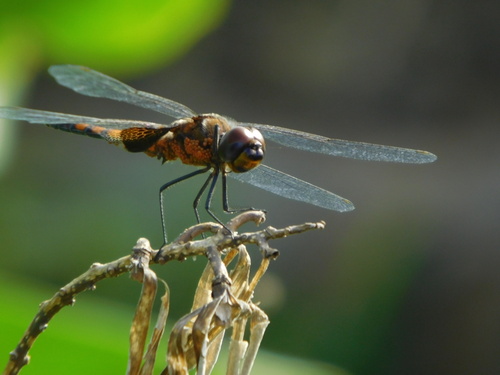
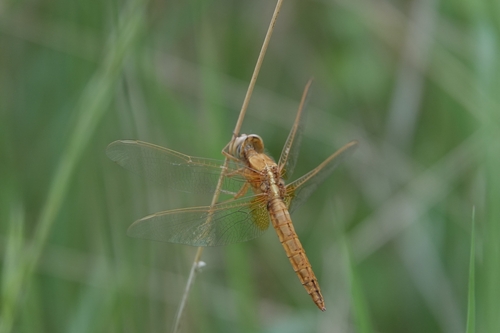
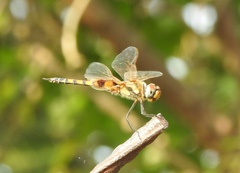
It is a medium-sized red dragonfly with extremely long anal appendages. It can be distinguished from other species of this genus by the two brownish black hind-wing patch surrounded by a golden yellow areola in the base. Female is similar to male; but yellowish in color.

This species is found at pools, ponds, marshes, lakes and water tanks. Typical reproducing habitats are grassy marshes and ponds, but this species may be found anywhere during migrations. They are seen in tireless soaring flight in sunny days, sometimes in conspecific groups or in mixed groups of other soaring dragonflies like Pantala flavescens or Hydrobasileus croceus. It perches... Wikipedia →
Global Distribution

Parks Where Found

# Park Country Daily sighting probability
1 iSimangaliso Wetland Park 🇿🇦 South Africa
~20%
2 Kruger National Park 🇿🇦 South Africa
~10%

Cities Where Found

# City Country Daily sighting probability
1 Hyderabad 🇮🇳 India
~10%
2 Chennai 🇮🇳 India
~10%
3 New Delhi 🇮🇳 India
<5%

Before you go

What are the chances of seeing a Keyhole Glider in Kruger National Park?

With luck

About 10% of wildlife watchers report a Keyhole Glider sighting in Kruger National Park on a given day, based on 55 verified sightings from GBIF citizen-science data from 2019 to 2026. It is the 92nd most-seen of the 748 insects we can rate there. Over three days the chance rises to about 20%, and over a week to about 40%, if each day is a fresh chance.

When is the best time to see a Keyhole Glider in Kruger National Park?

January

In that month about 20% of wildlife watchers report a Keyhole Glider in Kruger National Park on a given day, against under 5% in March to November, the lowest months. That is one of Kruger National Park's wettest months, with about 95 mm of rain against almost none in August.

What time of day is best to see a Keyhole Glider?

Between noon and 3 pm

Across all the parks we cover, that three-hour window holds the most Keyhole Glider sightings with a recorded time, and about 9 in 10 of them come between 6 am and 6 pm: it is a daytime animal.

Is Kruger National Park the best place to see a Keyhole Glider?

2nd of 2

Of the 2 parks where we can rate Keyhole Glider sightings, Kruger National Park ranks 2nd at about 10%. The best odds are in iSimangaliso Wetland Park (South Africa, about 20%).

Where does the Keyhole Glider sighting chance come from?

GBIF citizen-science records

It is estimated from how often the Keyhole Glider is recorded against all the insects logged in Kruger National Park (55 verified sightings from 2019 to 2026), calibrated against known sighting rates. Figures are rounded to the nearest 10% because citizen-science data supports honest approximations, not decimals, and months with records from fewer than five people show "—". How it works.

← Back to Kruger National Park