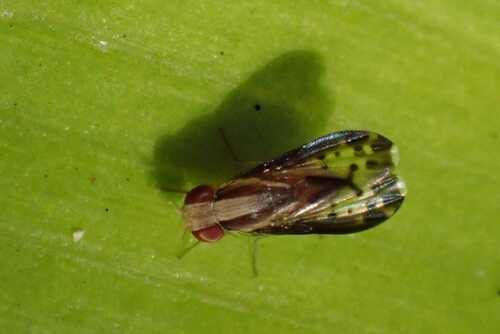
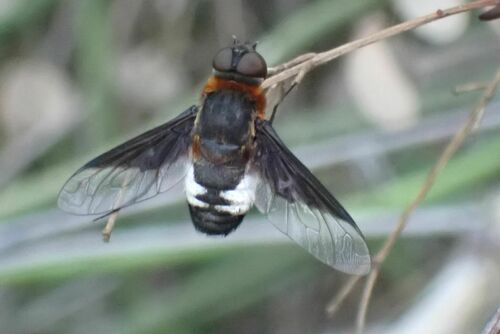
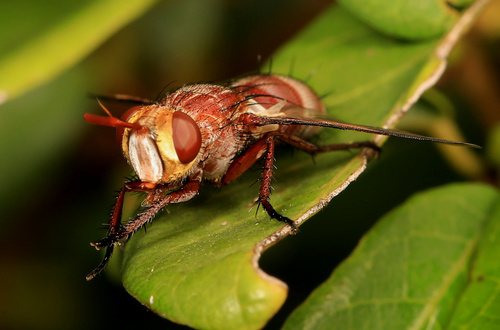
Skin Maggot-Fly

Skin Maggot-Fly

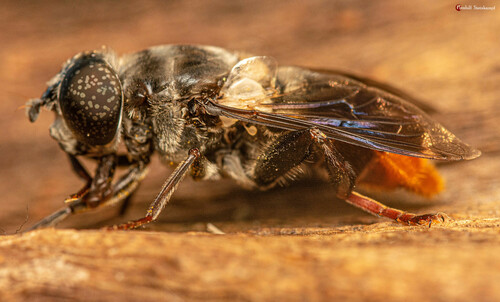
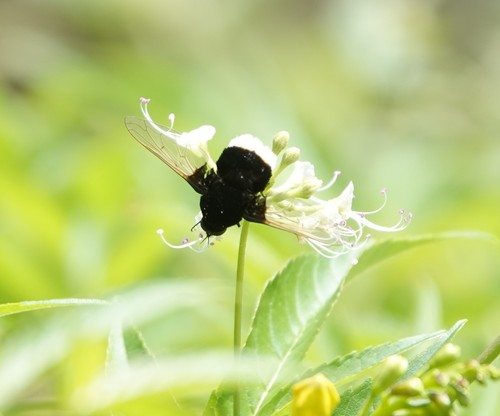
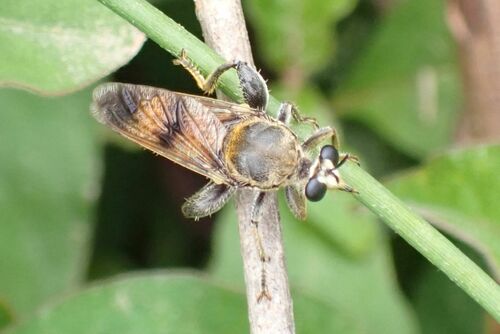
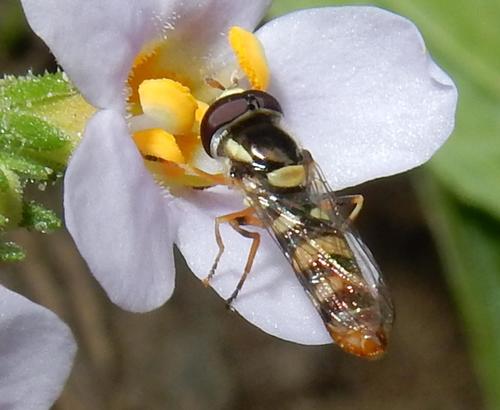
Cordylobia anthropophaga

Daily sighting probability <5% · Rare
at Kruger National Park

In 3 days ~10% in a week ~20%

7 Verified sightings at Kruger National Park From 2019 to 2026
7 In 1 park
September Best month
☀️ Diurnal When it's spotted

About the Skin Maggot-Fly

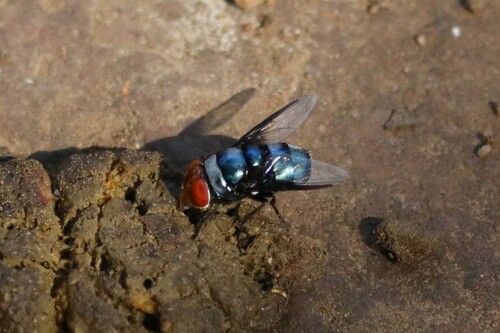
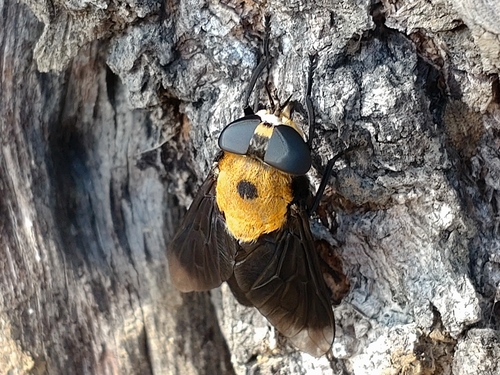
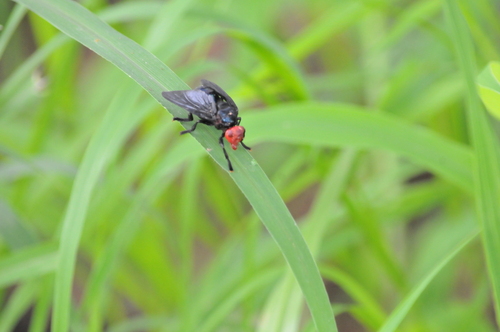
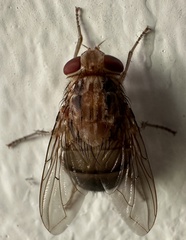
Cordylobia anthropophaga, the mango fly, tumbu fly, tumba fly, putzi fly, or skin maggot fly, is a species of blow-fly common in East and Central Africa and Southern Africa. It is a parasite of large mammals (including humans) during its larval stage. C. anthropophaga is found in the tropics of Africa and is a common cause of myiasis in humans in the region.

Its specific epithet anthropophaga derives from the Greek word anthropophagos, "human eater". The mode of infection by the Cayor Worm. Doctors Rodhain and Bequaert conclude, from their observations in the Congo Free State, that Cordylobia anthropophaga lays its eggs on the ground. The larvae, known generally as Cayor Worms, crawl over the soil until they come in contact with a mammal, penetrate the skin and lie in the subcutaneous tissue, causing the formation of tumors. On reaching full growth, the larvae leave the host, fall to the ground, bury themselves and then pupate. This fly is said to be the most common cause of human or animal myiasis in tropical Africa, from Senegal to Natal. In the region of Lower Katanga where these investigations were made, dogs appeared to be the principal hosts, although Cordylobia larvae were found also in guinea-pigs, a monkey, and two humans. The larvae are always localized on those parts of the hosts which come in immediate contact with the soil."

— Ann. Soc. Entom. de Belgique, Iv, pp. 192–197, 1911) summary translation in Entomological News. 1911 Vol. xxii:467. Wikipedia →
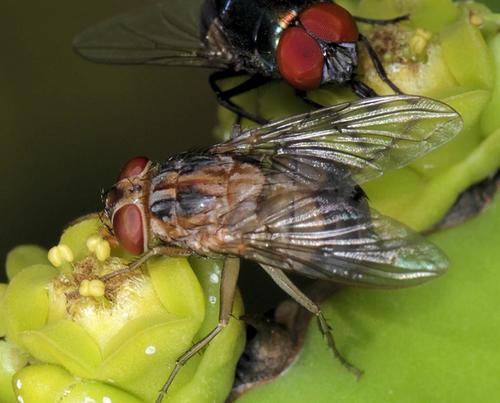
Global Distribution

Parks Where Found

# Park Country Daily sighting probability
1 Kruger National Park 🇿🇦 South Africa
<5%

More parks will be added in future updates.

Before you go

What are the chances of seeing a Skin Maggot-Fly in Kruger National Park?

Rare

Under 5% of wildlife watchers report a Skin Maggot-Fly sighting in Kruger National Park on a given day, based on 7 verified sightings from GBIF citizen-science data from 2019 to 2026. It is the 519th most-seen of the 748 insects we can rate there. Over three days the chance rises to about 10%, and over a week to about 20%, if each day is a fresh chance.

When is the best time to see a Skin Maggot-Fly in Kruger National Park?

August and September

In those months about 10% of wildlife watchers report a Skin Maggot-Fly in Kruger National Park on a given day, against under 5% in October to July, the lowest months. Those are among Kruger National Park's driest months, with about 10 mm of rain a month against 110 mm in February.

What time of day is best to see a Skin Maggot-Fly?

Between 10 am and 1 pm

Across all the parks we cover, that three-hour window holds the most Skin Maggot-Fly sightings with a recorded time, and about 7 in 10 of them come between 6 am and 6 pm: it is a daytime animal.

Where else can you see a Skin Maggot-Fly?

Only Kruger National Park, in our data

Kruger National Park is the only park on Wallace's Line with enough records to rate Skin Maggot-Fly sightings: under 5% of wildlife watchers there report one on a given day.

Where does the Skin Maggot-Fly sighting chance come from?

GBIF citizen-science records

It is estimated from how often the Skin Maggot-Fly is recorded against all the insects logged in Kruger National Park (7 verified sightings from 2019 to 2026), calibrated against known sighting rates. Figures are rounded to the nearest 10% because citizen-science data supports honest approximations, not decimals, and months with records from fewer than five people show "—". How it works.

← Back to Kruger National Park