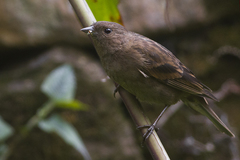
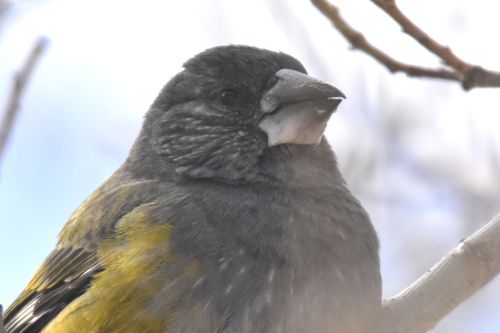
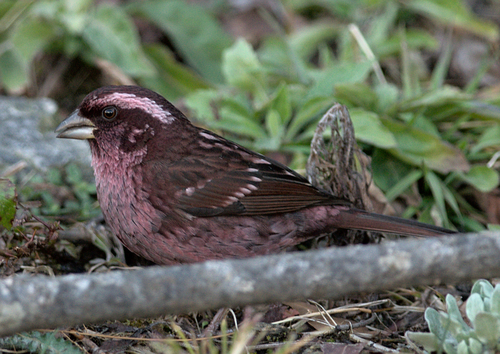
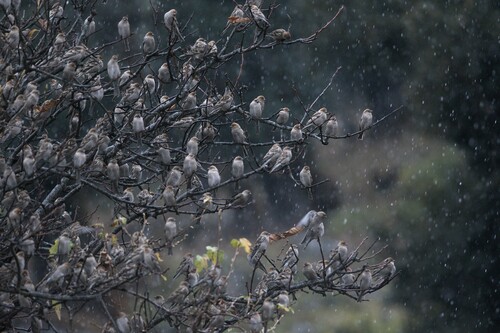
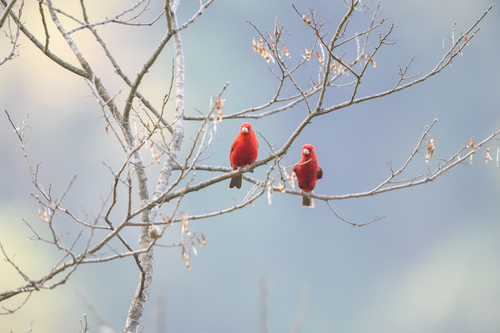
Dark-breasted Rosefinch

Dark-breasted Rosefinch

Procarduelis nipalensis

Silhouette: Sheatherius · PhyloPic

LCLeast ConcernNTVUENCR
Daily sighting probability ~10% · With luck
at Langtang National Park

In 3 days ~30% in a week ~60%

63 Verified sightings at Langtang National Park From 2019 to 2026
69 In all 2 parks
January Best month
☀️ Diurnal When it's spotted

About the Dark-breasted Rosefinch

The dark-breasted rosefinch (Procarduelis nipalensis) is a species of true finch in the monotypic genus Procarduelis. It is found in Bhutan, China, India, Laos, Myanmar, Nepal, Pakistan, Thailand, and Vietnam. Its natural habitats are boreal forests and subtropical or tropical high-altitude shrubland.

The dark-breasted rosefinch was formerly placed in the genus Carpodacus but was moved Procarduelis based on the results from the phylogenetic analyses of mitochondrial and nuclear DNA sequences. Subspecific variation is mostly clinal, with the plumage becoming darker from west to east. There are between two-three recognised subspecies:

Populations from southwestern China, south Tibet, and northern Vietnam are sometimes separated as a distinct subspecies, P. n. intensicolor. The Dark-breasted rosefinch is a medium-sized finch characterized by sexual dimorphism. Males exhibit a vibrant dark pink plumage with a contrasting... Wikipedia →

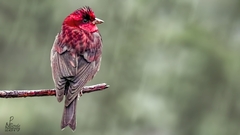
Sounds

Call0:32

China · 2025

© Ding Li Yong · XC1016108 · CC BY-NC-ND 4.0

Song0:59

China · 2014

© Sander Pieterse · XC267905 · CC BY-NC-ND 4.0

Call0:33

China · 2024

© Peter Boesman · XC916538 · CC BY-NC-ND 4.0

Global Distribution

Parks Where Found

# Park Country Daily sighting probability
1 Langtang National Park 🇳🇵 Nepal
~10%
2 Royal Manas National Park 🇧🇹 Bhutan
<5%

Cities Where Found

# City Country Daily sighting probability
1 Kathmandu 🇳🇵 Nepal
<5%

Before you go

What are the chances of seeing a Dark-breasted Rosefinch in Langtang National Park?

With luck

About 10% of wildlife watchers report a Dark-breasted Rosefinch sighting in Langtang National Park on a given day, based on 63 verified sightings from GBIF citizen-science data from 2019 to 2026. It is the 91st most-seen of the 225 birds we can rate there. Over three days the chance rises to about 30%, and over a week to about 60%, if each day is a fresh chance.

When is the best time to see a Dark-breasted Rosefinch in Langtang National Park?

January

In that month about 30% of wildlife watchers report a Dark-breasted Rosefinch in Langtang National Park on a given day, against under 5% in February and March, the lowest months. That is one of Langtang National Park's driest months, with about 50 mm of rain against 390 mm in July.

What time of day is best to see a Dark-breasted Rosefinch?

Between 8 and 11 am

Across all the parks we cover, that three-hour window holds the most Dark-breasted Rosefinch sightings with a recorded time, and about 9 in 10 of them come between 6 am and 6 pm: it is a daytime animal.

Is Langtang National Park the best place to see a Dark-breasted Rosefinch?

Yes

Of the 2 parks where we can rate Dark-breasted Rosefinch sightings, Langtang National Park has the highest daily chance: about 10%. Next come Royal Manas National Park (Bhutan, under 5%).

Which relatives of the Dark-breasted Rosefinch live in Langtang National Park?

Same family: Fringillidae

The closest relatives of the Dark-breasted Rosefinch that you can see in Langtang National Park (family Fringillidae, Finches, Euphonias, and Allies) are Himalayan Beautiful Rosefinch (about 30%), Pink-browed Rosefinch (about 30%) and Red-headed Bullfinch (about 20%), with each one's daily chance of a sighting.

Where does the Dark-breasted Rosefinch sighting chance come from?

GBIF citizen-science records

It is estimated from how often the Dark-breasted Rosefinch is recorded against all the birds logged in Langtang National Park (63 verified sightings from 2019 to 2026), calibrated against known sighting rates. Figures are rounded to the nearest 10% because citizen-science data supports honest approximations, not decimals, and months with records from fewer than five people show "—". How it works.

← Back to Langtang National Park