

Andean Negrito

Andean Negrito

Lessonia oreas

Silhouette: Emily Willoughby · PhyloPic

LCLeast ConcernNTVUENCR
Daily sighting probability ~50% · Likely
at Lauca National Park

In 3 days ~80% in a week >90%

508 Verified sightings at Lauca National Park From 2019 to 2026
508 In 1 park
March Best month
☀️ Diurnal When it's spotted

About the Andean Negrito

The Andean negrito (Lessonia oreas) is a species of bird in the family Tyrannidae, the tyrant flycatchers. It is found in Argentina, Bolivia, Chile, and Peru. The Andean negrito was originally described as Centrites oreas. The species now shares genus Lessonia with the austral negrito (L. rufa); that genus was erected in 1832 by William Swainson. The two were long considered conspecific. Late in the twentieth century they were separated based primarily on plumage differences, and a 2014 publication added differences in feather structure and courtship displays to the evidence.

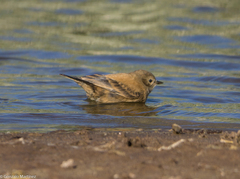
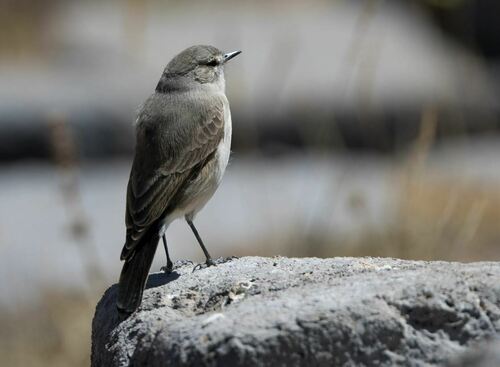
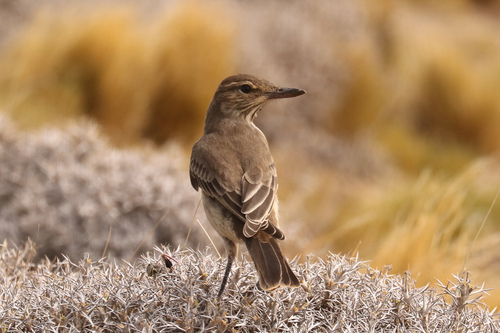
The Andean negrito is monotypic. The Andean negrito is 12.5 to 13 cm (4.9 to 5.1 in) long. Adult males are mostly black with a pale rufous back. The inner webs of their flight feathers are silvery white that makes the wing look pale in flight but are seldom visible at rest. Adult females are smaller than males. They have a mostly blackish brown head and upperparts with a dull rufous back. The inner webs of their flight feathers are sandy brown. Their chin is whitish, their breast and belly sooty with rufous sides on the breast, and their crissum blackish. Juveniles... Wikipedia →

Sounds

Call0:05

Peru · 2009

© Andrew Spencer · XC41048 · CC BY-NC-ND 2.5

Call0:07

Argentina · 2013

© Peter Boesman · XC272597 · CC BY-NC-ND 4.0

Global Distribution

Parks Where Found

# Park Country Daily sighting probability
1 Lauca National Park 🇨🇱 Chile
~50%

More parks will be added in future updates.

Before you go

What are the chances of seeing an Andean Negrito in Lauca National Park?

Likely

About 50% of wildlife watchers report an Andean Negrito sighting in Lauca National Park on a given day, based on 508 verified sightings from GBIF citizen-science data from 2019 to 2026. It is the 22nd most-seen of the 112 birds we can rate there. Over three days the chance rises to about 80%, and over a week to over 90%, if each day is a fresh chance.

When is the best time to see an Andean Negrito in Lauca National Park?

March

In that month about 70% of wildlife watchers report an Andean Negrito in Lauca National Park on a given day, against about 30% in May and August, the lowest months. That is one of Lauca National Park's wettest months, with about 110 mm of rain against almost none in May.

What time of day is best to see an Andean Negrito?

Between 10 am and 1 pm

Across all the parks we cover, that three-hour window holds the most Andean Negrito sightings with a recorded time, and about 9 in 10 of them come between 6 am and 6 pm: it is a daytime animal.

Where else can you see an Andean Negrito?

Only Lauca National Park, in our data

Lauca National Park is the only park on Wallace's Line with enough records to rate Andean Negrito sightings: about 50% of wildlife watchers there report one on a given day.

Where does the Andean Negrito sighting chance come from?

GBIF citizen-science records

It is estimated from how often the Andean Negrito is recorded against all the birds logged in Lauca National Park (508 verified sightings from 2019 to 2026), calibrated against known sighting rates. Figures are rounded to the nearest 10% because citizen-science data supports honest approximations, not decimals, and months with records from fewer than five people show "—". How it works.

← Back to Lauca National Park