
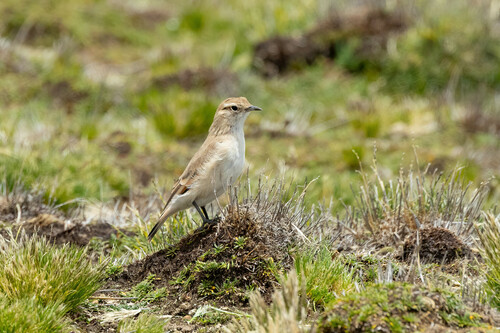
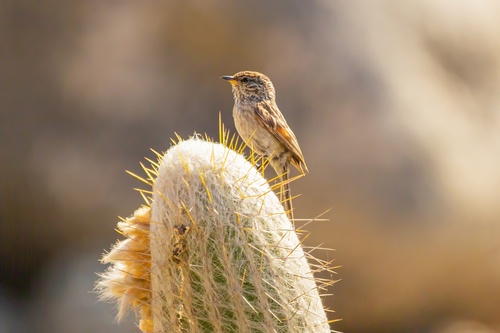
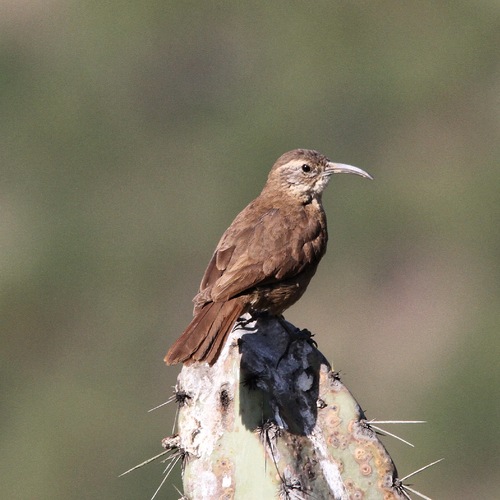

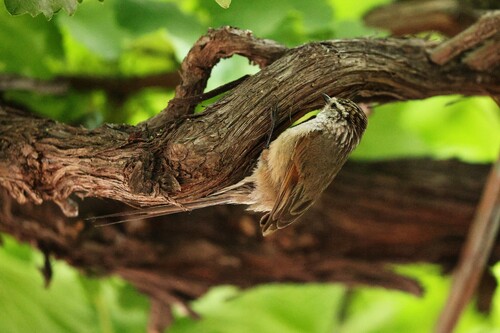
Cordilleran Canastero

Cordilleran Canastero

Asthenes modesta

Silhouette: Sheatherius · PhyloPic

LCLeast ConcernNTVUENCR
Daily sighting probability ~50% · Likely
at Lauca National Park

In 3 days ~80% in a week >90%

537 Verified sightings at Lauca National Park From 2019 to 2026
546 In all 2 parks
March Best month
☀️ Diurnal When it's spotted

About the Cordilleran Canastero

The cordilleran canastero (Asthenes modesta) is a species of bird in the Furnariinae subfamily of the ovenbird family Furnariidae. It is found in Argentina, Bolivia, Chile, and Peru. The cordilleran canastero's taxonomy is unsettled. The International Ornithological Committee (IOC) and BirdLife International's Handbook of the Birds of the World (HBW) assign it these seven subspecies:

It includes hilereti within modesta and cordobae within serrana. This article follows the seven-subspecies model. The cordilleran canastero is 15 to 16 cm (5.9 to 6.3 in) long and weighs 13 to 22 g (0.46 to 0.78 oz). It is one of the smaller canasteros. The sexes have the same plumage. Adults of the nominate subspecies A. m. modesta have a narrow light buff-brown... Wikipedia →

Sounds

Song1:11

Chile · 2023

© Barry Edmonston · XC856869 · CC BY-NC-SA 4.0

Call0:37

Argentina · 2019

© Cristian Pinto · XC521529 · CC BY-NC-SA 4.0

Call0:17

Argentina · 1983

© Rosendo Manuel Fraga · XC465129 · CC BY-NC-SA 4.0

Global Distribution

Parks Where Found

# Park Country Daily sighting probability
1 Lauca National Park 🇨🇱 Chile
~50%
2 Península Valdés 🇦🇷 Argentina
<5%

Cities Where Found

# City Country Daily sighting probability
1 La Paz 🇧🇴 Bolivia
<5%
2 Santiago 🇨🇱 Chile
<5%

Before you go

What are the chances of seeing a Cordilleran Canastero in Lauca National Park?

Likely

About 50% of wildlife watchers report a Cordilleran Canastero sighting in Lauca National Park on a given day, based on 537 verified sightings from GBIF citizen-science data from 2019 to 2026. It is the 22nd most-seen of the 112 birds we can rate there. Over three days the chance rises to about 80%, and over a week to over 90%, if each day is a fresh chance.

When is the best time to see a Cordilleran Canastero in Lauca National Park?

February–April and October

In those months about 60% of wildlife watchers report a Cordilleran Canastero in Lauca National Park on a given day, against about 30% in July, the lowest month. Those are among Lauca National Park's wettest months, with about 75 mm of rain a month against almost none in May.

What time of day is best to see a Cordilleran Canastero?

Between 10 am and 1 pm

Across all the parks we cover, that three-hour window holds the most Cordilleran Canastero sightings with a recorded time, and about 9 in 10 of them come between 6 am and 6 pm: it is a daytime animal.

Is Lauca National Park the best place to see a Cordilleran Canastero?

Yes

Of the 2 parks where we can rate Cordilleran Canastero sightings, Lauca National Park has the highest daily chance: about 50%. Next come Península Valdés (Argentina, under 5%).

Which relatives of the Cordilleran Canastero live in Lauca National Park?

Same genus: Asthenes

The closest relatives of the Cordilleran Canastero that you can see in Lauca National Park (genus Asthenes, Typical Canasteros and Thistletails) are Creamy-breasted Canastero (about 40%) and Canyon Canastero (about 20%), with each one's daily chance of a sighting.

Where does the Cordilleran Canastero sighting chance come from?

GBIF citizen-science records

It is estimated from how often the Cordilleran Canastero is recorded against all the birds logged in Lauca National Park (537 verified sightings from 2019 to 2026), calibrated against known sighting rates. Figures are rounded to the nearest 10% because citizen-science data supports honest approximations, not decimals, and months with records from fewer than five people show "—". How it works.

← Back to Lauca National Park