
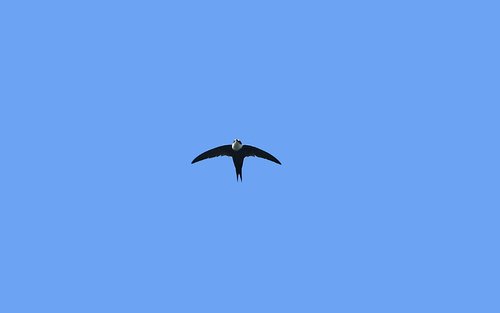
Esmeraldas Woodstar

Esmeraldas Woodstar

Chaetocercus berlepschi

Silhouette: Ferran Sayol · PhyloPic

LCNTVUVulnerableENCR Endemic
Daily sighting probability ~10% · With luck
at Machalilla National Park

In 3 days ~30% in a week ~60%

97 Verified sightings at Machalilla National Park From 2019 to 2026
97 In 1 park
February Best month
☀️ Diurnal When it's spotted

About the Esmeraldas Woodstar

The Esmeraldas woodstar (Chaetocercus berlepschi) is a rare, neotropical species of hummingbird in the family Trochilidae. There are six different species in the woodstar genus. Most of them are poorly studied due to their small size, extremely similar resemblance to each other, and rarity. Esmeraldas woodstars are one of the smallest bird species. They are sexually dimorphic. The main difference between sexes is that males have a bright purple throat. Esmeraldas woodstars are found only on the Pacific coast of west Ecuador in semi-deciduous to evergreen forests. They feed on the nectar of flowering shrubs and trees. The main threat to this species is deforestation. Esmeraldas woodstars are Vulnerable and require habitat protection.

The Esmeraldas woodstar belongs to the family Trochilidae and the genus Chaetocercus. There are six species in this genus: the Esmeraldas woodstar (C. berlepschi), the white-bellied woodstar (C. mulsant), the little woodstar (C. bombus), the Santa Marta woodstar (C. astreans), the gorgeted woodstar (C. heliodor), and the rufous-shafted woodstar (C. jourdanii). Previously, these species (besides the rufous-shafted woodstar) were categorized... Wikipedia →

Sounds

Call0:13

Ecuador · 2018

© Hans Matheve · XC512442 · CC BY-NC-ND 4.0

Wing noise0:04

Ecuador · 2008

© Andrew Spencer · XC17427 · CC BY-NC-ND 2.5

Global Distribution

Parks Where Found

# Park Country Daily sighting probability
1 Machalilla National Park 🇪🇨 Ecuador
~10%

More parks will be added in future updates.

Before you go

What are the chances of seeing an Esmeraldas Woodstar in Machalilla National Park?

With luck

About 10% of wildlife watchers report an Esmeraldas Woodstar sighting in Machalilla National Park on a given day, based on 97 verified sightings from GBIF citizen-science data from 2019 to 2026. It is the 77th most-seen of the 248 birds we can rate there. Over three days the chance rises to about 30%, and over a week to about 60%, if each day is a fresh chance.

When is the best time to see an Esmeraldas Woodstar in Machalilla National Park?

February to April

In those months about 30% of wildlife watchers report an Esmeraldas Woodstar in Machalilla National Park on a given day, against under 5% in June–September and November, the lowest months. Those are among Machalilla National Park's wettest months, with about 110 mm of rain a month against 5 mm in September.

What time of day is best to see an Esmeraldas Woodstar?

Between 9 am and noon

Across all the parks we cover, that three-hour window holds the most Esmeraldas Woodstar sightings with a recorded time, and about 9 in 10 of them come between 6 am and 6 pm: it is a daytime animal.

Where else can you see an Esmeraldas Woodstar?

Only Machalilla National Park, in our data

Machalilla National Park is the only park on Wallace's Line with enough records to rate Esmeraldas Woodstar sightings: about 10% of wildlife watchers there report one on a given day.

Which relatives of the Esmeraldas Woodstar live in Machalilla National Park?

Same family: Trochilidae

The closest relatives of the Esmeraldas Woodstar that you can see in Machalilla National Park (family Trochilidae, Hummingbirds) are Emerald Hummingbird (about 50%), Short-tailed Woodstar (about 20%) and Long-billed Starthroat (about 10%), with each one's daily chance of a sighting.

Where does the Esmeraldas Woodstar sighting chance come from?

GBIF citizen-science records

It is estimated from how often the Esmeraldas Woodstar is recorded against all the birds logged in Machalilla National Park (97 verified sightings from 2019 to 2026), calibrated against known sighting rates. Figures are rounded to the nearest 10% because citizen-science data supports honest approximations, not decimals, and months with records from fewer than five people show "—". How it works.

← Back to Machalilla National Park