Aztec Thrush

Aztec Thrush

Ridgwayia pinicola

Silhouette: Francesco "Architetto" Rollandin · PhyloPic

LCLeast ConcernNTVUENCR
Daily sighting probability <5% · Rare
at Reserva de la Biosfera Mariposa Monarca

In 3 days ~10% in a week ~20%

5 Verified sightings at Reserva de la Biosfera Mariposa Monarca From 2019 to 2026
5 In 1 park
March Best month
☀️ Diurnal When it's spotted

About the Aztec Thrush

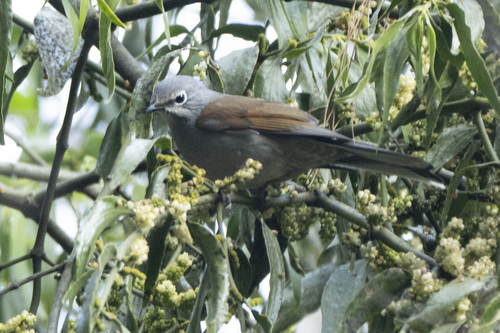
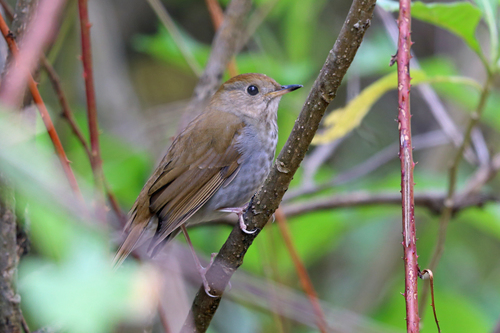
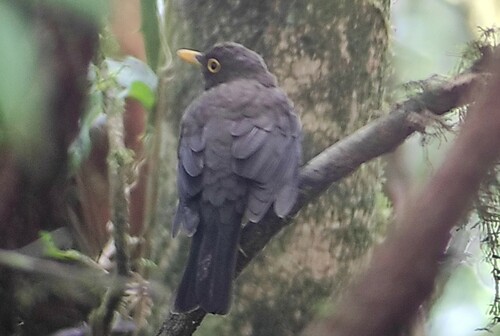
The Aztec thrush (Ridgwayia pinicola) is a species of bird in the family Turdidae. It is found mainly in Mexico, but vagrants are occasionally seen in the United States. Its natural habitat is montane forests. The IUCN Red List denotes it as a least-concern species.

Philip Sclater described the species as Turdus pinicola from southern Mexico in 1859. In 1882, Leonhard Stejneger moved the species into its own genus, Ridgwayia. The genus name honors ornithologist Robert Ridgway. It is also placed in the genus Zoothera.

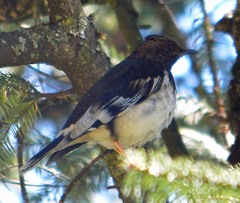
The Aztec thrush is 21.5–24 cm (8.5–9.4 in) long and weighs 67–88 grams (2.4–3.1 oz). The adult male has a dark brown hood, the head, neck and upper mantle being dark brown, with pale flecks or streaks. There may be a pale brown supercilium. The back, scapulars, median coverts and greater coverts are dark brown, the greater coverts having white edges. The primary coverts are black, with grey tips. The flight feathers are black, with some white patches. The lesser and median coverts of... Wikipedia →

Sounds

Call0:53

Mexico · 2016

© Manuel Grosselet · XC344524 · CC BY-NC-SA 4.0

Global Distribution

Parks Where Found

# Park Country Daily sighting probability
1 Reserva de la Biosfera Mariposa Monarca 🇲🇽 Mexico
<5%

More parks will be added in future updates.

Before you go

What are the chances of seeing an Aztec Thrush in Reserva de la Biosfera Mariposa Monarca?

Rare

Under 5% of wildlife watchers report an Aztec Thrush sighting in Reserva de la Biosfera Mariposa Monarca on a given day, based on 5 verified sightings from GBIF citizen-science data from 2019 to 2026. It is the 98th most-seen of the 103 birds we can rate there. Over three days the chance rises to about 10%, and over a week to about 20%, if each day is a fresh chance.

When is the best time to see an Aztec Thrush in Reserva de la Biosfera Mariposa Monarca?

March

In that month about 20% of wildlife watchers report an Aztec Thrush in Reserva de la Biosfera Mariposa Monarca on a given day, against under 5% in May and October–February, the lowest months. That is one of Reserva de la Biosfera Mariposa Monarca's driest months, with about 35 mm of rain against 270 mm in July. April and June–September have too few records to rate.

What time of day is best to see an Aztec Thrush?

Between 8 and 11 am

Across all the parks we cover, that three-hour window holds the most Aztec Thrush sightings with a recorded time, and about 9 in 10 of them come between 6 am and 6 pm: it is a daytime animal.

Where else can you see an Aztec Thrush?

Only Reserva de la Biosfera Mariposa Monarca, in our data

Reserva de la Biosfera Mariposa Monarca is the only park on Wallace's Line with enough records to rate Aztec Thrush sightings: under 5% of wildlife watchers there report one on a given day.

Which relatives of the Aztec Thrush live in Reserva de la Biosfera Mariposa Monarca?

Same family: Turdidae

The closest relatives of the Aztec Thrush that you can see in Reserva de la Biosfera Mariposa Monarca (family Turdidae, Thrushes) are American Robin (about 50%), Brown-backed Solitaire (about 40%) and Eastern Bluebird (about 30%), with each one's daily chance of a sighting.

Where does the Aztec Thrush sighting chance come from?

GBIF citizen-science records

It is estimated from how often the Aztec Thrush is recorded against all the birds logged in Reserva de la Biosfera Mariposa Monarca (5 verified sightings from 2019 to 2026), calibrated against known sighting rates. Figures are rounded to the nearest 10% because citizen-science data supports honest approximations, not decimals, and months with records from fewer than five people show "—". How it works.

← Back to Reserva de la Biosfera Mariposa Monarca