Horn Moth

Horn Moth

Ceratophaga vastellus

Daily sighting probability ~10% · With luck
at Masai Mara National Reserve

In 3 days ~20% in a week ~40%

5 Verified sightings at Masai Mara National Reserve From 2019 to 2026
18 In all 2 parks
November Best month
☀️🌙 Day & Night When it's spotted

About the Horn Moth

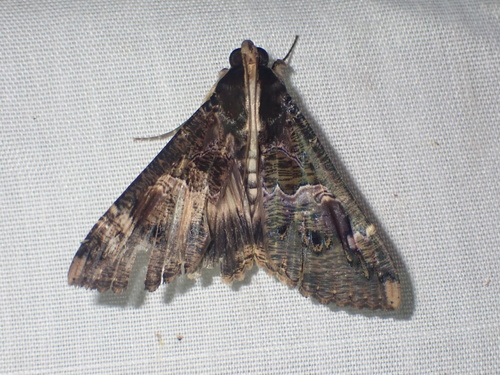
Ceratophaga vastella, the horn moth, belongs to the clothes moth family Tineidae and is noted for its larva's ability to feed on keratin from the horns and hooves of dead ungulates, and occasionally on dried fruit or mushrooms. Keratin, a protein which makes up skin, hair, nails and feathers, is extremely resistant to proteolysis by the enzymes from specialised micro-organisms such as fungi and bacteria.

Ceratophaga vastella is widespread in the Afrotropical realm. Thus far there are 16 described species in the genus, with 12 found in Africa, three in Asia and one, C. vicinella, from the Americas, which feeds on the shells of Gopherus polyphemus, a tortoise from the southeastern United States, but also feeds on the horns of cattle in the US.

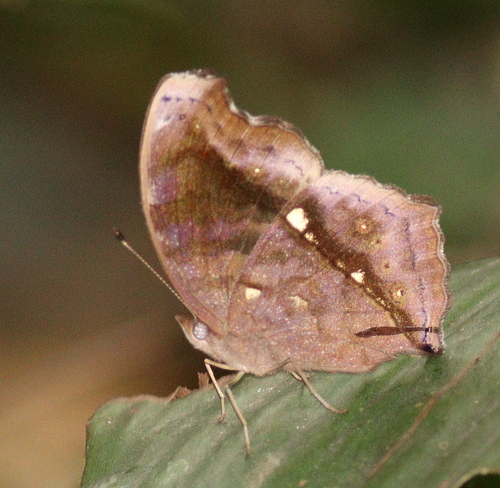
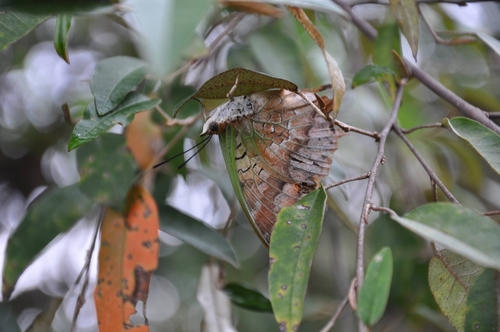
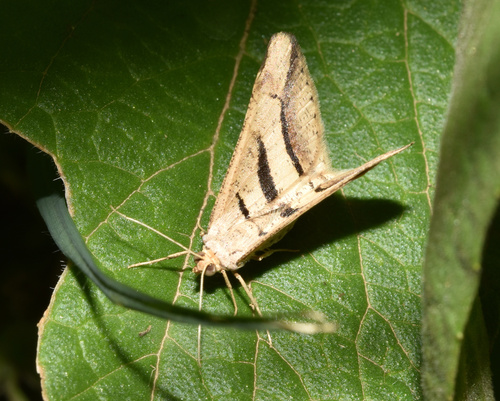
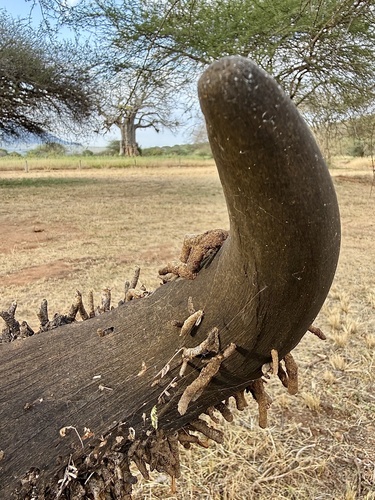
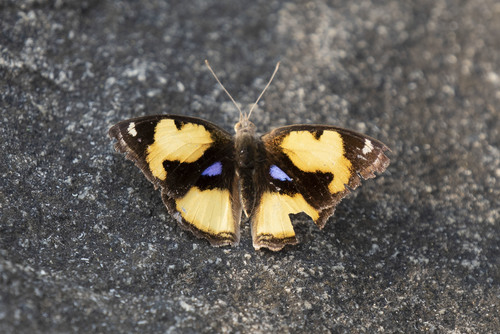
Larvae are cream-coloured and thick-set, with brown head and tip of abdomen. Usually the larval cases are noticed on the surface of old horns. The adult moth is a typical tineid, having a conspicuous tuft of yellow hair on the head. Other Tineidae share C. vastella's diet of keratin, dried animal hides and wool - C. ethadopa (Meyr.), Monopis rejectella (Wlk.), Tinea pellionella and Tineola bisselliella.

The entomologist Thomas de Grey (1843–1919) suggested that the larvae of this species may occasionally be found in the horns of living animals. Mr. Haliday made some remarks on two pairs of antelope's horns, exhibited to the meeting by J. M. Neligan, M.D. These horns belonging, one pair to Oreas canna (pi. i., fig. 3), the other to Kobus ellipsiprymnus were brought home from the Gambia by J. Fitzgibbon, Esq., M.D., who lately purchased them from some natives in the market at Macarthy's Island, being struck with their appearance, as they were perforated by grubs enclosed in cases which projected abundantly from the surface of the horns, although these were taken from freshly-killed animals, the blood not having dried up on them when brought to market. The most remarkable point was the evidence that the horns had been thus infested while the animal was yet living which bore them. As the fibrous substance of the horn undergoes little or no change at the death of the animal, there seems to be no reason why the moth should not deposit its eggs when the living animal is at rest, nor why the larva should not penetrate the horn; but the question must be considered to be "sub judice".

Zeller and Roland Trimen, however, expressed their doubts about larvae feeding off the horn of a living animal and were supported in this view by Lieutenant Colonel the Hon. Wenman Coke, a soldier and hunter. Wikipedia →
Global Distribution

Parks Where Found

# Park Country Daily sighting probability
1 Masai Mara National Reserve 🇰🇪 Kenya
~10%
2 Kruger National Park 🇿🇦 South Africa
<5%

Before you go

What are the chances of seeing a Horn Moth in Masai Mara National Reserve?

With luck

About 10% of wildlife watchers report a Horn Moth sighting in Masai Mara National Reserve on a given day, based on 5 verified sightings from GBIF citizen-science data from 2019 to 2026. It is the 14th most-seen of the 18 insects we can rate there. Over three days the chance rises to about 20%, and over a week to about 40%, if each day is a fresh chance.

When is the best time to see a Horn Moth in Masai Mara National Reserve?

November

In that month about 20% of wildlife watchers report a Horn Moth in Masai Mara National Reserve on a given day, against under 5% in September–October and December–May, the lowest months. That is one of Masai Mara National Reserve's wettest months, with about 120 mm of rain against 15 mm in July.

What time of day is best to see a Horn Moth?

Between 8 and 11 am

Across all the parks we cover, that three-hour window holds the most Horn Moth sightings with a recorded time, and about 7 in 10 of them come between 6 am and 6 pm: it is seen both by day and at night.

Is Masai Mara National Reserve the best place to see a Horn Moth?

Yes

Of the 2 parks where we can rate Horn Moth sightings, Masai Mara National Reserve has the highest daily chance: about 10%. Next come Kruger National Park (South Africa, under 5%).

Which relatives of the Horn Moth live in Masai Mara National Reserve?

Same order: Lepidoptera

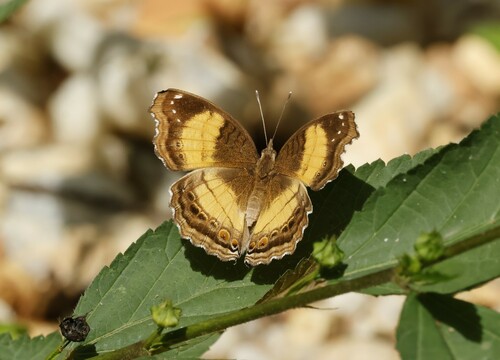
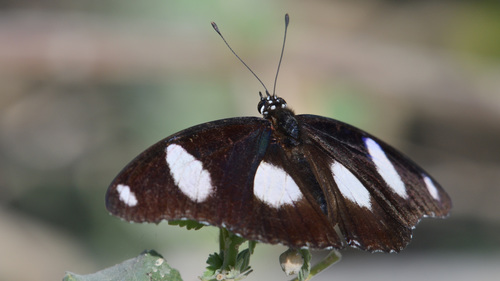
The closest relatives of the Horn Moth that you can see in Masai Mara National Reserve (order Lepidoptera, Butterflies and Moths) are Yellow Pansy (about 20%), Dark Blue Pansy (about 10%) and Soldier Commodore (about 10%), with each one's daily chance of a sighting.

Where does the Horn Moth sighting chance come from?

GBIF citizen-science records

It is estimated from how often the Horn Moth is recorded against all the insects logged in Masai Mara National Reserve (5 verified sightings from 2019 to 2026), calibrated against known sighting rates. Figures are rounded to the nearest 10% because citizen-science data supports honest approximations, not decimals, and months with records from fewer than five people show "—". How it works.

← Back to Masai Mara National Reserve