Florida Carpenter Ant

Florida Carpenter Ant

Camponotus floridanus

Endemic
Daily sighting probability ~10% · With luck
at Merritt Island National Wildlife Refuge

In 3 days ~30% in a week ~60%

36 Verified sightings at Merritt Island National Wildlife Refuge From 2019 to 2026
296 In all 3 parks
May Best month
☀️ Diurnal When it's spotted

About the Florida Carpenter Ant

Camponotus floridanus, or Florida carpenter ant, is a species of ant in the genus Camponotus. First described as Formica floridana by Buckley in 1866, the species was moved to Camponotus by Mayr in 1886. The ant is widespread in Florida and occurs as far north as North Carolina and as far west as Mississippi.

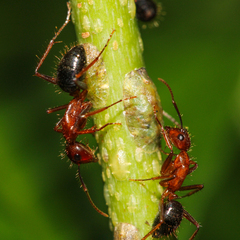
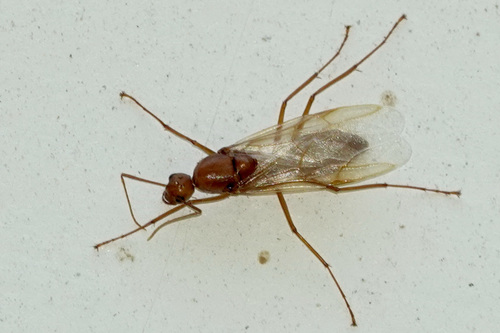
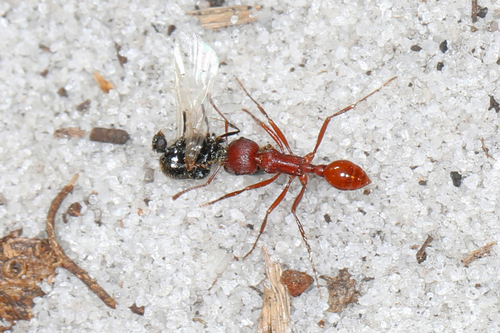
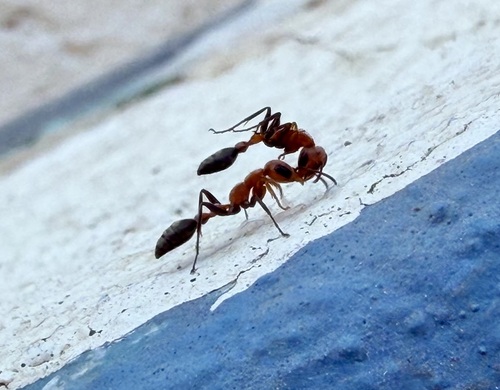
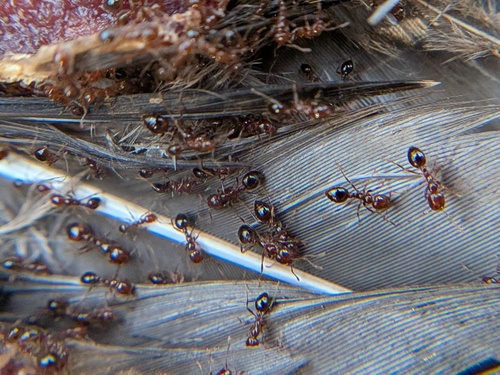
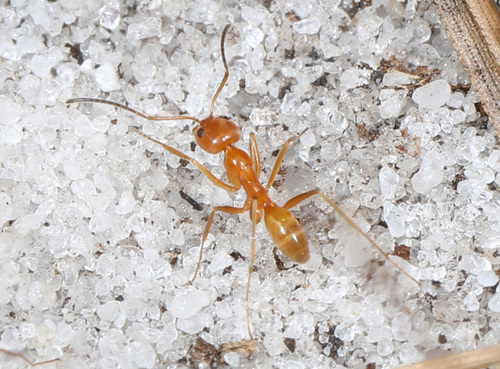
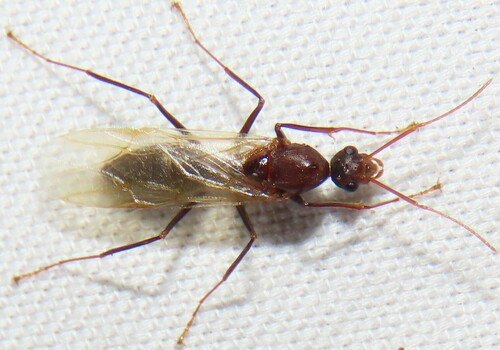
Camponotus floridanus is one of the most familiar ant species in Florida owing both to its large size and conspicuous coloration. Workers and queens are bicolored, having a reddish-orange head and a bright to dullish orange colored mesosoma and legs, contrasted sharply by a deep black gaster. Male alates of this species are more concolorous, primarily ranging in the rusty to cider oranges. Camponotus floridanus can be distinguished from its visually similar, but smaller relative Camponotus tortuganus by its wider than long head, smaller but stockier legs relative to the body, and overall stouter build.

Queens on average vary 14–16 mm in length, and the highly polymorphic workers can potentially attain similar lengths, with the largest majors reaching 11–13 mm. Minors and mediae are typically around 4–9 mm. Florida carpenter ants' native range... Wikipedia →
Global Distribution

Parks Where Found

# Park Country Daily sighting probability
1 Everglades National Park 🇺🇸 United States
~30%
2 Big Cypress National Preserve 🇺🇸 United States
~20%
3 Merritt Island National Wildlife Refuge 🇺🇸 United States
~10%

Cities Where Found

# City Country Daily sighting probability
1 Miami 🇺🇸 United States
~20%
2 Orlando 🇺🇸 United States
~10%

Before you go

What are the chances of seeing a Florida Carpenter Ant in Merritt Island National Wildlife Refuge?

With luck

About 10% of wildlife watchers report a Florida Carpenter Ant sighting in Merritt Island National Wildlife Refuge on a given day, based on 36 verified sightings from GBIF citizen-science data from 2019 to 2026. It is the 40th most-seen of the 189 insects we can rate there. Over three days the chance rises to about 30%, and over a week to about 60%, if each day is a fresh chance.

When is the best time to see a Florida Carpenter Ant in Merritt Island National Wildlife Refuge?

May–June and September

In those months about 20% of wildlife watchers report a Florida Carpenter Ant in Merritt Island National Wildlife Refuge on a given day, against about 10% in July–August and October–April, the lowest months. Those are among Merritt Island National Wildlife Refuge's wettest months, with about 170 mm of rain a month against 50 mm in March.

What time of day is best to see a Florida Carpenter Ant?

Between 10 am and 1 pm

Across all the parks we cover, that three-hour window holds the most Florida Carpenter Ant sightings with a recorded time, and about 7 in 10 of them come between 6 am and 6 pm: it is a daytime animal.

Is Merritt Island National Wildlife Refuge the best place to see a Florida Carpenter Ant?

3rd of 3

Of the 3 parks where we can rate Florida Carpenter Ant sightings, Merritt Island National Wildlife Refuge ranks 3rd at about 10%. The best odds are in Everglades National Park (United States, about 30%) and Big Cypress National Preserve (United States, about 20%).

Where does the Florida Carpenter Ant sighting chance come from?

GBIF citizen-science records

It is estimated from how often the Florida Carpenter Ant is recorded against all the insects logged in Merritt Island National Wildlife Refuge (36 verified sightings from 2019 to 2026), calibrated against known sighting rates. Figures are rounded to the nearest 10% because citizen-science data supports honest approximations, not decimals, and months with records from fewer than five people show "—". How it works.

← Back to Merritt Island National Wildlife Refuge