Marsh Rabbit

Marsh Rabbit

Sylvilagus palustris

Silhouette: T. Michael Keesey · PhyloPic

LCLeast ConcernNTVUENCR Endemic
Daily sighting probability ~10% · With luck
at Merritt Island National Wildlife Refuge

In 3 days ~30% in a week ~60%

29 Verified sightings at Merritt Island National Wildlife Refuge From 2019 to 2026
38 In all 2 parks
April Best month
🌅 Crepuscular When it's spotted

About the Marsh Rabbit

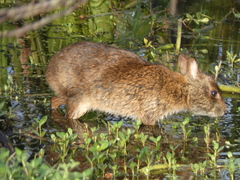
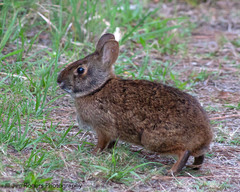
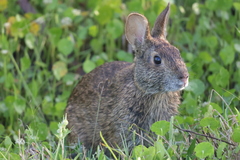
The marsh rabbit (Sylvilagus palustris) is a small cottontail rabbit found in marshes and swamps of coastal regions of the Eastern and Southern United States, from Virginia to the lower Florida Keys. Being a small brown rabbit, it is similar in appearance to the widespread eastern cottontail (Sylvilagus floridanus), but is characterized by its smaller ears, legs, and tail, as well as its grayish-brown underparts.

Marsh rabbits are common throughout their range, except for in the Everglades, where the invasive Burmese python has reduced their numbers, and the lower Florida Keys, where the subspecies known as the Lower Keys marsh rabbit (Sylvilagus palustris hefneri) is threatened by rising sea levels and human development of the land. They prefer to live in marshes, swamps, and alongside coastal waters and rivers, as they are excellent swimmers. The marsh rabbit is often compared to the aquatic swamp rabbit (Sylvilagus aquaticus), which is found along the Gulf coast and further inland in the southeastern United States, though the swamp rabbit has larger ears, tail and legs, as well as a distinctly white underside of its tail.

Like other rabbits, the marsh rabbit is a herbivore, and will eat the leaves and bulbs of various aquatic plants, such as cattails and marsh pennywort. It will also eat crops, such as carrot, sweet potato, and sugar cane, which has caused it to be labeled as a pest. The marsh rabbit is nocturnal and will dig out shelters in the ground with its long toenails to hide and rest in during the daytime, and though it does not create burrows like some other rabbits, it will take advantage of those left behind by other animals. The rabbit's long nails also help it to swim. Some predators of the marsh rabbit include birds of prey, such as owls and the northern harrier, and land animals like bobcats and snakes. Rabbit ticks and other parasites are often found on and in the marsh rabbit, and cases of tularemia and mange are known from it as well.

Humans have some history with marsh rabbits, with the species' diet of aquatic and cultivated plants making it considered as a pest, especially in Florida where sugar cane is grown. Some states regulate marsh rabbits as game animals for hunting, where patches of dried grass may be burned to flush them out. As food, the marsh rabbit may be stewed, or it may be marinated, floured, and fried. The term "marsh rabbit" is used in some restaurants in the eastern United States as a euphemism for muskrat meat. Wikipedia →

Global Distribution

Parks Where Found

# Park Country Daily sighting probability
1 Merritt Island National Wildlife Refuge 🇺🇸 United States
~10%
2 Big Cypress National Preserve 🇺🇸 United States
~10%

Cities Where Found

# City Country Daily sighting probability
1 Orlando 🇺🇸 United States
~30%
2 Miami 🇺🇸 United States
~20%

Zoos & Centres Where Found

# Zoo / Centre Country
1 Disney's Animal Kingdom 🇺🇸 United States In captivity

Before you go

What are the chances of seeing a Marsh Rabbit in Merritt Island National Wildlife Refuge?

With luck

About 10% of wildlife watchers report a Marsh Rabbit sighting in Merritt Island National Wildlife Refuge on a given day, based on 29 verified sightings from GBIF citizen-science data from 2019 to 2026. It is the 8th most-seen of the 11 mammals we can rate there. Over three days the chance rises to about 30%, and over a week to about 60%, if each day is a fresh chance.

When is the best time to see a Marsh Rabbit in Merritt Island National Wildlife Refuge?

April

In that month about 30% of wildlife watchers report a Marsh Rabbit in Merritt Island National Wildlife Refuge on a given day, against under 5% in February, August and December, the lowest months.

What time of day is best to see a Marsh Rabbit?

Between 5 and 8 pm

Across all the parks we cover, that three-hour window holds the most Marsh Rabbit sightings with a recorded time, and about 6 in 10 of them come between 6 am and 6 pm: it is most active around dawn and dusk.

Is Merritt Island National Wildlife Refuge the best place to see a Marsh Rabbit?

Yes

Of the 2 parks where we can rate Marsh Rabbit sightings, Merritt Island National Wildlife Refuge has the highest daily chance: about 10%. Next come Big Cypress National Preserve (United States, about 10%).

Where does the Marsh Rabbit sighting chance come from?

GBIF citizen-science records

It is estimated from how often the Marsh Rabbit is recorded against all the mammals logged in Merritt Island National Wildlife Refuge (29 verified sightings from 2019 to 2026), calibrated against known sighting rates. Figures are rounded to the nearest 10% because citizen-science data supports honest approximations, not decimals, and months with records from fewer than five people show "—". How it works.

← Back to Merritt Island National Wildlife Refuge