
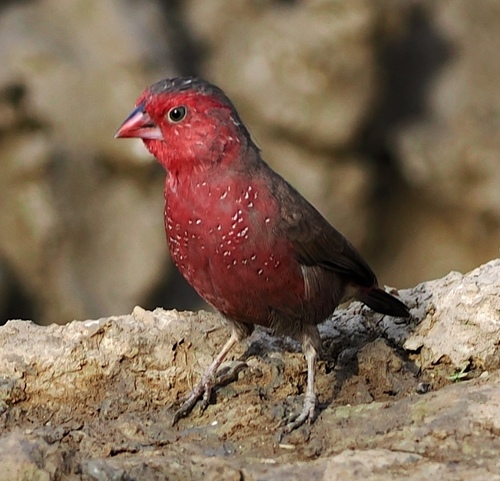
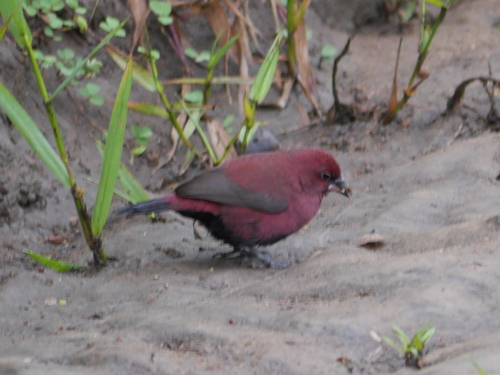
Lavender Waxbill

Lavender Waxbill

Estrilda caerulescens

Silhouette: Ferran Sayol · PhyloPic

Daily sighting probability <5% · Rare
at Niokolo-Koba National Park

In 3 days ~10% in a week ~30%

21 Verified sightings at Niokolo-Koba National Park From 2019 to 2026
21 In 1 park
September Best month

About the Lavender Waxbill

The lavender waxbill (Glaucestrilda caerulescens) is a common species of estrildid finch native to Central Africa and successfully introduced on Hawaiʻi. It has an estimated global extent of occurrence of 620,000 km2 (240,000 sq mi).

It is found in subtropical/tropical (lowland) dry shrubland habitats in Benin, Burkina Faso, Cameroon, Central African Republic, Chad, Côte d'Ivoire, Gambia, Ghana, Guinea, Guinea-Bissau, Liberia, Mali, Niger, Nigeria, Senegal, Sudan, Togo and the United States (Hawaii island only). The IUCN has classified the species as being of least concern.

BirdLife International species factsheet Wikipedia →

Global Distribution

Parks Where Found

# Park Country Daily sighting probability
1 Niokolo-Koba National Park 🇸🇳 Senegal
<5%

More parks will be added in future updates.

Cities Where Found

# City Country Daily sighting probability
1 Serrekunda 🇬🇲 Gambia
~40%
2 Ouagadougou 🇧🇫 Burkina Faso
~10%

Zoos & Centres Where Found

# Zoo / Centre Country
1 Granby Zoo 🇨🇦 Canada In captivity
2 Bloedel Conservatory 🇨🇦 Canada In captivity

Before you go

What are the chances of seeing a Lavender Waxbill in Niokolo-Koba National Park?

Rare

Under 5% of wildlife watchers report a Lavender Waxbill sighting in Niokolo-Koba National Park on a given day, based on 21 verified sightings from GBIF citizen-science data from 2019 to 2026. It is the 168th most-seen of the 215 birds we can rate there. Over three days the chance rises to about 10%, and over a week to about 30%, if each day is a fresh chance.

When is the best time to see a Lavender Waxbill in Niokolo-Koba National Park?

September

In that month about 20% of wildlife watchers report a Lavender Waxbill in Niokolo-Koba National Park on a given day, against under 5% in January–February, April and November, the lowest months. That is one of Niokolo-Koba National Park's wettest months, with about 230 mm of rain against almost none in January. May–July and October have too few records to rate.

Where else can you see a Lavender Waxbill?

Only Niokolo-Koba National Park, in our data

Niokolo-Koba National Park is the only park on Wallace's Line with enough records to rate Lavender Waxbill sightings: under 5% of wildlife watchers there report one on a given day.

Which relatives of the Lavender Waxbill live in Niokolo-Koba National Park?

Same genus: Estrilda

The closest relatives of the Lavender Waxbill that you can see in Niokolo-Koba National Park (genus Estrilda, Typical Waxbills) are Black-rumped Waxbill (about 40%) and Orange-cheeked Waxbill (about 30%), with each one's daily chance of a sighting.

Where does the Lavender Waxbill sighting chance come from?

GBIF citizen-science records

It is estimated from how often the Lavender Waxbill is recorded against all the birds logged in Niokolo-Koba National Park (21 verified sightings from 2019 to 2026), calibrated against known sighting rates. Figures are rounded to the nearest 10% because citizen-science data supports honest approximations, not decimals, and months with records from fewer than five people show "—". How it works.

← Back to Niokolo-Koba National Park