Patagonia Lancehead

Patagonia Lancehead

Bothrops ammodytoides

Silhouette: Steven Traver · PhyloPic

LCLeast ConcernNTVUENCR
Daily sighting probability ~50% · Likely
at Península Valdés

In 3 days ~90% in a week >90%

33 Verified sightings at Península Valdés From 2019 to 2026
33 In 1 park
November Best month
☀️ Diurnal When it's spotted

About the Patagonia Lancehead

Common names: Patagonian lancehead, yarará ñata, Patagonian pit viper. Bothrops ammodytoides is a pit viper species endemic to Argentina. No subspecies are currently recognized. This species has a stocky build and grows to an average total length of 45–75 cm (18-30 inches), but is capable reaching almost 1 m (39 inches) in total length. The rostral scale is elongated vertically and the snout is upturned, similar to the hog-nosed pitvipers of the genus Porthidium.

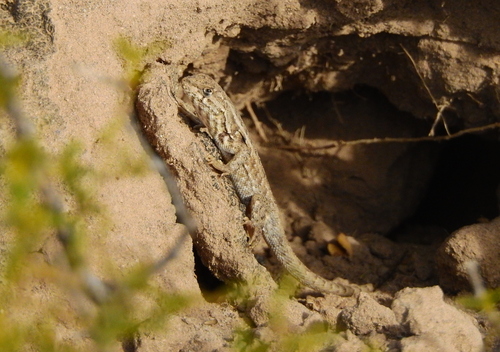
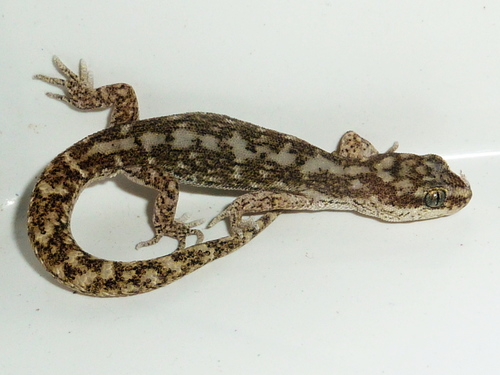
Dorsally, it is pale brown, with a series of large squarish dark brown spots or crossbars which are edged with black. On some specimens these markings alternate to form a zigzag stripe. There is a dark streak behind the eye. Ventrally, it is yellowish with brown dots.

The very strongly keeled dorsal scales are arranged in 23 or 25 rows at midbody. Ventrals 149–160; anal plate entire; subcaudals 30–38, divided. The dorsal surface of the head is covered by small, imbricate, keeled scales. The large supraoculars are separated by 8 or 9 rows of these small scales. Two rows of scales separate the eye from the upper labials. Upper labials 9 or 10, the 2nd separated from the loreal pit, the 3rd and 4th largest. The... Wikipedia →

Global Distribution

Parks Where Found

# Park Country Daily sighting probability
1 Península Valdés 🇦🇷 Argentina
~50%

More parks will be added in future updates.

Before you go

What are the chances of seeing a Patagonia Lancehead in Península Valdés?

Likely

About 50% of wildlife watchers report a Patagonia Lancehead sighting in Península Valdés on a given day, based on 33 verified sightings from GBIF citizen-science data from 2019 to 2026. It is the 2nd most-seen of the 6 reptiles we can rate there. Over three days the chance rises to about 90%, and over a week to over 90%, if each day is a fresh chance.

When is the best time to see a Patagonia Lancehead in Península Valdés?

January and October–November

In those months about 60% of wildlife watchers report a Patagonia Lancehead in Península Valdés on a given day, against about 10% in July to September, the lowest months.

What time of day is best to see a Patagonia Lancehead?

Between 3 and 6 pm

Across all the parks we cover, that three-hour window holds the most Patagonia Lancehead sightings with a recorded time, and about 7 in 10 of them come between 6 am and 6 pm: it is a daytime animal.

Where else can you see a Patagonia Lancehead?

Only Península Valdés, in our data

Península Valdés is the only park on Wallace's Line with enough records to rate Patagonia Lancehead sightings: about 50% of wildlife watchers there report one on a given day.

Where does the Patagonia Lancehead sighting chance come from?

GBIF citizen-science records

It is estimated from how often the Patagonia Lancehead is recorded against all the reptiles logged in Península Valdés (33 verified sightings from 2019 to 2026), calibrated against known sighting rates. Figures are rounded to the nearest 10% because citizen-science data supports honest approximations, not decimals, and months with records from fewer than five people show "—". How it works.

← Back to Península Valdés