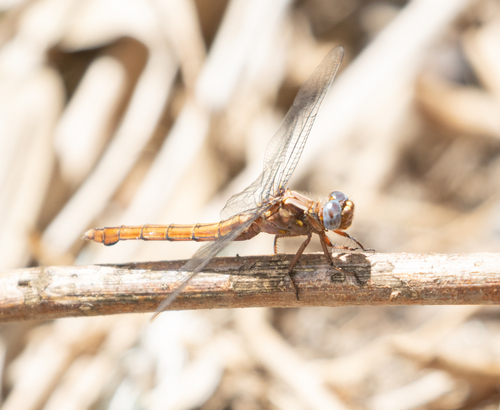
Indian Walking Stick

Indian Walking Stick

Carausius morosus

Daily sighting probability ~20% · Possible
at Ranomafana National Park

In 3 days ~60% in a week ~90%

11 Verified sightings at Ranomafana National Park From 2019 to 2026
56 In all 3 parks
December Best month
☀️ Diurnal When it's spotted

About the Indian Walking Stick

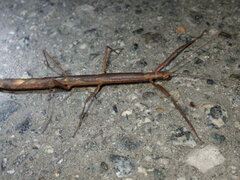
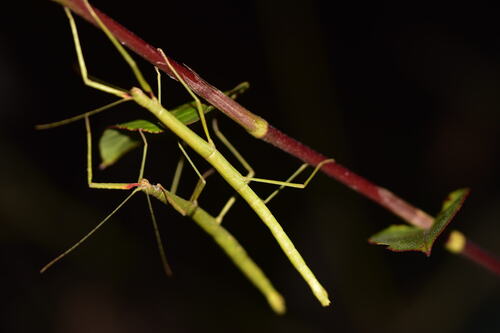
Carausius morosus (the 'common', 'Indian' or 'laboratory' stick insect) is a species of Phasmatodea (phasmid) often kept as pets. Culture stocks originate from a collection from Tamil Nadu, India. Like the majority of the Phasmatodea, C. morosus are nocturnal. Culture stocks are parthenogenetic females that can reproduce without mating. Only 1 in 1000 are male, and although in captivity, gynandromorphs (individuals with both female and male characteristics) are sometimes reared.

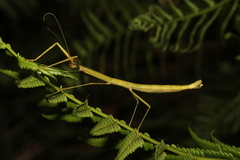
Females are elongated and about 80–100 mm (3–4 in) in length, ranging from a light green to a darkish brown in colour. The front legs have red patches at the base of the forelegs, and similar but yellow patches on the mid-legs. Eggs are 2 mm (0.08 in) in length, ovoid and brown, with a beige capitula at one end.

When the eggs hatch, the plug opens and dark, tiny, string-like young crawl out of the opening. The eggs are haploid. After hatching, the body of the stick insect can sometimes still be attached to the egg, but it is harmless and comes off mostly at the first moult.

When disturbed, the major defence method is feigning death, the body becoming rigid,... Wikipedia →
Global Distribution

Parks Where Found

# Park Country Daily sighting probability
1 Ranomafana National Park 🇲🇬 Madagascar
~20%
2 Table Mountain National Park 🇿🇦 South Africa
~10%
3 Garden Route National Park 🇿🇦 South Africa
<5%

Cities Where Found

# City Country Daily sighting probability
1 Porto 🇵🇹 Portugal
~10%
2 Cape Town 🇿🇦 South Africa
~10%
3 Lisbon 🇵🇹 Portugal
~10%
4 San Diego 🇺🇸 United States
<5%
5 San Francisco 🇺🇸 United States
<5%
6 Los Angeles 🇺🇸 United States
<5%

Before you go

What are the chances of seeing an Indian Walking Stick in Ranomafana National Park?

Possible

About 20% of wildlife watchers report an Indian Walking Stick sighting in Ranomafana National Park on a given day, based on 11 verified sightings from GBIF citizen-science data from 2019 to 2026. It is the 27th most-seen of the 68 insects we can rate there. Over three days the chance rises to about 60%, and over a week to about 90%, if each day is a fresh chance.

When is the best time to see an Indian Walking Stick in Ranomafana National Park?

December

In that month about 50% of wildlife watchers report an Indian Walking Stick in Ranomafana National Park on a given day, against under 5% in February–July and September, the lowest months.

What time of day is best to see an Indian Walking Stick?

Between 8 and 11 am

Across all the parks we cover, that three-hour window holds the most Indian Walking Stick sightings with a recorded time, and about 7 in 10 of them come between 6 am and 6 pm: it is a daytime animal.

Is Ranomafana National Park the best place to see an Indian Walking Stick?

Yes

Of the 3 parks where we can rate Indian Walking Stick sightings, Ranomafana National Park has the highest daily chance: about 20%. Next come Table Mountain National Park (South Africa, about 10%) and Garden Route National Park (South Africa, under 5%).

Which relatives of the Indian Walking Stick live in Ranomafana National Park?

Same order: Phasmida

The closest relatives of the Indian Walking Stick that you can see in Ranomafana National Park (order Phasmida, Stick Insects) are Parectatosoma echinus (about 50%) and Cirsia madegassa (about 30%), with each one's daily chance of a sighting.

Where does the Indian Walking Stick sighting chance come from?

GBIF citizen-science records

It is estimated from how often the Indian Walking Stick is recorded against all the insects logged in Ranomafana National Park (11 verified sightings from 2019 to 2026), calibrated against known sighting rates. Figures are rounded to the nearest 10% because citizen-science data supports honest approximations, not decimals, and months with records from fewer than five people show "—". How it works.

← Back to Ranomafana National Park