Brown-capped Rosy-Finch

Brown-capped Rosy-Finch

Leucosticte australis

Silhouette: PhyloPic

LCNTVUENEndangeredCR Endemic
Daily sighting probability ~10% · With luck
at Rocky Mountain National Park

In 3 days ~30% in a week ~50%

1,063 Verified sightings at Rocky Mountain National Park From 2019 to 2026
1,063 In 1 park
December Best month
☀️ Diurnal When it's spotted

About the Brown-capped Rosy-Finch

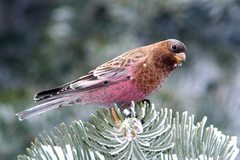
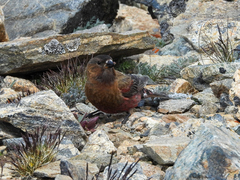
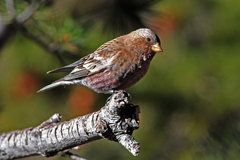
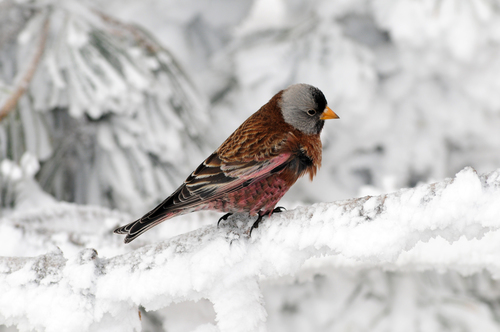
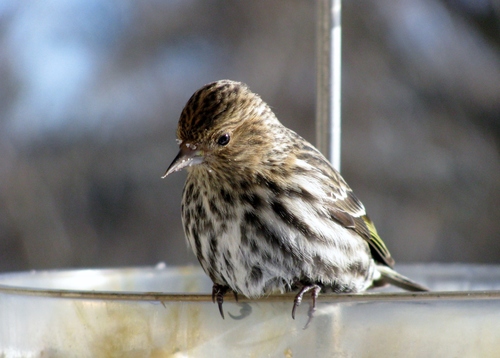
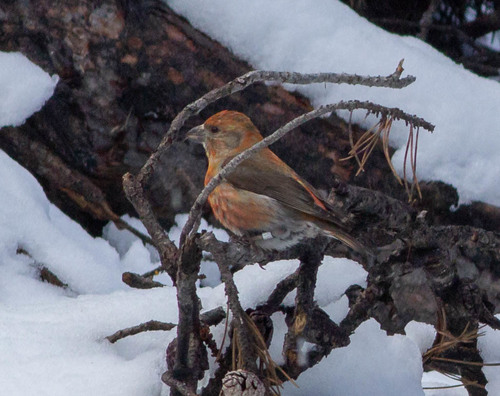
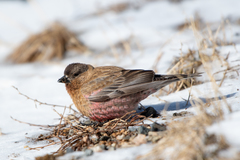
The brown-capped rosy finch (Leucosticte australis) is a medium-sized finch endemic to North America in the middle of the Rocky Mountains. Adults are brown on the head, back, and breast. The belly and rump are pink, with additional pink shading on the wings and tail. The pink is pronounced on the male but more subdued on the female. The forehead is black or grayish brown. The bill is yellow in winter and black in summer. These birds have short black legs and a long forked tail.

Their breeding habitat is mountain peaks in the central Rocky Mountains of the United States. They build a cup nest in a cavity on a cliff, or re-use abandoned cliff swallow nests. In winter, these birds migrate short distances to lower elevations. After breeding, the female takes three days to finish the nest.

These birds can be found in alpine snowfields and also at feeders, especially in the winter. They forage on the ground, but may fly to catch insects in flight. They mainly eat seeds from weeds and grasses and insects. They often feed in small flocks with other rosy finches.

At one time, the three North American rosy finches were considered to be one species. Despite fears that the population of this bird is declining, an analysis published in 2023 found a healthy population with more than three times the birds estimated in a 2016 report. Wikipedia →

Sounds

Call0:26

United States · 2011

© Andrew Spencer · XC87646 · CC BY-NC-ND 2.5

Begging call0:27

United States · 2007

© Nathan Pieplow · XC15216 · CC BY-NC-ND 2.5

Call0:05

United States · 2019

© Ross Gallardy · XC469181 · CC BY-NC-SA 4.0

Global Distribution

Parks Where Found

# Park Country Daily sighting probability
1 Rocky Mountain National Park 🇺🇸 United States
~10%

More parks will be added in future updates.

Before you go

What are the chances of seeing a Brown-capped Rosy-Finch in Rocky Mountain National Park?

With luck

About 10% of wildlife watchers report a Brown-capped Rosy-Finch sighting in Rocky Mountain National Park on a given day, based on 1,063 verified sightings from GBIF citizen-science data from 2019 to 2026. It is the 58th most-seen of the 223 birds we can rate there. Over three days the chance rises to about 30%, and over a week to about 50%, if each day is a fresh chance.

When is the best time to see a Brown-capped Rosy-Finch in Rocky Mountain National Park?

December

In that month about 30% of wildlife watchers report a Brown-capped Rosy-Finch in Rocky Mountain National Park on a given day, against under 5% in May and August–September, the lowest months.

What time of day is best to see a Brown-capped Rosy-Finch?

Between 9 am and noon

Across all the parks we cover, that three-hour window holds the most Brown-capped Rosy-Finch sightings with a recorded time, and nearly all of them come between 6 am and 6 pm: it is a daytime animal.

Where else can you see a Brown-capped Rosy-Finch?

Only Rocky Mountain National Park, in our data

Rocky Mountain National Park is the only park on Wallace's Line with enough records to rate Brown-capped Rosy-Finch sightings: about 10% of wildlife watchers there report one on a given day.

Where does the Brown-capped Rosy-Finch sighting chance come from?

GBIF citizen-science records

It is estimated from how often the Brown-capped Rosy-Finch is recorded against all the birds logged in Rocky Mountain National Park (1,063 verified sightings from 2019 to 2026), calibrated against known sighting rates. Figures are rounded to the nearest 10% because citizen-science data supports honest approximations, not decimals, and months with records from fewer than five people show "—". How it works.

← Back to Rocky Mountain National Park