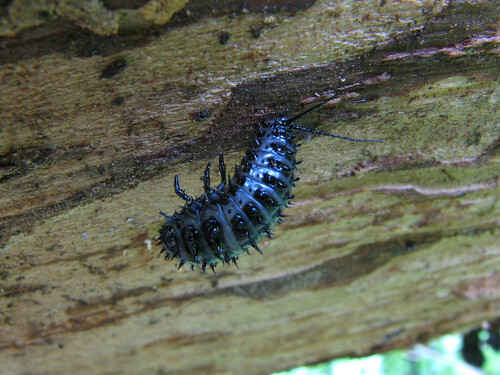

Douglas Fir Adelgid

Douglas Fir Adelgid

Adelges cooleyi

Daily sighting probability ~10% · With luck
at Rocky Mountain National Park

In 3 days ~20% in a week ~30%

10 Verified sightings at Rocky Mountain National Park From 2019 to 2026
33 In all 3 parks
January Best month
☀️ Diurnal When it's spotted

About the Douglas Fir Adelgid

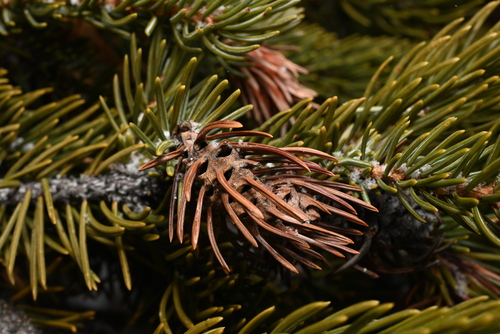
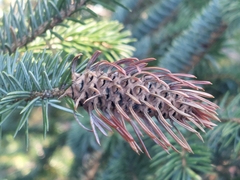
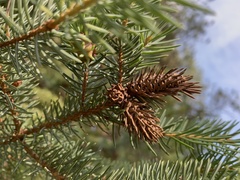
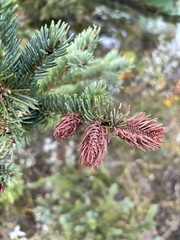
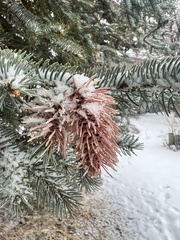
The gall adelgid (Adelges cooleyi) is an adelgid species that produces galls in spruce trees. They infect the new buds of native spruce trees in the foothills of the Rocky Mountains in the spring. They also attack blue spruce to a lesser degree. The insects complete two generations within the year. They require two different trees for its life cycle, the second being the Rocky Mountain Douglas-fir. They may also attack Sitka, Engelmann, or white spruce. The many different species of adelgids produce different galls on different spruce species.

The Cooley spruce gall adelgid (Adelges cooleyi Gillette) is mainly a western species that usually alternates between white spruce and Douglas fir. It is rare in eastern Canada. In Ontario, the galls are found mostly on Colorado spruce.

The infection is most noticeable on spruce in the spring, May to June, when the galls appear. This infection may be mistakenly diagnosed to be caused by worms, grubs, or even as a sex organ of the spruce. Spruce pollen, however, is released from a smaller structure that lacks needles. The galls are characterized by this pineapple-like form, with a length of 0.5 cm to 8 cm depending on the... Wikipedia →

Global Distribution

Parks Where Found

# Park Country Daily sighting probability
1 Jasper National Park 🇨🇦 Canada
~10%
2 Banff National Park 🇨🇦 Canada
~10%
3 Rocky Mountain National Park 🇺🇸 United States
~10%

Cities Where Found

# City Country Daily sighting probability
1 Calgary 🇨🇦 Canada
<5%
2 Edmonton 🇨🇦 Canada
<5%
3 Seattle 🇺🇸 United States
<5%

Before you go

What are the chances of seeing a Douglas Fir Adelgid in Rocky Mountain National Park?

With luck

About 10% of wildlife watchers report a Douglas Fir Adelgid sighting in Rocky Mountain National Park on a given day, based on 10 verified sightings from GBIF citizen-science data from 2019 to 2026. It is the 119th most-seen of the 191 insects we can rate there. Over three days the chance rises to about 20%, and over a week to about 30%, if each day is a fresh chance.

When is the best time to see a Douglas Fir Adelgid in Rocky Mountain National Park?

December and January

In those months about 20% of wildlife watchers report a Douglas Fir Adelgid in Rocky Mountain National Park on a given day, against under 5% in February, April–May, July–August and October, the lowest months.

What time of day is best to see a Douglas Fir Adelgid?

Between 2 and 5 pm

Across all the parks we cover, that three-hour window holds the most Douglas Fir Adelgid sightings with a recorded time, and about 9 in 10 of them come between 6 am and 6 pm: it is a daytime animal.

Is Rocky Mountain National Park the best place to see a Douglas Fir Adelgid?

Among the best

Of the 3 parks where we can rate Douglas Fir Adelgid sightings, Rocky Mountain National Park ranks 3rd at about 10%, level with the leaders once rounded. The best odds are in Jasper National Park (Canada, about 10%) and Banff National Park (Canada, about 10%).

Which relatives of the Douglas Fir Adelgid live in Rocky Mountain National Park?

Same order: Hemiptera

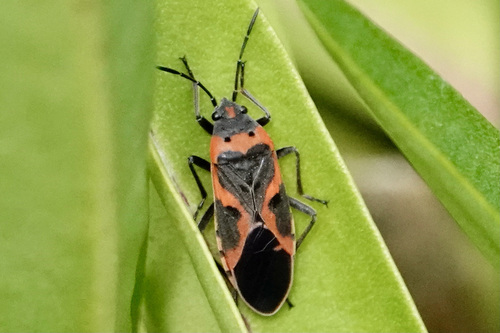
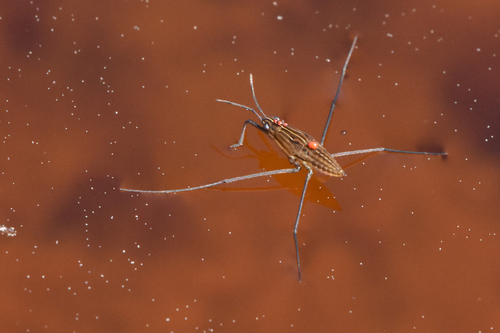
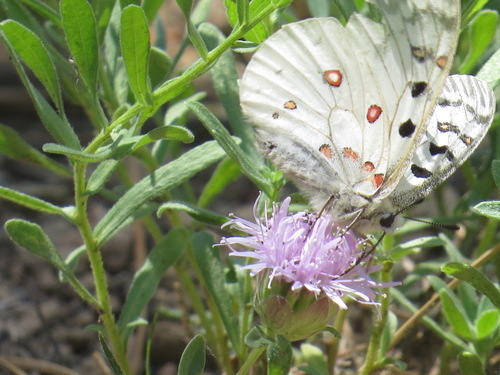
The closest relatives of the Douglas Fir Adelgid that you can see in Rocky Mountain National Park (order Hemiptera, True Bugs, Hoppers, Aphids, and allies) are Small Milkweed Bug (about 10%), Western Conifer Seed Bug (about 10%) and Limnoporus notabilis (about 10%), with each one's daily chance of a sighting.

Where does the Douglas Fir Adelgid sighting chance come from?

GBIF citizen-science records

It is estimated from how often the Douglas Fir Adelgid is recorded against all the insects logged in Rocky Mountain National Park (10 verified sightings from 2019 to 2026), calibrated against known sighting rates. Figures are rounded to the nearest 10% because citizen-science data supports honest approximations, not decimals, and months with records from fewer than five people show "—". How it works.

← Back to Rocky Mountain National Park