Himalayan Cutia

Himalayan Cutia

Cutia nipalensis

Silhouette: Margot Michaud · PhyloPic

LCLeast ConcernNTVUENCR
Daily sighting probability <5% · Rare
at Royal Manas National Park

In 3 days ~10% in a week ~20%

29 Verified sightings at Royal Manas National Park From 2019 to 2026
29 In 1 park
May Best month
☀️ Diurnal When it's spotted

About the Himalayan Cutia

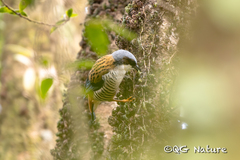
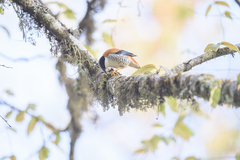
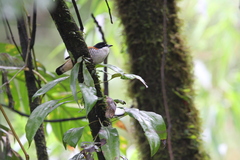
The Himalayan cutia (Cutia nipalensis) is a bird species in the family Leiothrichidae. Its scientific name ultimately means "the khutya from Nepal", as Cutia is derived from the Nepali name for these birds, and nipalensis is Latin for "from Nepal".

This species inhabits the Himalayan region, from India to northern Thailand. A subspecies also occurs in Peninsular Malaysia. Previously the genus Cutia was monotypic, but the Vietnamese cutia, for long lumped with the Himalayan birds as a subspecies, has been recently raised to full species status as C. legalleni.

Its natural habitats are tropical to subtropical humid montane forests. It is not a bird of the high mountains, however, rather inhabiting broadleaf forest – e.g. of oaks (Quercus) – of the foothills upwards of 1,500 m ASL or so, but rarely if ever ascending above 2,500 m ASL.

The Himalayan cutia is not considered threatened by the IUCN, retaining its pre-split status as a Species of Least Concern; in Bhutan, for example, it is a fairly frequently seen resident. BirdLife International (BLI) (2008a) Himalayan Cutia Species Factsheet. Retrieved 2008-MAY-27.

BirdLife International (BLI... Wikipedia →

Sounds

Uncertain0:27

China · 2026

© JJSUN · XC1085396 · CC BY-NC-SA 4.0

Call0:17

Bhutan · 2023

© Jonathan Bryant · XC826808 · CC BY-NC-SA 4.0

Begging call0:29

Malaysia · 2013

© Ding Li Yong · XC648783 · CC BY-NC-ND 4.0

Global Distribution

Parks Where Found

# Park Country Daily sighting probability
1 Royal Manas National Park 🇧🇹 Bhutan
<5%

More parks will be added in future updates.

Before you go

What are the chances of seeing a Himalayan Cutia in Royal Manas National Park?

Rare

Under 5% of wildlife watchers report a Himalayan Cutia sighting in Royal Manas National Park on a given day, based on 29 verified sightings from GBIF citizen-science data from 2019 to 2026. It is the 245th most-seen of the 388 birds we can rate there. Over three days the chance rises to about 10%, and over a week to about 20%, if each day is a fresh chance.

When is the best time to see a Himalayan Cutia in Royal Manas National Park?

March and May

In those months about 10% of wildlife watchers report a Himalayan Cutia in Royal Manas National Park on a given day, against under 5% in April, June–July and October–February, the lowest months. August and September have too few records to rate.

What time of day is best to see a Himalayan Cutia?

Between 7 and 10 am

Across all the parks we cover, that three-hour window holds the most Himalayan Cutia sightings with a recorded time, and about 8 in 10 of them come between 6 am and 6 pm: it is a daytime animal.

Where else can you see a Himalayan Cutia?

Only Royal Manas National Park, in our data

Royal Manas National Park is the only park on Wallace's Line with enough records to rate Himalayan Cutia sightings: under 5% of wildlife watchers there report one on a given day.

Where does the Himalayan Cutia sighting chance come from?

GBIF citizen-science records

It is estimated from how often the Himalayan Cutia is recorded against all the birds logged in Royal Manas National Park (29 verified sightings from 2019 to 2026), calibrated against known sighting rates. Figures are rounded to the nearest 10% because citizen-science data supports honest approximations, not decimals, and months with records from fewer than five people show "—". How it works.

← Back to Royal Manas National Park