
Desert Pocket Mouse

Desert Pocket Mouse

Chaetodipus penicillatus

Silhouette: T. Michael Keesey · PhyloPic

LCLeast ConcernNTVUENCR
Daily sighting probability <5% · Rare
at Saguaro National Park

In 3 days ~10% in a week ~30%

6 Verified sightings at Saguaro National Park From 2019 to 2026
6 In 1 park
October Best month
☀️🌙 Day & Night When it's spotted

About the Desert Pocket Mouse

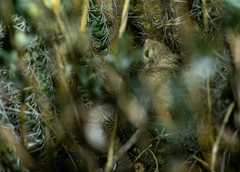
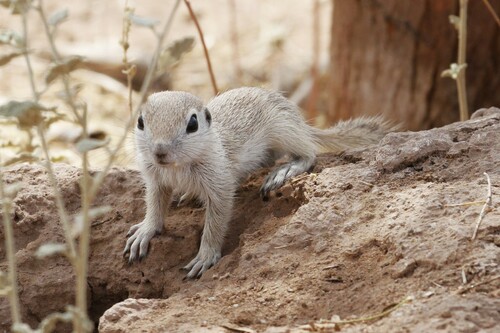
The desert pocket mouse (Chaetodipus penicillatus) is a North American species of heteromyid rodent found in the southwestern United States and Mexico. True to its common name, the medium-sized desert pocket mouse prefers sandy, sparsely vegetated desert environments.

Chaetodipus penicillatus is a medium-sized pocket mouse. The total length of adults usually does not exceed 180 mm. Coloration is grayish brown to yellowish gray and may be sprinkled with black. The pelage is coarse. This species lacks rump spines but has numerous, elongate rump hairs which are darker dorsally and lighter laterally. There is no lateral line. The underparts of the body and tail are whitish. The tail is heavily crested and is longer than the head and body, with average tail length being 109 mm. The soles of the hind feet are whitish and average hind foot length is 25 mm.

Chaetodipus penicillatus occurs in the southwestern United States and northern Mexico. The northern limit of its range is southern Nevada. It extends southwest into California and the northern Baja Peninsula and northwestern Mexico. Eastward it stretches into the southwesternmost parts... Wikipedia →

Global Distribution

Parks Where Found

# Park Country Daily sighting probability
1 Saguaro National Park 🇺🇸 United States
<5%

More parks will be added in future updates.

Before you go

What are the chances of seeing a Desert Pocket Mouse in Saguaro National Park?

Rare

Under 5% of wildlife watchers report a Desert Pocket Mouse sighting in Saguaro National Park on a given day, based on 6 verified sightings from GBIF citizen-science data from 2019 to 2026. It is the 22nd most-seen of the 24 mammals we can rate there. Over three days the chance rises to about 10%, and over a week to about 30%, if each day is a fresh chance.

When is the best time to see a Desert Pocket Mouse in Saguaro National Park?

June–August and October–November

In those months about 10% of wildlife watchers report a Desert Pocket Mouse in Saguaro National Park on a given day, against under 5% in September and December–May, the lowest months.

What time of day is best to see a Desert Pocket Mouse?

Between 8 and 11 pm

Across all the parks we cover, that three-hour window holds the most Desert Pocket Mouse sightings with a recorded time, and about half of them come between 6 am and 6 pm: it is seen both by day and at night.

Where else can you see a Desert Pocket Mouse?

Only Saguaro National Park, in our data

Saguaro National Park is the only park on Wallace's Line with enough records to rate Desert Pocket Mouse sightings: under 5% of wildlife watchers there report one on a given day.

Which relatives of the Desert Pocket Mouse live in Saguaro National Park?

Same order: Rodentia

The closest relatives of the Desert Pocket Mouse that you can see in Saguaro National Park (order Rodentia, Rodents) are Rock Squirrel (about 40%), Harris' Antelope Squirrel (about 40%) and White-throated Woodrat (about 10%), with each one's daily chance of a sighting.

Where does the Desert Pocket Mouse sighting chance come from?

GBIF citizen-science records

It is estimated from how often the Desert Pocket Mouse is recorded against all the mammals logged in Saguaro National Park (6 verified sightings from 2019 to 2026), calibrated against known sighting rates. Figures are rounded to the nearest 10% because citizen-science data supports honest approximations, not decimals, and months with records from fewer than five people show "—". How it works.

← Back to Saguaro National Park