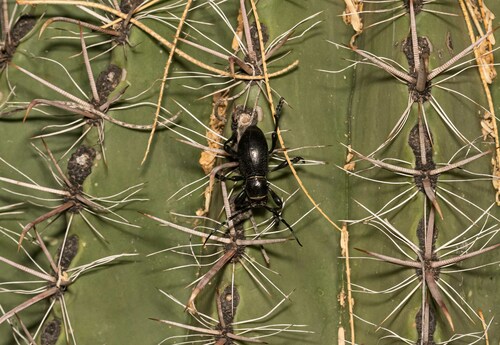
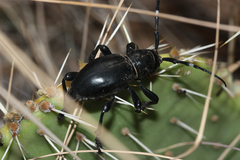
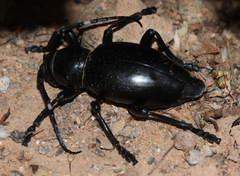
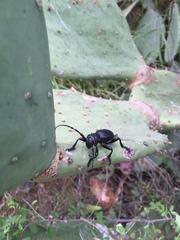
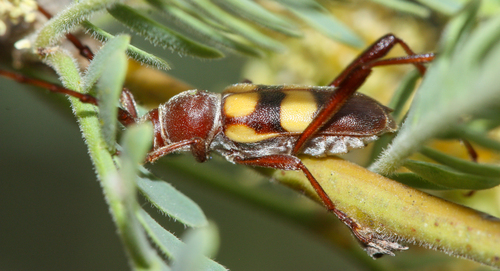
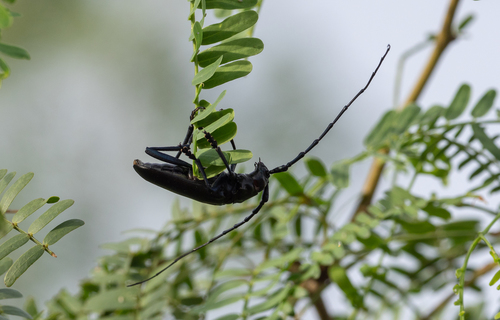
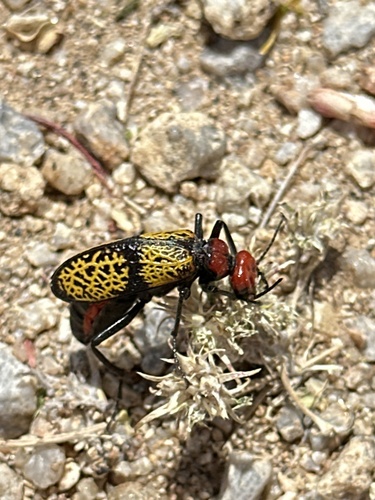
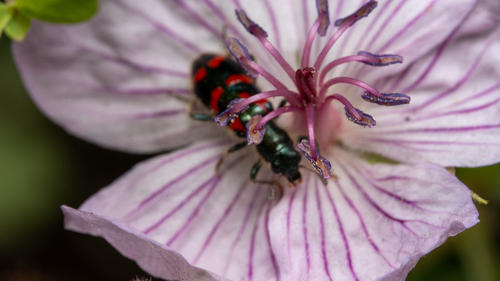
Giant Cactus Longhorn Beetle

Giant Cactus Longhorn Beetle

Moneilema gigas

Daily sighting probability ~20% · Possible
at Saguaro National Park

In 3 days ~40% in a week ~70%

98 Verified sightings at Saguaro National Park From 2019 to 2026
98 In 1 park
October Best month
🌅 Crepuscular When it's spotted

About the Giant Cactus Longhorn Beetle

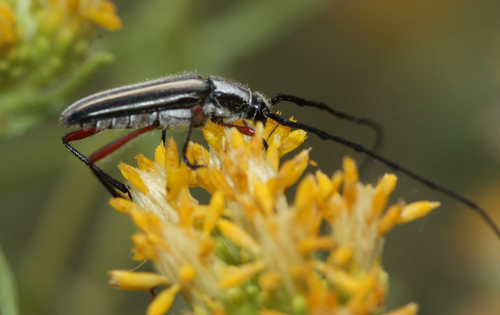
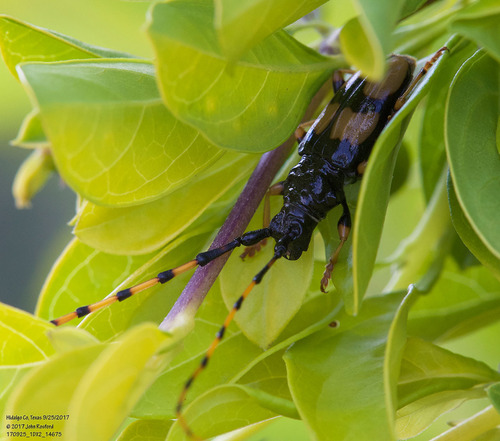
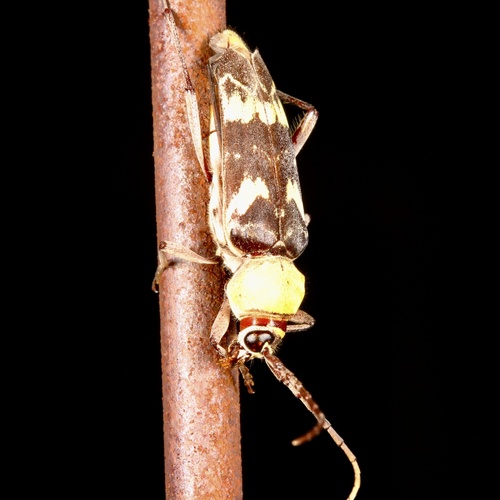
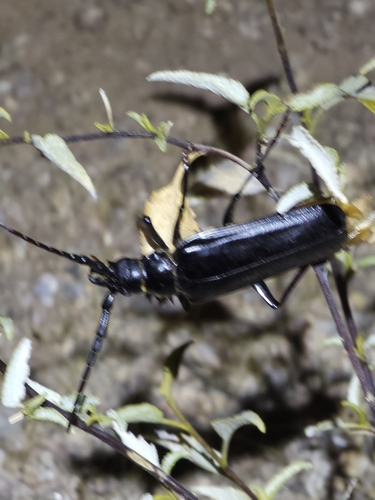
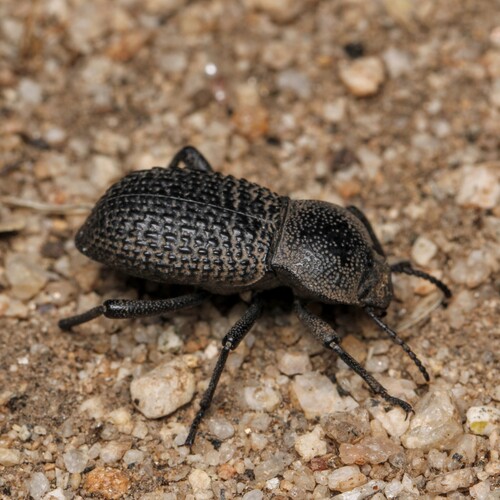
Moneilema gigas is a large, flightless, black beetle native to the Sonoran desert at elevations below 1500 metres. The front wings are fused forming a single, hardened shell. Collectively—with 19 other Moneilema species—M. gigas is also known as the cactus longhorn beetle.

Moneilema gigas normally feeds on chollas and prickly pear cacti, and is known to feed on saguaro seedlings. Larvae bore into cactus roots and stems, sometimes killing more susceptible individuals. Adults also feed on the surface of cacti. M. gigas are most active during mid or late summer—the adults typically emerging during the summer monsoon season.

Like many flightless beetles, these beetles have limited wing musculature with a rounded abdomen and thorax, similar in appearance to a number of other flightless desert beetles. Cactus longhorn beetles resemble and mimic the behavior of noxious stink beetles in the genus Eleodes. Wikipedia →

Global Distribution

Parks Where Found

# Park Country Daily sighting probability
1 Saguaro National Park 🇺🇸 United States
~20%

More parks will be added in future updates.

Before you go

What are the chances of seeing a Giant Cactus Longhorn Beetle in Saguaro National Park?

Possible

About 20% of wildlife watchers report a Giant Cactus Longhorn Beetle sighting in Saguaro National Park on a given day, based on 98 verified sightings from GBIF citizen-science data from 2019 to 2026. It is the 27th most-seen of the 354 insects we can rate there. Over three days the chance rises to about 40%, and over a week to about 70%, if each day is a fresh chance.

When is the best time to see a Giant Cactus Longhorn Beetle in Saguaro National Park?

October

In that month about 30% of wildlife watchers report a Giant Cactus Longhorn Beetle in Saguaro National Park on a given day, against about 10% in November to May, the lowest months. That is one of Saguaro National Park's driest months, with about 15 mm of rain against 55 mm in July.

What time of day is best to see a Giant Cactus Longhorn Beetle?

Between 6 and 9 pm

Across all the parks we cover, that three-hour window holds the most Giant Cactus Longhorn Beetle sightings with a recorded time, and about 6 in 10 of them come between 6 pm and 6 am: it is most active around dawn and dusk.

Where else can you see a Giant Cactus Longhorn Beetle?

Only Saguaro National Park, in our data

Saguaro National Park is the only park on Wallace's Line with enough records to rate Giant Cactus Longhorn Beetle sightings: about 20% of wildlife watchers there report one on a given day.

Which relatives of the Giant Cactus Longhorn Beetle live in Saguaro National Park?

Same family: Cerambycidae

The closest relatives of the Giant Cactus Longhorn Beetle that you can see in Saguaro National Park (family Cerambycidae, Longhorn Beetles) are Double-Banded Bycid (about 10%) and Long-Jawed Longhorn Beetle (about 10%), with each one's daily chance of a sighting.

Where does the Giant Cactus Longhorn Beetle sighting chance come from?

GBIF citizen-science records

It is estimated from how often the Giant Cactus Longhorn Beetle is recorded against all the insects logged in Saguaro National Park (98 verified sightings from 2019 to 2026), calibrated against known sighting rates. Figures are rounded to the nearest 10% because citizen-science data supports honest approximations, not decimals, and months with records from fewer than five people show "—". How it works.

← Back to Saguaro National Park