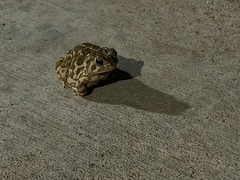
Great Plains Toad

Great Plains Toad

Anaxyrus cognatus

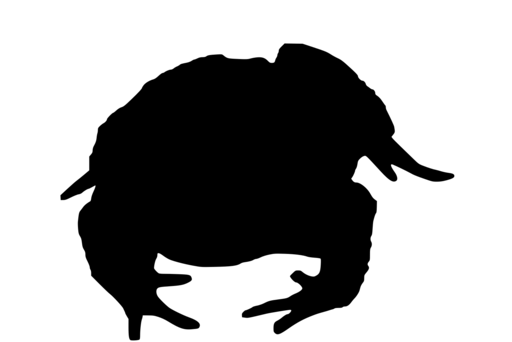
Silhouette: Michael Scroggie, from original photograph by Gary M. Stolz, USFWS (original photograph in public domain). · PhyloPic

LCLeast ConcernNTVUENCR
Daily sighting probability ~10% · With luck
at Saguaro National Park

In 3 days ~10% in a week ~30%

9 Verified sightings at Saguaro National Park From 2019 to 2026
34 In all 2 parks
July Best month
🌙 Nocturnal When it's spotted

About the Great Plains Toad

The Great Plains toad (Anaxyrus cognatus) is a relatively large species of true toad native to central North America. The amphibian is native throughout the Canadian Prairies (northern Great Plains) in southern Alberta, Manitoba, and Saskatchewan; and into northern Mexico in the Sonoran Desert and Mexican Plateau.

The Great Plains toad is grey, brown, and green in color, with darker colored blotching. It can grow to anywhere between 5.1 and 11.4 cm (2 and 4.5 in) in length. Its primary diet is various species of cutworms. It prefers grassland habitat with loose soil that is easy to burrow in. Breeding occurs throughout the spring and summer months, most often immediately after heavy rainfall. In dry areas it may only emerge from its burrow for a few weeks when conditions are right, and usually at night, but in areas with permanent water bodies and abundant rain it may be active all day. Its mating call is a very loud, harsh chirping noise repeated many times, very fast.

The great plains toad feeds a range of insects such as lepidopterans, dipterans, hymenopterans, coleopterans, ants, and termites. The toad is preyed upon by the plains... Wikipedia →

Sounds

Recording0:12

United States · 2025

© Carl · iNaturalist · CC BY-NC 4.0

Recording0:24

United States · 2017

© Chris Harrison · iNaturalist · CC BY-NC 4.0

Recording0:12

United States · 2024

© John Van Veldhuizen · iNaturalist · CC BY-NC 4.0

Global Distribution

Parks Where Found

# Park Country Daily sighting probability
1 Badlands National Park 🇺🇸 United States
~30%
2 Saguaro National Park 🇺🇸 United States
~10%

Cities Where Found

# City Country Daily sighting probability
1 Phoenix 🇺🇸 United States
<5%

Zoos & Centres Where Found

# Zoo / Centre Country
1 Phoenix Zoo 🇺🇸 United States In captivity
2 Detroit Zoo 🇺🇸 United States In captivity
3 Oklahoma City Zoo and Botanical Garden 🇺🇸 United States In captivity
4 Arizona-Sonora Desert Museum 🇺🇸 United States In captivity

Before you go

What are the chances of seeing a Great Plains Toad in Saguaro National Park?

With luck

About 10% of wildlife watchers report a Great Plains Toad sighting in Saguaro National Park on a given day, based on 9 verified sightings from GBIF citizen-science data from 2019 to 2026. It is the 7th most-seen of the 7 amphibians we can rate there. Over three days the chance rises to about 10%, and over a week to about 30%, if each day is a fresh chance.

When is the best time to see a Great Plains Toad in Saguaro National Park?

May to September

In those months about 10% of wildlife watchers report a Great Plains Toad in Saguaro National Park on a given day, against under 5% in October to April, the lowest months.

What time of day is best to see a Great Plains Toad?

Between 8 and 11 pm

Across all the parks we cover, that three-hour window holds the most Great Plains Toad sightings with a recorded time, and about 7 in 10 of them come between 6 pm and 6 am: it is mostly seen at night.

Is Saguaro National Park the best place to see a Great Plains Toad?

2nd of 2

Of the 2 parks where we can rate Great Plains Toad sightings, Saguaro National Park ranks 2nd at about 10%. The best odds are in Badlands National Park (United States, about 30%).

Where does the Great Plains Toad sighting chance come from?

GBIF citizen-science records

It is estimated from how often the Great Plains Toad is recorded against all the amphibians logged in Saguaro National Park (9 verified sightings from 2019 to 2026), calibrated against known sighting rates. Figures are rounded to the nearest 10% because citizen-science data supports honest approximations, not decimals, and months with records from fewer than five people show "—". How it works.

← Back to Saguaro National Park