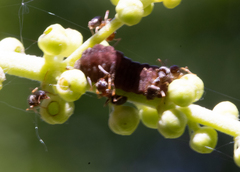
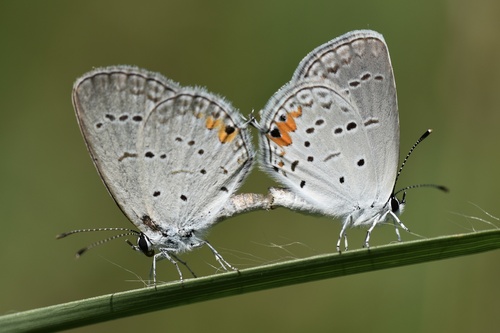
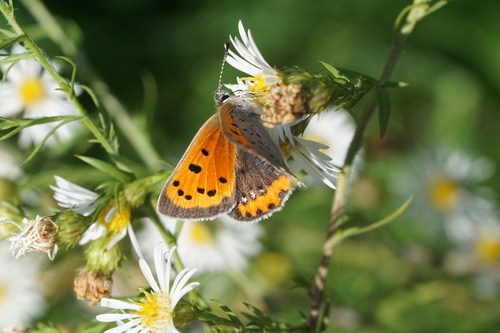
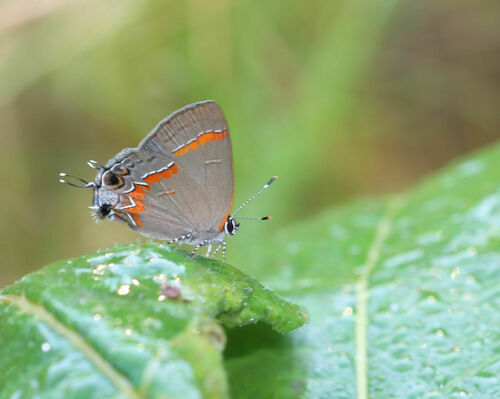
Appalachian Azure

Appalachian Azure

Celastrina neglectamajor

Daily sighting probability ~10% · With luck
at Shenandoah National Park

In 3 days ~10% in a week ~30%

8 Verified sightings at Shenandoah National Park From 2019 to 2026
8 In 1 park
May Best month
☀️ Diurnal When it's spotted

About the Appalachian Azure

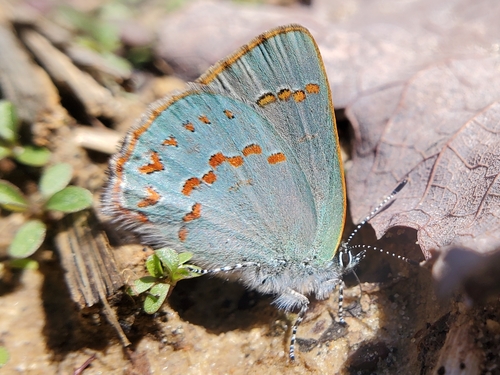
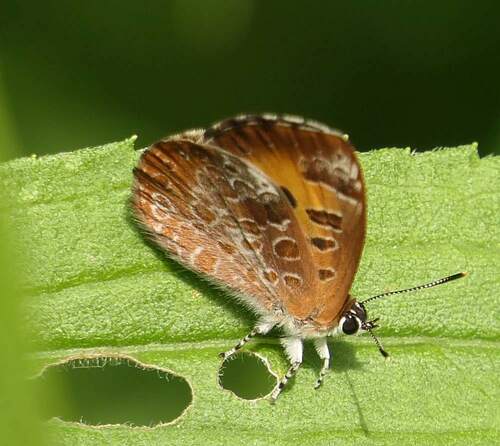
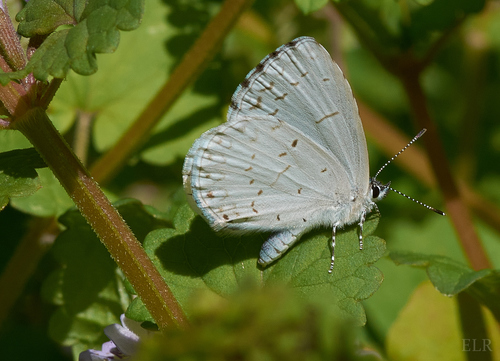
The Appalachian azure (Celastrina neglectamajor) is a butterfly in the gossamer wings family Lycaenidae. The male is light blue on the upperwing with a narrow, dark line running along the edge of the forewing. The underwing is chalky white and is dotted with small, pale dark spots. The very back of the hindwing has a row of dark spots running along the edge and contained by a faint zigzagging band. Females are similar to the males but have broad dark wing borders instead of the male's narrow ones. The adult butterfly has a 1.1–1.4-inch (2.8–3.6 cm) wingspan. It is the largest azure in the area.

The Appalachian azure is found throughout the central and southern Appalachian Mountains from Pennsylvania to Georgia and has a few isolated records from Missouri, Kentucky, and Ohio. It lives in moist deciduous woodlands with plenty of shade and streamsides near these forests. Males often gather in groups near mud puddles by these streamsides. The species is listed as endangered in Connecticut.

The adult butterflies only lay one set of eggs. The azure's eggs are laid singly on the flower buds of a host plant, though several eggs may be on the same plant. The eggs are a pale green. The larvae range in coloration from a yellowish green in the early stages of life to a reddish brown. They typically have an incomplete dark dorsal band and the greener caterpillars may have pale white markings. The Appalachian azure's larvae are specialists, living on and only eating the flowers of the black cohosh (Actaea racemosa).

The adult azure typically lives for a few weeks from mid-May to late June. It is temporally separated from similar species of azure in its range by living as a butterfly after the similar spring azure but before the summer azure.

The scientific name neglecta-major was coined in 1908 by Tutt as a 'form', describing the late spring generation of Celastrina argiolus pseudargiolus. In their authoritative monograph on the Lycaenopsis group of Polyommatine genera, Eliot & Kawazoe treated pseudargiolus as a synonym of ladon, Cramer, 1780. Thus the according to neglectamajor of specific status is very doubtful.

Although this species is not threatened with extinction, its habitat may be threatened by the spread of the garlic mustard (Alliaria officinalis). Additionally, black cohosh is being harvested from the wild for use as a dietary supplement. Wild harvesting of medicinal plants can lead to low numbers of those plants. Wikipedia →
Global Distribution

Parks Where Found

# Park Country Daily sighting probability
1 Shenandoah National Park 🇺🇸 United States
~10%

More parks will be added in future updates.

Before you go

What are the chances of seeing an Appalachian Azure in Shenandoah National Park?

With luck

About 10% of wildlife watchers report an Appalachian Azure sighting in Shenandoah National Park on a given day, based on 8 verified sightings from GBIF citizen-science data from 2019 to 2026. It is the 447th most-seen of the 723 insects we can rate there. Over three days the chance rises to about 10%, and over a week to about 30%, if each day is a fresh chance.

When is the best time to see an Appalachian Azure in Shenandoah National Park?

May and June

In those months about 10% of wildlife watchers report an Appalachian Azure in Shenandoah National Park on a given day, against under 5% in July to April, the lowest months.

What time of day is best to see an Appalachian Azure?

Between 11 am and 2 pm

Across all the parks we cover, that three-hour window holds the most Appalachian Azure sightings with a recorded time, and nearly all of them come between 6 am and 6 pm: it is a daytime animal.

Where else can you see an Appalachian Azure?

Only Shenandoah National Park, in our data

Shenandoah National Park is the only park on Wallace's Line with enough records to rate Appalachian Azure sightings: about 10% of wildlife watchers there report one on a given day.

Which relatives of the Appalachian Azure live in Shenandoah National Park?

Same family: Lycaenidae

The closest relatives of the Appalachian Azure that you can see in Shenandoah National Park (family Lycaenidae, Gossamer-winged Butterflies) are Elkalyce comyntas (about 20%), American Copper (about 20%) and Cyaniris neglecta (about 10%), with each one's daily chance of a sighting.

Where does the Appalachian Azure sighting chance come from?

GBIF citizen-science records

It is estimated from how often the Appalachian Azure is recorded against all the insects logged in Shenandoah National Park (8 verified sightings from 2019 to 2026), calibrated against known sighting rates. Figures are rounded to the nearest 10% because citizen-science data supports honest approximations, not decimals, and months with records from fewer than five people show "—". How it works.

← Back to Shenandoah National Park