Torpedo Bug

Torpedo Bug

Siphanta acuta

Daily sighting probability <5% · Rare
at Table Mountain National Park

In 3 days ~10% in a week ~30%

23 Verified sightings at Table Mountain National Park From 2019 to 2026
79 In all 3 parks
January Best month
☀️🌙 Day & Night When it's spotted

About the Torpedo Bug

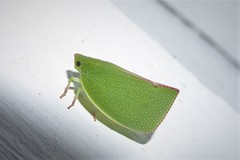
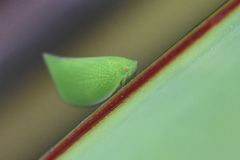
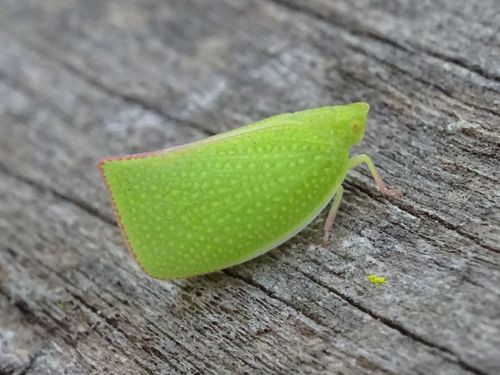
Siphanta acuta is a species of planthopper in the family Flatidae; this species is native to Australia, but is now found in various other parts of the world. About 10 mm long, they resemble small leaves and are generally found in trees. Its common names are the green planthopper or leaf bug (in Australia and New Zealand), and the torpedo bug (in Hawaii).

Adult Siphanta acuta are large-winged (as are other members of the family Flatidae) and bright green. Their wings are triangular, sharply pointed at the tip, and sit held like a steep roof. Their wings project behind the end of their abdomen and almost reach the ground. Most of their body is concealed. A pointed head and distal segments of front and middle legs (sometimes tarsus of hind legs) are visible.

The body length of mature green planthoppers is around 9.3 mm. They have two pairs of wings, three pairs of legs, one pair of antennae, and compound eyes on either side of their head. They have piercing/sucking mouthparts and females have an ovipositor at the end of the abdomen.

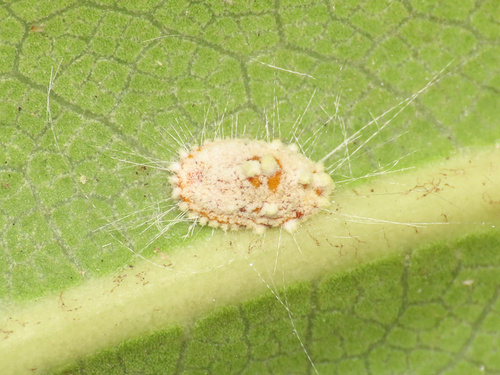
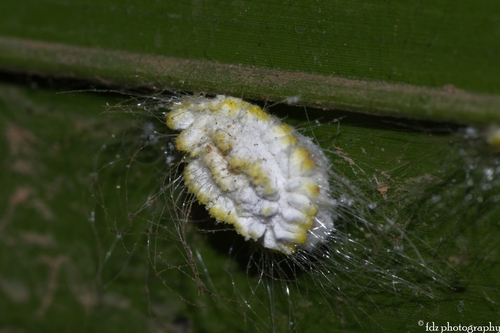
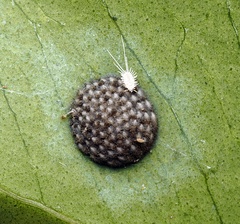
Nymphs of Siphanta acuta are white with a pair of waxy filaments either side of the sixth abdominal segment, with two long tufts at the... Wikipedia →
Global Distribution

Parks Where Found

# Park Country Daily sighting probability
1 Egmont National Park 🇳🇿 New Zealand
~20%
2 Garden Route National Park 🇿🇦 South Africa
~10%
3 Table Mountain National Park 🇿🇦 South Africa
<5%

Cities Where Found

# City Country Daily sighting probability
1 Auckland 🇳🇿 New Zealand
~10%
2 Johannesburg 🇿🇦 South Africa
~10%
3 San Francisco 🇺🇸 United States
~10%
4 Los Angeles 🇺🇸 United States
~10%
5 Pretoria 🇿🇦 South Africa
<5%
6 San Diego 🇺🇸 United States
<5%
7 Lisbon 🇵🇹 Portugal
<5%
8 Cape Town 🇿🇦 South Africa
<5%

Before you go

What are the chances of seeing a Torpedo Bug in Table Mountain National Park?

Rare

Under 5% of wildlife watchers report a Torpedo Bug sighting in Table Mountain National Park on a given day, based on 23 verified sightings from GBIF citizen-science data from 2019 to 2026. It is the 138th most-seen of the 344 insects we can rate there. Over three days the chance rises to about 10%, and over a week to about 30%, if each day is a fresh chance.

When is the best time to see a Torpedo Bug in Table Mountain National Park?

January

In that month about 10% of wildlife watchers report a Torpedo Bug in Table Mountain National Park on a given day, against under 5% in February to December, the lowest months. That is one of Table Mountain National Park's driest months, with about 20 mm of rain against 110 mm in June.

What time of day is best to see a Torpedo Bug?

Between 6 and 9 pm

Across all the parks we cover, that three-hour window holds the most Torpedo Bug sightings with a recorded time, and about 6 in 10 of them come between 6 am and 6 pm: it is seen both by day and at night.

Is Table Mountain National Park the best place to see a Torpedo Bug?

3rd of 3

Of the 3 parks where we can rate Torpedo Bug sightings, Table Mountain National Park ranks 3rd at under 5%. The best odds are in Egmont National Park (New Zealand, about 20%) and Garden Route National Park (South Africa, about 10%).

Which relatives of the Torpedo Bug live in Table Mountain National Park?

Same order: Hemiptera

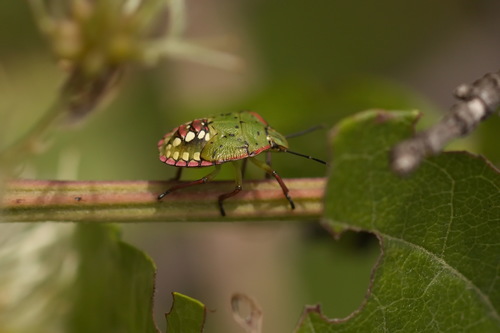
The closest relatives of the Torpedo Bug that you can see in Table Mountain National Park (order Hemiptera, True Bugs, Hoppers, Aphids, and allies) are Common Tip Wilter (about 10%), Brown Stink Bug (about 10%) and Cottony Cushion Scale (about 10%), with each one's daily chance of a sighting.

Where does the Torpedo Bug sighting chance come from?

GBIF citizen-science records

It is estimated from how often the Torpedo Bug is recorded against all the insects logged in Table Mountain National Park (23 verified sightings from 2019 to 2026), calibrated against known sighting rates. Figures are rounded to the nearest 10% because citizen-science data supports honest approximations, not decimals, and months with records from fewer than five people show "—". How it works.

← Back to Table Mountain National Park