East African Spring-hare

East African Spring-hare

Pedetes surdaster

Silhouette: Margot Michaud · PhyloPic

LCLeast ConcernNTVUENCR
Daily sighting probability ~10% · With luck
at Tarangire National Park

In 3 days ~30% in a week ~60%

5 Verified sightings at Tarangire National Park From 2019 to 2026
5 In 1 park
November Best month
🌙 Nocturnal When it's spotted

About the East African Spring-hare

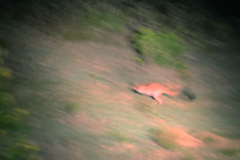
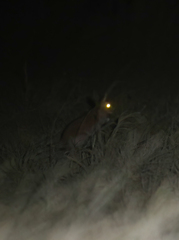
The East African springhare (Pedetes surdaster) is an African mammal found in Kenya and Tanzania that is closely related to the South African springhare. It is a member of the Pedetidae, a rodent family, and resembles a small kangaroo.

Pedetes surdaster was recognised by Matthee and Robinson in 1997 as a species distinct from the southern African springhare (P. capensis) based on genetic, morphological, and ethological differences. P. capensis from South Africa has fewer chromosomes (2n= 38) than does P. surdaster which has (2n = 40) and some other genetic variations. The species was confirmed by Dieterlen in 2005.

Unlike P. capensis, the second and third cervical vertebrae are fused in this species. This species is found in central and southern Kenya and most of Tanzania. A single specimen has been recorded in Uganda near the Kenya border, at Mount Moroto. It is found from sea level up to an altitude over 2,000 m.

The East African springhare resembles a small kangaroo (a marsupial in the family Macropodidae of Oceania), and is about the size of a rabbit (Oryctolagus cuniculus). It is mid-brown, has large erect ears, very short... Wikipedia →

Global Distribution

Parks Where Found

# Park Country Daily sighting probability
1 Tarangire National Park 🇹🇿 Tanzania
~10%

More parks will be added in future updates.

Before you go

What are the chances of seeing an East African Spring-hare in Tarangire National Park?

With luck

About 10% of wildlife watchers report an East African Spring-hare sighting in Tarangire National Park on a given day, based on 5 verified sightings from GBIF citizen-science data from 2019 to 2026. It is the 30th most-seen of the 33 mammals we can rate there. Over three days the chance rises to about 30%, and over a week to about 60%, if each day is a fresh chance.

When is the best time to see an East African Spring-hare in Tarangire National Park?

February, June, August and October–November

In those months about 20% of wildlife watchers report an East African Spring-hare in Tarangire National Park on a given day, against under 5% in March–May, July, September and December–January, the lowest months.

What time of day is best to see an East African Spring-hare?

Between 7 and 10 pm

Across all the parks we cover, that three-hour window holds the most East African Spring-hare sightings with a recorded time, and about 7 in 10 of them come between 6 pm and 6 am: it is mostly seen at night.

Where else can you see an East African Spring-hare?

Only Tarangire National Park, in our data

Tarangire National Park is the only park on Wallace's Line with enough records to rate East African Spring-hare sightings: about 10% of wildlife watchers there report one on a given day.

Which relatives of the East African Spring-hare live in Tarangire National Park?

Same order: Rodentia

The closest relatives of the East African Spring-hare that you can see in Tarangire National Park (order Rodentia, Rodents) are Unstriped Ground Squirrel (about 40%) and Ochre Bush Squirrel (about 30%), with each one's daily chance of a sighting.

Where does the East African Spring-hare sighting chance come from?

GBIF citizen-science records

It is estimated from how often the East African Spring-hare is recorded against all the mammals logged in Tarangire National Park (5 verified sightings from 2019 to 2026), calibrated against known sighting rates. Figures are rounded to the nearest 10% because citizen-science data supports honest approximations, not decimals, and months with records from fewer than five people show "—". How it works.

← Back to Tarangire National Park