Sudan Mabuya

Sudan Mabuya

Trachylepis brevicollis

Silhouette: David Orr · PhyloPic

LCLeast ConcernNTVUENCR
Daily sighting probability ~10% · With luck
at Tarangire National Park

In 3 days ~30% in a week ~60%

5 Verified sightings at Tarangire National Park From 2019 to 2026
5 In 1 park
January Best month
☀️ Diurnal When it's spotted

About the Sudan Mabuya

Trachylepis brevicollis, the short-necked skink or Sudan mabuya, is a species of skink in the family Scincidae. It is distributed across northeastern and eastern Africa and the southern Arabian Peninsula. The species was originally described by Wiegmann in 1837 as Euprepes brevicollis.

It was later placed in the genus Mabuya before being transferred to the genus Trachylepis following taxonomic revision of African mabuyine skinks. The specific epithet brevicollis is derived from Latin, meaning “short-necked”, referring to the species’ relatively stout neck.

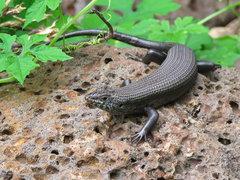
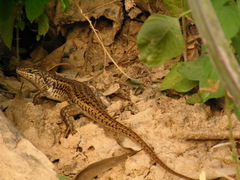
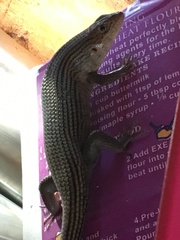
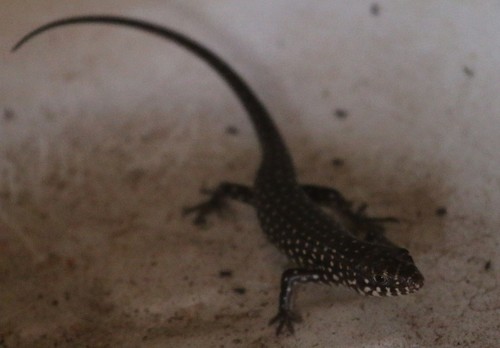
Trachylepis brevicollis is a relatively large and robust skink, reaching a snout–vent length of approximately 140 mm. The body is cylindrical with well-developed limbs. Dorsal and lateral scales are strongly keeled, often with double keels, giving the skin a rough texture. The neck is not particularly short, but the head is short and broad with five supralabial scales anterior to the eye, and the first supraocular scale contacts the frontal scale. The eye is large with a round pupil. The tail is about half the skink's total length and is stout at its base.

Adult size may reach up to... Wikipedia →
Global Distribution

Parks Where Found

# Park Country Daily sighting probability
1 Tarangire National Park 🇹🇿 Tanzania
~10%

More parks will be added in future updates.

Before you go

What are the chances of seeing a Sudan Mabuya in Tarangire National Park?

With luck

About 10% of wildlife watchers report a Sudan Mabuya sighting in Tarangire National Park on a given day, based on 5 verified sightings from GBIF citizen-science data from 2019 to 2026. It is the 8th most-seen of the 9 reptiles we can rate there. Over three days the chance rises to about 30%, and over a week to about 60%, if each day is a fresh chance.

When is the best time to see a Sudan Mabuya in Tarangire National Park?

January

In that month about 30% of wildlife watchers report a Sudan Mabuya in Tarangire National Park on a given day, against under 5% in March–September and December, the lowest months.

What time of day is best to see a Sudan Mabuya?

Between 8 and 11 am

Across all the parks we cover, that three-hour window holds the most Sudan Mabuya sightings with a recorded time, and about 8 in 10 of them come between 6 am and 6 pm: it is a daytime animal.

Where else can you see a Sudan Mabuya?

Only Tarangire National Park, in our data

Tarangire National Park is the only park on Wallace's Line with enough records to rate Sudan Mabuya sightings: about 10% of wildlife watchers there report one on a given day.

Where does the Sudan Mabuya sighting chance come from?

GBIF citizen-science records

It is estimated from how often the Sudan Mabuya is recorded against all the reptiles logged in Tarangire National Park (5 verified sightings from 2019 to 2026), calibrated against known sighting rates. Figures are rounded to the nearest 10% because citizen-science data supports honest approximations, not decimals, and months with records from fewer than five people show "—". How it works.

← Back to Tarangire National Park