Kikuchi Habu

Kikuchi Habu

Trimeresurus gracilis

Silhouette: Steven Traver · PhyloPic

LCLeast ConcernNTVUENCR Endemic
Daily sighting probability ~10% · With luck
at Taroko National Park

In 3 days ~40% in a week ~70%

10 Verified sightings at Taroko National Park From 2019 to 2026
10 In 1 park
August Best month
☀️ Diurnal When it's spotted

About the Kikuchi Habu

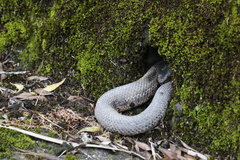
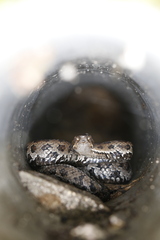
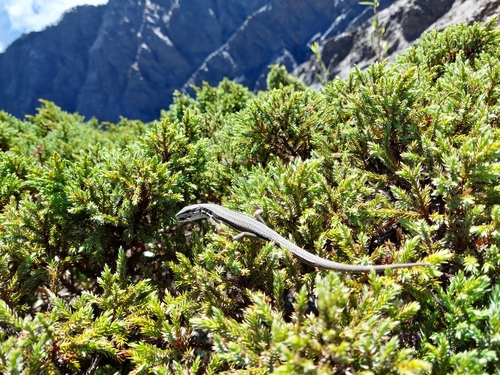
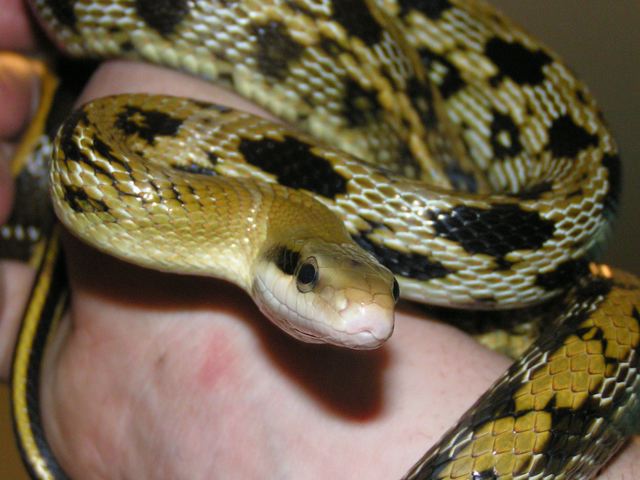
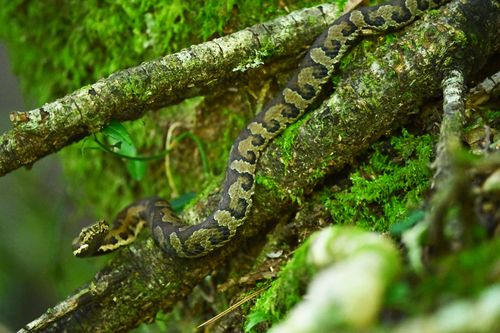
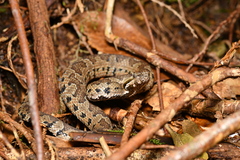
Trimeresurus gracilis, commonly known as the Taiwan pit viper or Taiwan mountain pitviper, is a venomous pit viper species endemic to Taiwan. No subspecies are currently recognized. The species is known as kikushi habu in Japanese.

Trimeresurus gracilis is a small snake with a total length up to 60 cm (24 in). Scalation includes 19 (or 21) rows of dorsal scales at midbody, 144–149 ventral scales, 43–53 subcaudal scales, and 7–8 supralabial scales. It is found only in Taiwan, above 2,000 m (6,600 ft) above sea level. The type locality given is "Mt. Noko, Nanto". According to Zhao and Adler (1993), this would be "Mt. Nôkô, Nanto Co., central Formosa" (Mount Nengkaoshan, Nantou County, Taiwan).

In a study were results that negated a commonly believed inference relating to the close affinity of T. monticola and T. okinawensis, and also suggested a sister relationship between T. okinawensis and T. gracilis. Phylogenetic relationships revealed in this study suggested that the genus Trimeresurus dispersed into the Ryukyu region at least three times, and that T. flavoviridis and T. tularensis from the central Ryukyus used to be more widespread and diverse... Wikipedia →
Global Distribution

Parks Where Found

# Park Country Daily sighting probability
1 Taroko National Park 🇹🇼 Taiwan
~10%

More parks will be added in future updates.

Zoos & Centres Where Found

# Zoo / Centre Country
1 Zoológico Miguél Álvarez del Toro 🇲🇽 Mexico In captivity

Before you go

What are the chances of seeing a Kikuchi Habu in Taroko National Park?

With luck

About 10% of wildlife watchers report a Kikuchi Habu sighting in Taroko National Park on a given day, based on 10 verified sightings from GBIF citizen-science data from 2019 to 2026. It is the 9th most-seen of the 14 reptiles we can rate there. Over three days the chance rises to about 40%, and over a week to about 70%, if each day is a fresh chance.

When is the best time to see a Kikuchi Habu in Taroko National Park?

August

In that month about 30% of wildlife watchers report a Kikuchi Habu in Taroko National Park on a given day, against under 5% in October to May, the lowest months.

What time of day is best to see a Kikuchi Habu?

Between 9 am and noon

Across all the parks we cover, that three-hour window holds the most Kikuchi Habu sightings with a recorded time, and about 9 in 10 of them come between 6 am and 6 pm: it is a daytime animal.

Where else can you see a Kikuchi Habu?

Only Taroko National Park, in our data

Taroko National Park is the only park on Wallace's Line with enough records to rate Kikuchi Habu sightings: about 10% of wildlife watchers there report one on a given day.

Where does the Kikuchi Habu sighting chance come from?

GBIF citizen-science records

It is estimated from how often the Kikuchi Habu is recorded against all the reptiles logged in Taroko National Park (10 verified sightings from 2019 to 2026), calibrated against known sighting rates. Figures are rounded to the nearest 10% because citizen-science data supports honest approximations, not decimals, and months with records from fewer than five people show "—". How it works.

← Back to Taroko National Park