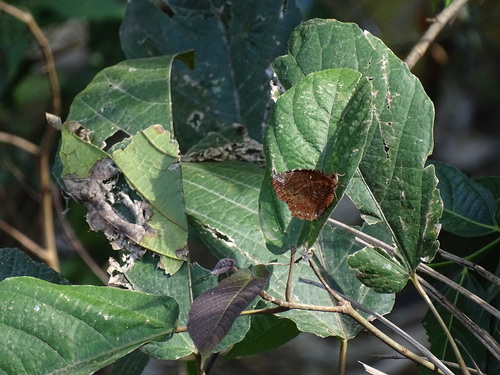
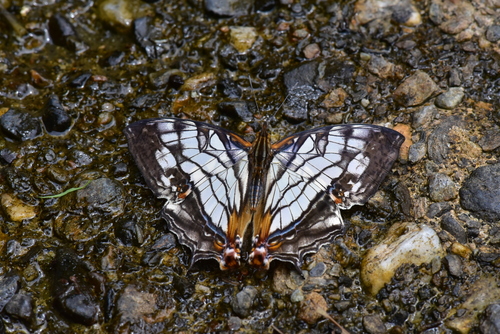
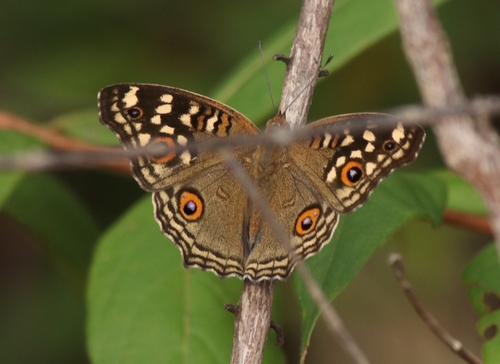
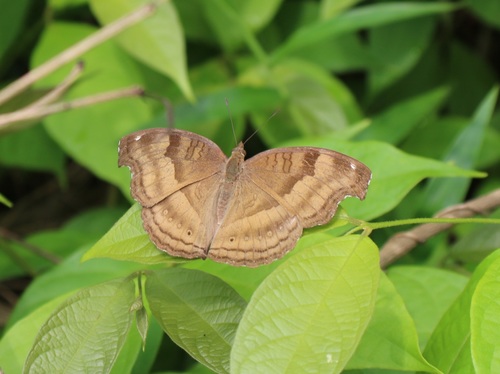
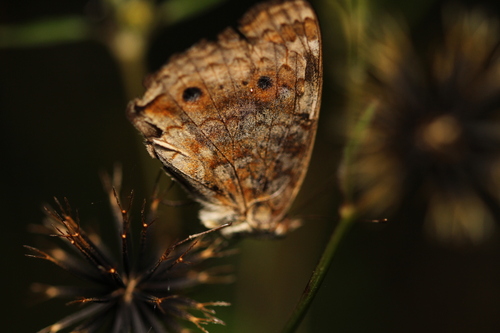
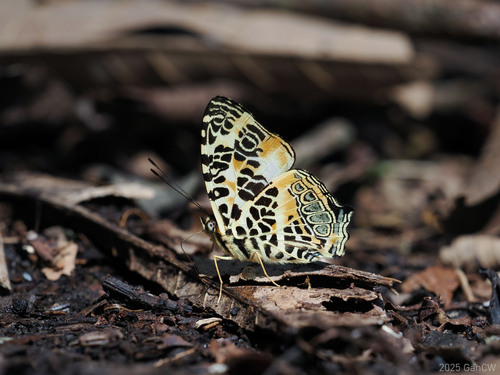
Scarce Tortoiseshell

Scarce Tortoiseshell

Nymphalis xanthomelas

Daily sighting probability ~10% · With luck
at Taroko National Park

In 3 days ~30% in a week ~60%

14 Verified sightings at Taroko National Park From 2019 to 2026
20 In all 2 parks
June Best month
☀️ Diurnal When it's spotted

About the Scarce Tortoiseshell

Nymphalis xanthomelas, the scarce tortoiseshell, is a species of nymphalid butterfly found in eastern Europe and Asia. This butterfly is also referred as yellow-legged tortoiseshell or large tortoiseshell (however, in Europe, "large tortoiseshell" is usually reserved for Nymphalis polychloros).

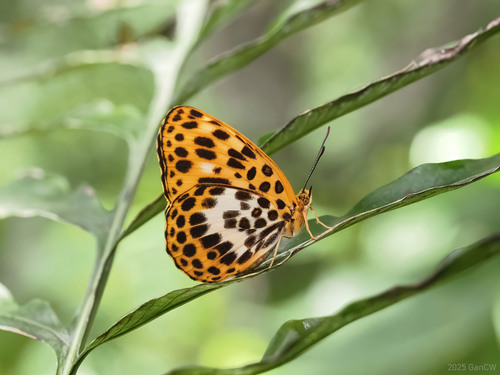
Upperside rich orange yellow, forewing has costal margin dusky black on the basal half flecked with brown; two oval black spots in cell, a quadrate subcostal black patch just beyond the discocellulars, a second more oblique irregular black patch beyond this, and three large oval discal black spots, with a smaller dusky patch beyond the lowest spot. Hindwing uniform, with a large subcostal black patch. Forewings and hindwings with a common sinuous transverse subterminal black band, and a terminal dusky band flecked with golden brown; the black subterminal band on the hindwing with an outer border of blue lunules margined outwardly by a slender black line; the forewing just below the costa, between the black patches beyond the cell and between the outer black patch and subterminal band, prominently pale yellow. In the female, an incomplete series of yellow lunules also borders... Wikipedia →

Global Distribution

Parks Where Found

# Park Country Daily sighting probability
1 Biebrza National Park 🇵🇱 Poland
~20%
2 Taroko National Park 🇹🇼 Taiwan
~10%

Cities Where Found

# City Country Daily sighting probability
1 Nizhny Novgorod 🇷🇺 Russia
~20%
2 Novosibirsk 🇷🇺 Russia
~10%
3 Moscow 🇷🇺 Russia
~10%
4 Kazan 🇷🇺 Russia
~10%
5 Nagoya 🇯🇵 Japan
~10%
6 Almaty 🇰🇿 Kazakhstan
~10%
7 Yekaterinburg 🇷🇺 Russia
~10%
8 Helsinki 🇫🇮 Finland
~10%
9 Saint Petersburg 🇷🇺 Russia
~10%
10 Kyiv 🇺🇦 Ukraine
<5%

Before you go

What are the chances of seeing a Scarce Tortoiseshell in Taroko National Park?

With luck

About 10% of wildlife watchers report a Scarce Tortoiseshell sighting in Taroko National Park on a given day, based on 14 verified sightings from GBIF citizen-science data from 2019 to 2026. It is the 135th most-seen of the 447 insects we can rate there. Over three days the chance rises to about 30%, and over a week to about 60%, if each day is a fresh chance.

When is the best time to see a Scarce Tortoiseshell in Taroko National Park?

June

In that month about 30% of wildlife watchers report a Scarce Tortoiseshell in Taroko National Park on a given day, against under 5% in March–April and August–January, the lowest months.

What time of day is best to see a Scarce Tortoiseshell?

Between 9 am and noon

Across all the parks we cover, that three-hour window holds the most Scarce Tortoiseshell sightings with a recorded time, and about 9 in 10 of them come between 6 am and 6 pm: it is a daytime animal.

Is Taroko National Park the best place to see a Scarce Tortoiseshell?

2nd of 2

Of the 2 parks where we can rate Scarce Tortoiseshell sightings, Taroko National Park ranks 2nd at about 10%. The best odds are in Biebrza National Park (Poland, about 20%).

Which relatives of the Scarce Tortoiseshell live in Taroko National Park?

Same family: Nymphalidae

The closest relatives of the Scarce Tortoiseshell that you can see in Taroko National Park (family Nymphalidae, Brush-footed Butterflies) are Yellow Emperor (about 40%), Common Palmfly (about 30%) and Common Mapwing (about 30%), with each one's daily chance of a sighting.

Where does the Scarce Tortoiseshell sighting chance come from?

GBIF citizen-science records

It is estimated from how often the Scarce Tortoiseshell is recorded against all the insects logged in Taroko National Park (14 verified sightings from 2019 to 2026), calibrated against known sighting rates. Figures are rounded to the nearest 10% because citizen-science data supports honest approximations, not decimals, and months with records from fewer than five people show "—". How it works.

← Back to Taroko National Park