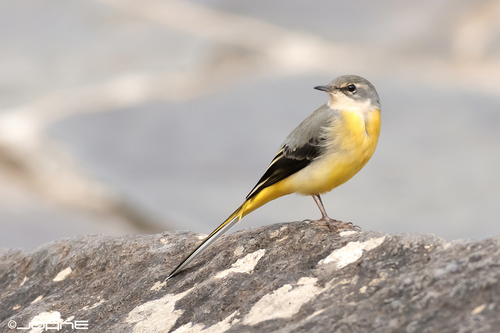
African Blue Tit

African Blue Tit

Cyanistes teneriffae

LCLeast ConcernNTVUENCR
Daily sighting probability ~30% · Possible
at Teno-Rasca Marine Strip (Tenerife)

In 3 days ~70% in a week ~90%

219 Verified sightings at Teno-Rasca Marine Strip (Tenerife) From 2019 to 2026
219 In 1 park
December Best month
☀️ Diurnal When it's spotted

About the African Blue Tit

The African blue tit (Cyanistes teneriffae) is a species of bird in the family Paridae. It is found in northern Africa, Pantelleria (Italy) and the Canary Islands (Spain). Its natural habitat is temperate forests. This species and the Eurasian blue tit were formerly considered conspecific. The status of this species has not been assessed because it is noted to be common on the islands of Tenerife and Gran Canaria. The species has been used in many research studies due to its island populations and relevance to evolutionary hypotheses.

The African blue tit is found in Northern Africa, Pantelleria and the Canary Islands. It is widespread on the Islands of Tenerife and Gran Canaria, but scarce in local populations on Fuerteventura and Lanzarote. The African blue tit ranges from 11–12 cm (4.3–4.7 in) in size. It is a small, sharp-billed, compact tit. The nominate race has a forehead and supercilium to centre of nape white, crown deep glossy blue, becoming blackish on the neck, with a blue dorsal and yellow ventral body. The song is a variable repetition of one or two notes.

The species is known to consume a variety of caterpillars. The diet...

Wikipedia →

Global Distribution

Parks Where Found

# Park Country Daily sighting probability
1 Teno-Rasca Marine Strip (Tenerife) 🇪🇸 Spain
~30%

More parks will be added in future updates.

Cities Where Found

# City Country Daily sighting probability
1 Rabat 🇲🇦 Morocco
~50%
2 Tunis 🇹🇳 Tunisia
~40%
3 Fez 🇲🇦 Morocco
~40%
4 Tangier 🇲🇦 Morocco
~30%
5 Algiers 🇩🇿 Algeria
~20%
6 Casablanca 🇲🇦 Morocco
~10%
7 Marrakesh 🇲🇦 Morocco
~10%

Before you go

What are the chances of seeing an African Blue Tit in Teno-Rasca Marine Strip (Tenerife)?

Possible

About 30% of wildlife watchers report an African Blue Tit sighting in Teno-Rasca Marine Strip (Tenerife) on a given day, based on 219 verified sightings from GBIF citizen-science data from 2019 to 2026. It is the 15th most-seen of the 70 birds we can rate there. Over three days the chance rises to about 70%, and over a week to about 90%, if each day is a fresh chance.

When is the best time to see an African Blue Tit in Teno-Rasca Marine Strip (Tenerife)?

April–May, August and December

In those months about 40% of wildlife watchers report an African Blue Tit in Teno-Rasca Marine Strip (Tenerife) on a given day, against about 20% in July, the lowest month.

What time of day is best to see an African Blue Tit?

Between 7 and 10 am

Across all the parks we cover, that three-hour window holds the most African Blue Tit sightings with a recorded time, and about 9 in 10 of them come between 6 am and 6 pm: it is a daytime animal.

Where else can you see an African Blue Tit?

Only Teno-Rasca Marine Strip (Tenerife), in our data

Teno-Rasca Marine Strip (Tenerife) is the only park on Wallace's Line with enough records to rate African Blue Tit sightings: about 30% of wildlife watchers there report one on a given day.

Which relatives of the African Blue Tit live in Teno-Rasca Marine Strip (Tenerife)?

Same order: Passeriformes

The closest relatives of the African Blue Tit that you can see in Teno-Rasca Marine Strip (Tenerife) (order Passeriformes, Perching Birds) are Canary Islands Chiffchaff (about 90%), Eurasian Blackbird (about 70%) and Spanish Sparrow (about 60%), with each one's daily chance of a sighting.

Where does the African Blue Tit sighting chance come from?

GBIF citizen-science records

It is estimated from how often the African Blue Tit is recorded against all the birds logged in Teno-Rasca Marine Strip (Tenerife) (219 verified sightings from 2019 to 2026), calibrated against known sighting rates. Figures are rounded to the nearest 10% because citizen-science data supports honest approximations, not decimals, and months with records from fewer than five people show "—". How it works.

← Back to Teno-Rasca Marine Strip (Tenerife)