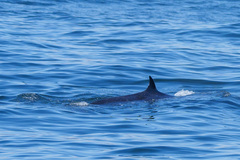
Bryde's Whale

Bryde's Whale

Balaenoptera edeni

Silhouette: Chris huh · PhyloPic

LCLeast ConcernNTVUENCR
Daily sighting probability ~10% · With luck
at Teno-Rasca Marine Strip (Tenerife)

In 3 days ~20% in a week ~50%

9 Verified sightings at Teno-Rasca Marine Strip (Tenerife) From 2019 to 2026
32 In all 3 parks
February Best month
☀️ Diurnal When it's spotted

About the Bryde's Whale

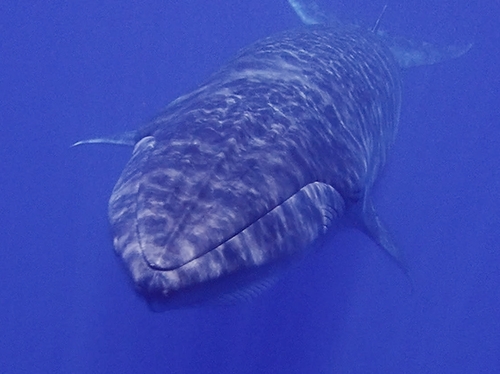
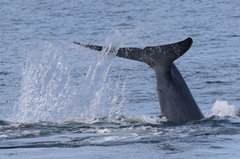
Bryde's whale ( BRUU-dəz), or the Bryde's whale complex, putatively comprises three species of rorqual and possibly four. The "complex" means the number and classification remain unclear because of a lack of definitive information and research. Also, a smaller, coastal form of B. brydei is found off southern Africa, and perhaps another form in the Indo-Pacific differs in skull morphology, tentatively referred to as the Indo-Pacific Bryde's whale. The recently described Omura's whale (B. omurai, Wada et al. 2003), was formerly thought to be a pygmy form of Bryde's, but is now recognized as a distinct species. Rice's whale (B. ricei), which makes its home solely in the Gulf of Mexico, was once considered a distinct population of Bryde's whale, but in 2021 it was described as a separate species.

B. brydei gets its specific and common name from Johan Bryde, Norwegian consul to South Africa, who helped establish the first modern whaling station in the country, while B. edeni gets its specific and common names from Sir Ashley Eden, former High Commissioner of Burma (Myanmar). Sittang whale refers to the type locality of the species.
Wikipedia →

Global Distribution

Parks Where Found

# Park Country Daily sighting probability
1 Teno-Rasca Marine Strip (Tenerife) 🇪🇸 Spain
~10%
2 Galápagos Islands 🇪🇨 Ecuador
<5%
3 Table Mountain National Park 🇿🇦 South Africa
<5%

Zoos & Centres Where Found

# Zoo / Centre Country
1 Samutprakarn Crocodile Farm & Zoo 🇹🇭 Thailand In captivity
2 Bangsaen Aquarium 🇹🇭 Thailand In captivity

Before you go

What are the chances of seeing a Bryde's Whale in Teno-Rasca Marine Strip (Tenerife)?

With luck

About 10% of wildlife watchers report a Bryde's Whale sighting in Teno-Rasca Marine Strip (Tenerife) on a given day, based on 9 verified sightings from GBIF citizen-science data from 2019 to 2026. It is the 5th most-seen of the 6 mammals we can rate there. Over three days the chance rises to about 20%, and over a week to about 50%, if each day is a fresh chance.

When is the best time to see a Bryde's Whale in Teno-Rasca Marine Strip (Tenerife)?

February

In that month about 20% of wildlife watchers report a Bryde's Whale in Teno-Rasca Marine Strip (Tenerife) on a given day, against under 5% in March, May–July and September–November, the lowest months. That is one of Teno-Rasca Marine Strip (Tenerife)'s wettest months, with about 40 mm of rain against almost none in July.

What time of day is best to see a Bryde's Whale?

Between 10 am and 1 pm

Across all the parks we cover, that three-hour window holds the most Bryde's Whale sightings with a recorded time, and about 9 in 10 of them come between 6 am and 6 pm: it is a daytime animal.

Is Teno-Rasca Marine Strip (Tenerife) the best place to see a Bryde's Whale?

Yes

Of the 3 parks where we can rate Bryde's Whale sightings, Teno-Rasca Marine Strip (Tenerife) has the highest daily chance: about 10%. Next come Galápagos Islands (Ecuador, under 5%) and Table Mountain National Park (South Africa, under 5%).

Which relatives of the Bryde's Whale live in Teno-Rasca Marine Strip (Tenerife)?

Same order: Cetacea

The closest relatives of the Bryde's Whale that you can see in Teno-Rasca Marine Strip (Tenerife) (order Cetacea) are Short-finned Pilot Whale (about 60%), Bottlenose Dolphin (about 20%) and Atlantic Spotted Dolphin (about 20%), with each one's daily chance of a sighting.

Where does the Bryde's Whale sighting chance come from?

GBIF citizen-science records

It is estimated from how often the Bryde's Whale is recorded against all the mammals logged in Teno-Rasca Marine Strip (Tenerife) (9 verified sightings from 2019 to 2026), calibrated against known sighting rates. Figures are rounded to the nearest 10% because citizen-science data supports honest approximations, not decimals, and months with records from fewer than five people show "—". How it works.

← Back to Teno-Rasca Marine Strip (Tenerife)