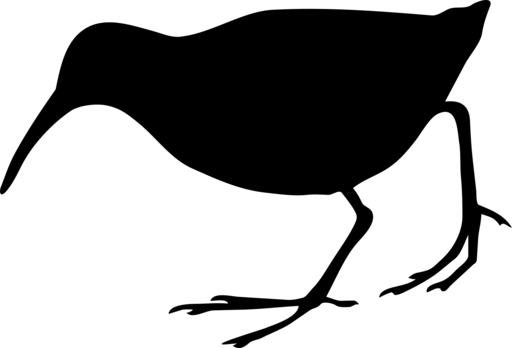
Austral Rail

Austral Rail

Rallus antarcticus

Silhouette: Ferran Sayol · PhyloPic

LCNTVUVulnerableENCR
Daily sighting probability ~10% · With luck
at Torres del Paine National Park

In 3 days ~30% in a week ~60%

144 Verified sightings at Torres del Paine National Park From 2019 to 2026
144 In 1 park
November Best month
🌅 Crepuscular When it's spotted

About the Austral Rail

The austral rail (Rallus antarcticus) is a Vulnerable species of bird in subfamily Rallinae of family Rallidae, the rails, gallinules, and coots. It is found in Argentina and Chile. Some authors have considered the austral rail as conspecific with the Virginia rail (R. limicola) but their treatment has not been widely accepted. The species is monotypic.

The austral rail is about 20 cm (7.9 in) long. Adults have dull brown upperparts with buff-edged black centers to the back feathers. Their face and throat are gray, their breast olive brown, and their flanks barred with black and white. Juveniles are similar with the addition of sooty tips on the breast feathers and a white throat.

The austral rail is patchily distributed in southern Chile's Magallanes Region and in southern Argentina between the departments of Río Negro and Santa Cruz. It formerly occurred as far north as Santiago, Chile, and Buenos Aires, Argentina. It has also been recorded as a vagrant on the Falkland Islands. It is found mostly near the coast where it inhabits wet fields and meadows, rushy lake shores, and reedbeds. Wikipedia →

Sounds

Call0:06

Chile · 2018

© Peter Boesman · XC450105 · CC BY-NC-ND 4.0

Song0:09

Chile · 2011

© Andrew Spencer · XC89443 · CC BY-NC-ND 2.5

Song0:13

Chile · 2008

© Nick Athanas · XC24431 · CC BY-NC-SA 3.0

Global Distribution

Parks Where Found

# Park Country Daily sighting probability
1 Torres del Paine National Park 🇨🇱 Chile
~10%

More parks will be added in future updates.

Before you go

What are the chances of seeing an Austral Rail in Torres del Paine National Park?

With luck

About 10% of wildlife watchers report an Austral Rail sighting in Torres del Paine National Park on a given day, based on 144 verified sightings from GBIF citizen-science data from 2019 to 2026. It is the 56th most-seen of the 106 birds we can rate there. Over three days the chance rises to about 30%, and over a week to about 60%, if each day is a fresh chance.

When is the best time to see an Austral Rail in Torres del Paine National Park?

November

In that month about 20% of wildlife watchers report an Austral Rail in Torres del Paine National Park on a given day, against under 5% in February–April and June, the lowest months.

What time of day is best to see an Austral Rail?

Between 5 and 8 pm

Across all the parks we cover, that three-hour window holds the most Austral Rail sightings with a recorded time, and about 6 in 10 of them come between 6 am and 6 pm: it is most active around dawn and dusk.

Where else can you see an Austral Rail?

Only Torres del Paine National Park, in our data

Torres del Paine National Park is the only park on Wallace's Line with enough records to rate Austral Rail sightings: about 10% of wildlife watchers there report one on a given day.

Which relatives of the Austral Rail live in Torres del Paine National Park?

Same family: Rallidae

The closest relatives of the Austral Rail that you can see in Torres del Paine National Park (family Rallidae, Rails, Gallinules, and Coots) are Red-gartered Coot (about 50%) and White-winged Coot (about 10%), with each one's daily chance of a sighting.

Where does the Austral Rail sighting chance come from?

GBIF citizen-science records

It is estimated from how often the Austral Rail is recorded against all the birds logged in Torres del Paine National Park (144 verified sightings from 2019 to 2026), calibrated against known sighting rates. Figures are rounded to the nearest 10% because citizen-science data supports honest approximations, not decimals, and months with records from fewer than five people show "—". How it works.

← Back to Torres del Paine National Park