
Ochre-naped Ground-Tyrant

Ochre-naped Ground-Tyrant

Muscisaxicola flavinucha

Silhouette: Emily Willoughby · PhyloPic

LCLeast ConcernNTVUENCR
Daily sighting probability <5% · Rare
at Torres del Paine National Park

In 3 days ~10% in a week ~30%

68 Verified sightings at Torres del Paine National Park From 2019 to 2026
277 In all 4 parks
October Best month
☀️ Diurnal When it's spotted

About the Ochre-naped Ground-Tyrant

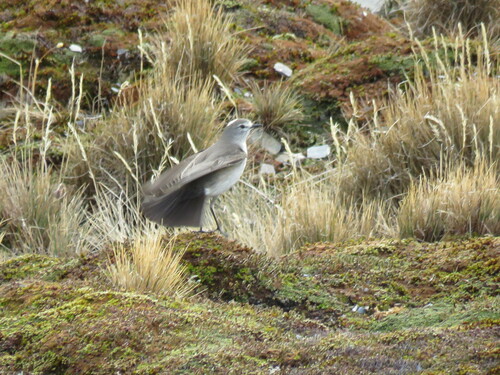
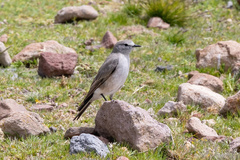
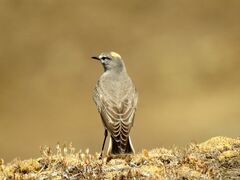
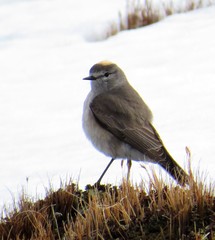
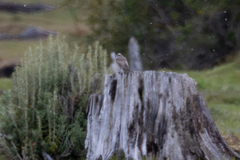
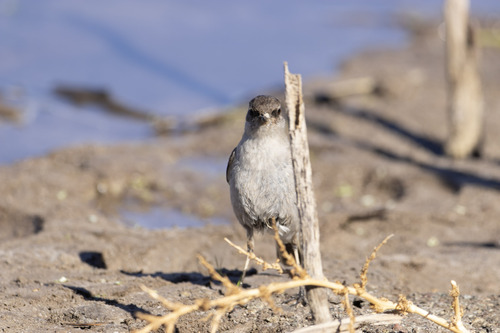
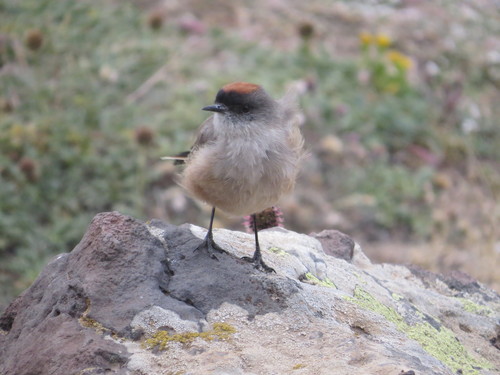
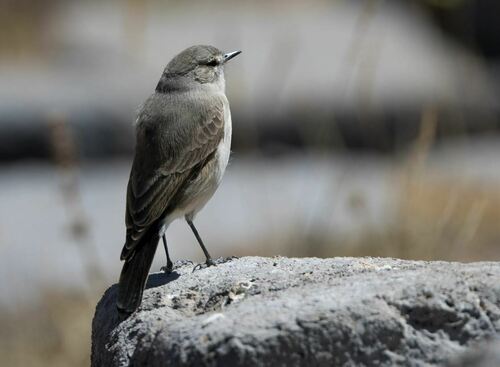
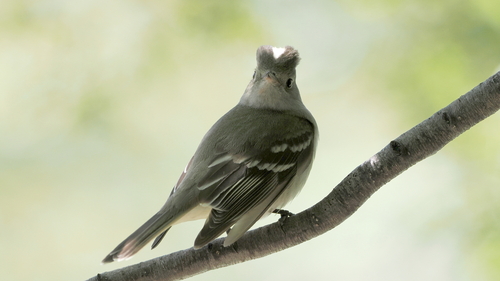
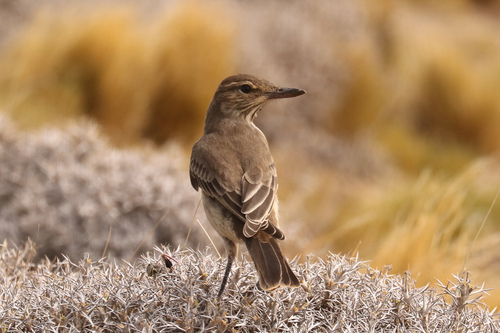
The ochre-naped ground tyrant (Muscisaxicola flavinucha) is a species of bird in the family Tyrannidae, the tyrant flycatchers. It is found in Argentina, Bolivia, Chile, and Peru. The ochre-naped ground tyrant is 18.5 to 20 cm (7.3 to 7.9 in) long. The sexes have the same plumage. Adults of the nominate subspecies have a white forehead and supercilium and a pale ochre patch on the rear crown on an otherwise pale brownish gray face. Their nape and back are pale brownish gray. Their wings are a duskier brownish gray with thin white edges on the flight feathers. Their tail is black with white edges on the outer feathers. Their throat, breast, and upper belly are grayish white that becomes white on the lower belly and vent area. They have a dark brown iris, a long black bill, and black legs and feet. Juveniles have a faint crown patch or none at all and buff edges on the flight feathers. Subspecies M. f. brevirostris is darker overall than the nominate with a slightly smaller bill and slightly shorter wings... Wikipedia →

Sounds

Recording0:52

Chile · 2018

© Cristian Pinto · XC403519 · CC BY-NC-SA 4.0

Song0:08

Chile · 2003

© Alvaro Jaramillo · XC59978 · CC BY-NC-ND 2.5

Call1:00

Argentina · 2008

© Bernabe Lopez-Lanus · XC45197 · CC BY-NC-SA 3.0

Global Distribution

Parks Where Found

# Park Country Daily sighting probability
1 Lauca National Park 🇨🇱 Chile
~10%
2 Tierra del Fuego National Park 🇦🇷 Argentina
~10%
3 Torres del Paine National Park 🇨🇱 Chile
<5%
4 Vicente Pérez Rosales National Park 🇨🇱 Chile
<5%

Before you go

What are the chances of seeing an Ochre-naped Ground-Tyrant in Torres del Paine National Park?

Rare

Under 5% of wildlife watchers report an Ochre-naped Ground-Tyrant sighting in Torres del Paine National Park on a given day, based on 68 verified sightings from GBIF citizen-science data from 2019 to 2026. It is the 75th most-seen of the 106 birds we can rate there. Over three days the chance rises to about 10%, and over a week to about 30%, if each day is a fresh chance.

When is the best time to see an Ochre-naped Ground-Tyrant in Torres del Paine National Park?

October and November

In those months about 10% of wildlife watchers report an Ochre-naped Ground-Tyrant in Torres del Paine National Park on a given day, against under 5% in December to September, the lowest months.

What time of day is best to see an Ochre-naped Ground-Tyrant?

Between 9 am and noon

Across all the parks we cover, that three-hour window holds the most Ochre-naped Ground-Tyrant sightings with a recorded time, and about 9 in 10 of them come between 6 am and 6 pm: it is a daytime animal.

Is Torres del Paine National Park the best place to see an Ochre-naped Ground-Tyrant?

3rd of 4

Of the 4 parks where we can rate Ochre-naped Ground-Tyrant sightings, Torres del Paine National Park ranks 3rd at under 5%. The best odds are in Lauca National Park (Chile, about 10%) and Tierra del Fuego National Park (Argentina, about 10%).

Which relatives of the Ochre-naped Ground-Tyrant live in Torres del Paine National Park?

Same genus: Muscisaxicola

The closest relatives of the Ochre-naped Ground-Tyrant that you can see in Torres del Paine National Park (genus Muscisaxicola, Ground-Tyrants) are Dark-faced Ground-Tyrant (about 20%) and Cinnamon-bellied Ground-Tyrant (about 10%), with each one's daily chance of a sighting.

Where does the Ochre-naped Ground-Tyrant sighting chance come from?

GBIF citizen-science records

It is estimated from how often the Ochre-naped Ground-Tyrant is recorded against all the birds logged in Torres del Paine National Park (68 verified sightings from 2019 to 2026), calibrated against known sighting rates. Figures are rounded to the nearest 10% because citizen-science data supports honest approximations, not decimals, and months with records from fewer than five people show "—". How it works.

← Back to Torres del Paine National Park