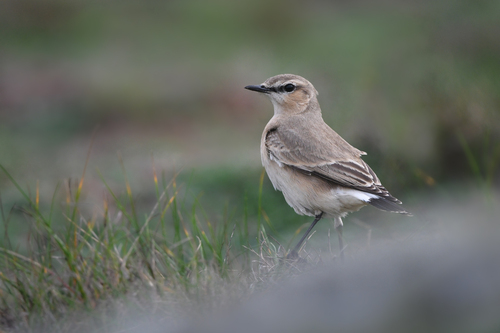
Rufous Bush Chat

Rufous Bush Chat

Erythropygia galactotes

Silhouette: Martin Bulla, based on François Desbordes' illustration · PhyloPic

Daily sighting probability ~10% · With luck
at Tsavo West National Park

In 3 days ~20% in a week ~50%

74 Verified sightings at Tsavo West National Park From 2019 to 2026
256 In all 4 parks
February Best month
☀️ Diurnal When it's spotted

About the Rufous Bush Chat

The rufous-tailed scrub robin (Cercotrichas galactotes) is a medium-sized member of the family Muscicapidae. Other common names include the rufous scrub robin, rufous bush chat, rufous bush robin and the rufous warbler. It breeds around the Mediterranean and east to Pakistan. It also breeds south of the Sahara from the Sahel region east to Somalia; these African birds are sometimes considered to be a separate species, the African scrub robin (C. minor). It is partially migratory, wintering in Africa (Kenya, South Sudan, Ethiopia, Somalia) and India. This is a very rare visitor to northern Europe.

The scientific name is from Ancient Greek. Cercotrichas is from kerkos, "tail" and trikhas, "thrush", and galactotes means resembling milk, from gala, "milk". The rufous-tailed scrub robin is a bird of dry open country with bushes and shrubs. It builds its nest a few feet off the ground; there are three to five eggs in a typical clutch.

The rufous-tailed scrub robin is larger than the European robin. It has brown upper parts, whitish under parts, and a prominent whitish supercilium and a dark eye-stripe. The western race has a paler, warmer brown back than birds in southeastern Europe and Asia. The long rufous tail is frequently fanned, showing the black and white tips of the tail feathers. The adult male and female have similar plumage and the juvenile resembles the adult but is paler. These birds feed on insects mostly caught on the ground. Their clear thrush-like song has a sad tone. Wikipedia →


Sounds

Recording0:30

Portugal · 2025

© Axel Gosseries · iNaturalist · CC BY-NC 4.0

Recording1:12

Iran · 2025

Shahrzad Fattahi · iNaturalist · CC0

Recording0:41

Morocco · 2025

© Ila France · iNaturalist · CC BY-NC 4.0

Global Distribution

Parks Where Found

# Park Country Daily sighting probability
1 Tsavo East National Park 🇰🇪 Kenya
~10%
2 Tsavo West National Park 🇰🇪 Kenya
~10%
3 Samburu National Reserve 🇰🇪 Kenya
~10%
4 Murchison Falls National Park 🇺🇬 Uganda
<5%

Cities Where Found

# City Country Daily sighting probability
1 Kuwait City 🇰🇼 Kuwait
~20%
2 Riyadh 🇸🇦 Saudi Arabia
~10%
3 Manama 🇧🇭 Bahrain
~10%
4 Doha 🇶🇦 Qatar
<5%
5 Marrakesh 🇲🇦 Morocco
<5%
6 Abu Dhabi 🇦🇪 United Arab Emirates
<5%
7 Dubai 🇦🇪 United Arab Emirates
<5%
8 Jerusalem 🇮🇱 Israel
<5%

Before you go

What are the chances of seeing a Rufous Bush Chat in Tsavo West National Park?

With luck

About 10% of wildlife watchers report a Rufous Bush Chat sighting in Tsavo West National Park on a given day, based on 74 verified sightings from GBIF citizen-science data from 2019 to 2026. It is the 188th most-seen of the 380 birds we can rate there. Over three days the chance rises to about 20%, and over a week to about 50%, if each day is a fresh chance.

When is the best time to see a Rufous Bush Chat in Tsavo West National Park?

February and November

In those months about 20% of wildlife watchers report a Rufous Bush Chat in Tsavo West National Park on a given day, against under 5% in April to September, the lowest months. Those are among Tsavo West National Park's wettest months, with about 95 mm of rain a month against 5 mm in July.

What time of day is best to see a Rufous Bush Chat?

Between 9 am and noon

Across all the parks we cover, that three-hour window holds the most Rufous Bush Chat sightings with a recorded time, and about 8 in 10 of them come between 6 am and 6 pm: it is a daytime animal.

Is Tsavo West National Park the best place to see a Rufous Bush Chat?

Among the best

Of the 4 parks where we can rate Rufous Bush Chat sightings, Tsavo West National Park ranks 2nd at about 10%, level with the leaders once rounded. The best odds are in Tsavo East National Park (Kenya, about 10%).

Where does the Rufous Bush Chat sighting chance come from?

GBIF citizen-science records

It is estimated from how often the Rufous Bush Chat is recorded against all the birds logged in Tsavo West National Park (74 verified sightings from 2019 to 2026), calibrated against known sighting rates. Figures are rounded to the nearest 10% because citizen-science data supports honest approximations, not decimals, and months with records from fewer than five people show "—". How it works.

← Back to Tsavo West National Park