Glaucous Shears Moth

Glaucous Shears Moth

Papestra biren

Daily sighting probability ~10% · With luck
at Vanoise National Park

In 3 days ~30% in a week ~60%

12 Verified sightings at Vanoise National Park From 2019 to 2026
12 In 1 park
June Best month
☀️ Diurnal When it's spotted

About the Glaucous Shears Moth

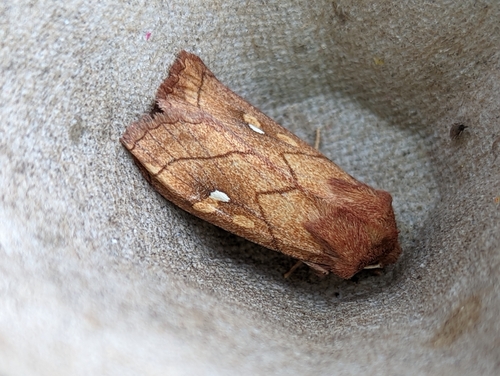
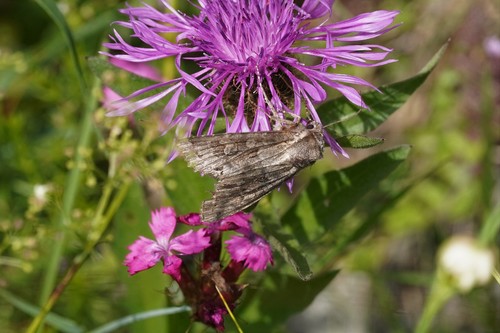
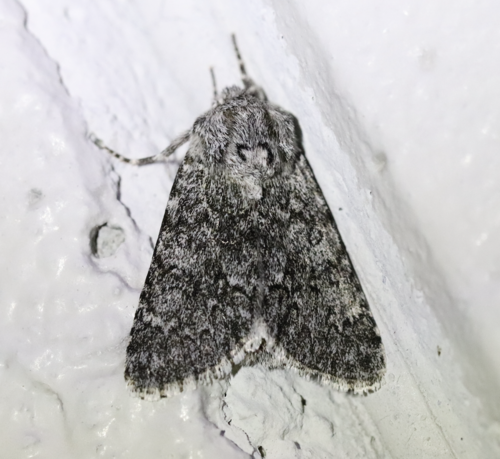
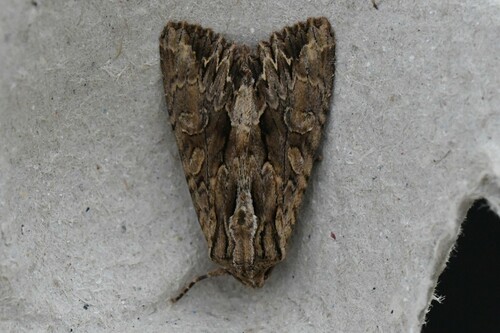
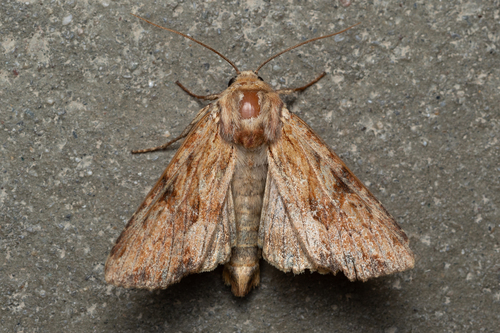
Papestra biren, the glaucous shears, is a moth of the family Noctuidae. The species was first described by Johann August Ephraim Goeze in 1781. It is found in most of Europe, but not in the southern parts of the Iberian Peninsula, Italy and Greece. Outside of Europe it is found in Kashmir and through the Palearctic to Siberia, Central Asia, Amur, Kamchatka, the Russian Far East and Japan. It was introduced in Newfoundland in 1935 and has since then extended its range ever more southward within North America partly overlapping with Papestra quadrata (Smith, 1891). It rises to 2200 m above sea level in the Alps.

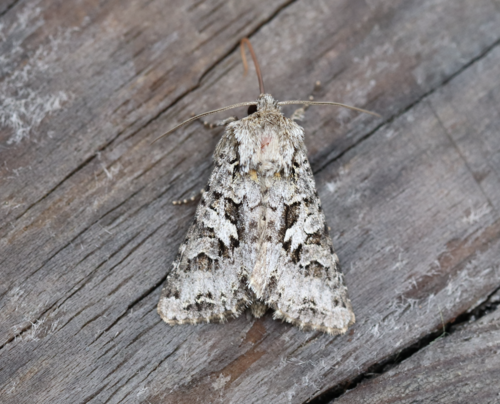
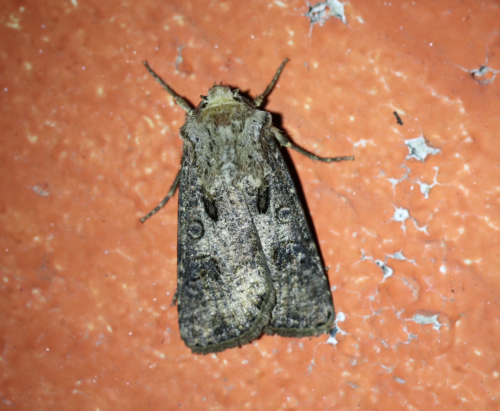
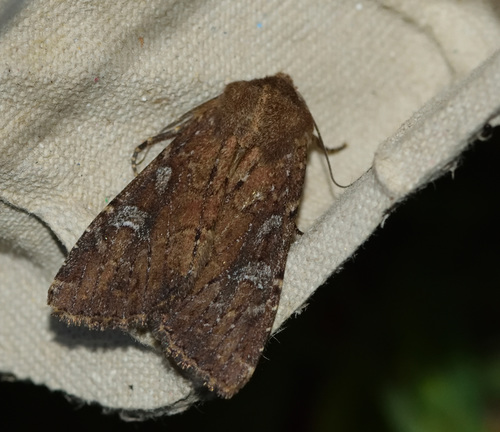
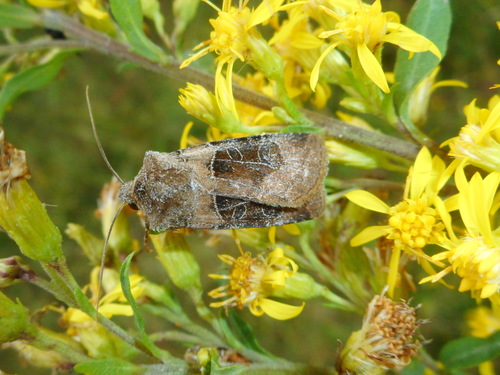
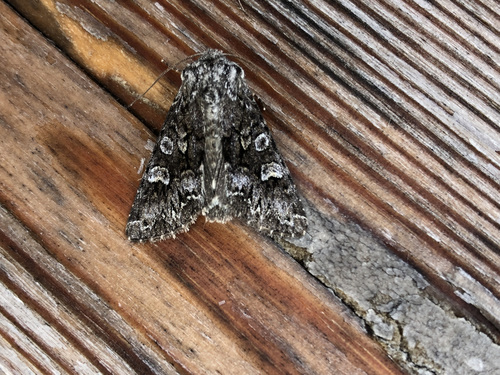
The wingspan is 30–38 mm. Forewing purplish grey suffused with blackish; stigmata pale grey, with whitish rims edged with black; submarginal line whitish, preceded by black dentate marks: hindwing dark brownish fuscous; the paler- or bluish-grey tint is most developed in the type form; lappo Dup. is a more ashy grey form with pale stigmata, from Lapland, Finland, and northern Ireland; aperta Geyer represents an exceptionally dark form; while taunensis Fuchs, from the Taunus Mts., is uniform dark ruddy grey, with only the external margins... Wikipedia →
Global Distribution

Parks Where Found

# Park Country Daily sighting probability
1 Vanoise National Park 🇫🇷 France
~10%

More parks will be added in future updates.

Before you go

What are the chances of seeing a Glaucous Shears Moth in Vanoise National Park?

With luck

About 10% of wildlife watchers report a Glaucous Shears Moth sighting in Vanoise National Park on a given day, based on 12 verified sightings from GBIF citizen-science data from 2019 to 2026. It is the 168th most-seen of the 308 insects we can rate there. Over three days the chance rises to about 30%, and over a week to about 60%, if each day is a fresh chance.

When is the best time to see a Glaucous Shears Moth in Vanoise National Park?

June

In that month about 30% of wildlife watchers report a Glaucous Shears Moth in Vanoise National Park on a given day, against under 5% in August to April, the lowest months.

What time of day is best to see a Glaucous Shears Moth?

Between 5 and 8 am

Across all the parks we cover, that three-hour window holds the most Glaucous Shears Moth sightings with a recorded time, and about 8 in 10 of them come between 6 am and 6 pm: it is a daytime animal.

Where else can you see a Glaucous Shears Moth?

Only Vanoise National Park, in our data

Vanoise National Park is the only park on Wallace's Line with enough records to rate Glaucous Shears Moth sightings: about 10% of wildlife watchers there report one on a given day.

Which relatives of the Glaucous Shears Moth live in Vanoise National Park?

Same family: Noctuidae

The closest relatives of the Glaucous Shears Moth that you can see in Vanoise National Park (family Noctuidae, Cutworm Moths and Allies) are Brown-Line Bright-Eye (about 10%), Pale Shining Brown (about 10%) and Sweet Gale Moth (about 10%), with each one's daily chance of a sighting.

Where does the Glaucous Shears Moth sighting chance come from?

GBIF citizen-science records

It is estimated from how often the Glaucous Shears Moth is recorded against all the insects logged in Vanoise National Park (12 verified sightings from 2019 to 2026), calibrated against known sighting rates. Figures are rounded to the nearest 10% because citizen-science data supports honest approximations, not decimals, and months with records from fewer than five people show "—". How it works.

← Back to Vanoise National Park