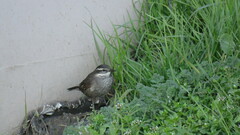
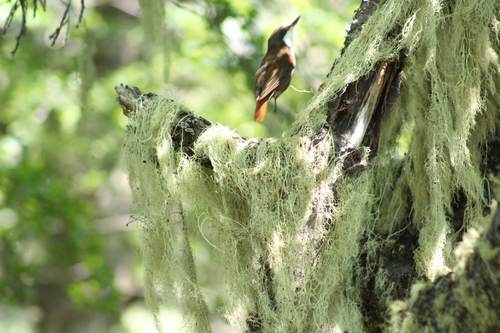
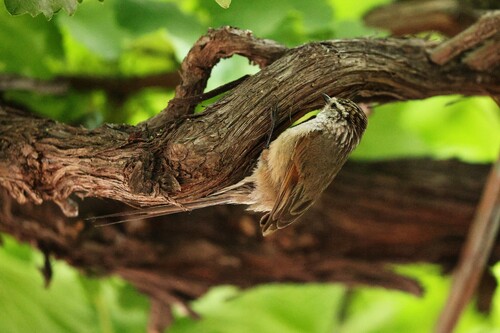
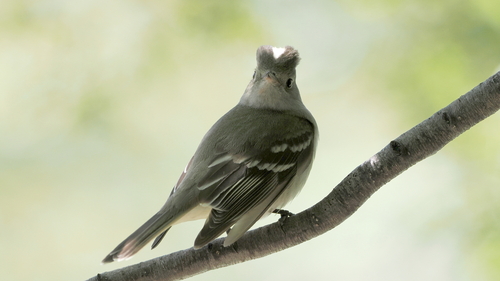
Gray-flanked Cinclodes

Gray-flanked Cinclodes

Cinclodes oustaleti

Silhouette: Edwin Price · PhyloPic

LCLeast ConcernNTVUENCR
Daily sighting probability <5% · Rare
at Vicente Pérez Rosales National Park

In 3 days <5% in a week ~10%

8 Verified sightings at Vicente Pérez Rosales National Park From 2019 to 2026
126 In all 4 parks
May Best month
☀️ Diurnal When it's spotted

About the Gray-flanked Cinclodes

The grey-flanked cinclodes (Cinclodes oustaleti), formerly known as Oustalet's cinclodes, is a species of bird in the Furnariinae subfamily of the ovenbird family Furnariidae. It is found in Argentina and Chile. The grey-flanked cinclodes is closely related to Olrog's cinclodes (C. olrogi).

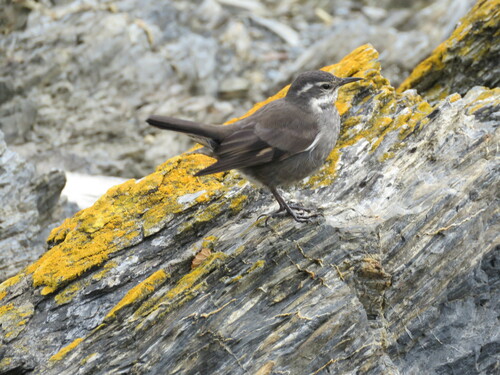
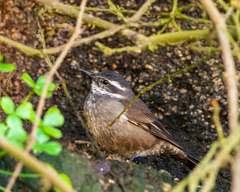
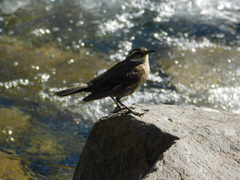
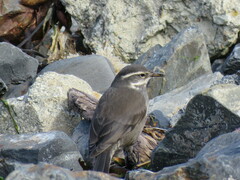
The grey-flanked cinclodes is 17 to 18 cm (6.7 to 7.1 in) long and weighs 22 to 31 g (0.78 to 1.1 oz). It is a small cinclodes with a medium-length slightly decurved bill. The sexes have the same plumage. Adults of the nominate subspecies have a buff supercilium with speckles at its front, blackish brown lores and ear coverts, and a whitish malar area with dark scallops. Their crown is dark grayish brown and their upperparts rich dark brown. Their wings are also rich dark brown, with a whitish bend, tawny-rufous and blackish brown primary coverts, and some rufous across the base of the flight feathers. Their tail is blackish brown with dull rufous tips on the outer feathers. Their throat is white with dark... Wikipedia →

Sounds

Song0:04

Chile · 2022

© Cristian Pinto Fernandez · XC718240 · CC BY-NC-SA 4.0

Alarm call0:07

Chile · 2019

© Cristian Pinto · XC494440 · CC BY-NC-SA 4.0

Call0:41

Chile · 2018

© Peter Boesman · XC449871 · CC BY-NC-ND 4.0

Global Distribution

Parks Where Found

# Park Country Daily sighting probability
1 Tierra del Fuego National Park 🇦🇷 Argentina
~10%
2 Torres del Paine National Park 🇨🇱 Chile
<5%
3 Vicente Pérez Rosales National Park 🇨🇱 Chile
<5%
4 Nahuel Huapi National Park 🇦🇷 Argentina
<5%

Cities Where Found

# City Country Daily sighting probability
1 Santiago 🇨🇱 Chile
<5%

Before you go

What are the chances of seeing a Gray-flanked Cinclodes in Vicente Pérez Rosales National Park?

Rare

Under 5% of wildlife watchers report a Gray-flanked Cinclodes sighting in Vicente Pérez Rosales National Park on a given day, based on 8 verified sightings from GBIF citizen-science data from 2019 to 2026. It is the 67th most-seen of the 70 birds we can rate there. Over three days the chance rises to under 5%, and over a week to about 10%, if each day is a fresh chance.

When is the best time to see a Gray-flanked Cinclodes in Vicente Pérez Rosales National Park?

March and May

In those months about 10% of wildlife watchers report a Gray-flanked Cinclodes in Vicente Pérez Rosales National Park on a given day, against under 5% in April and June–February, the lowest months.

What time of day is best to see a Gray-flanked Cinclodes?

Between 2 and 5 pm

Across all the parks we cover, that three-hour window holds the most Gray-flanked Cinclodes sightings with a recorded time, and about 9 in 10 of them come between 6 am and 6 pm: it is a daytime animal.

Is Vicente Pérez Rosales National Park the best place to see a Gray-flanked Cinclodes?

3rd of 4

Of the 4 parks where we can rate Gray-flanked Cinclodes sightings, Vicente Pérez Rosales National Park ranks 3rd at under 5%. The best odds are in Tierra del Fuego National Park (Argentina, about 10%) and Torres del Paine National Park (Chile, under 5%).

Which relatives of the Gray-flanked Cinclodes live in Vicente Pérez Rosales National Park?

Same genus: Cinclodes

The closest relatives of the Gray-flanked Cinclodes that you can see in Vicente Pérez Rosales National Park (genus Cinclodes) are Dark-bellied Cinclodes (about 50%) and Buff-winged Cinclodes (about 10%), with each one's daily chance of a sighting.

Where does the Gray-flanked Cinclodes sighting chance come from?

GBIF citizen-science records

It is estimated from how often the Gray-flanked Cinclodes is recorded against all the birds logged in Vicente Pérez Rosales National Park (8 verified sightings from 2019 to 2026), calibrated against known sighting rates. Figures are rounded to the nearest 10% because citizen-science data supports honest approximations, not decimals, and months with records from fewer than five people show "—". How it works.

← Back to Vicente Pérez Rosales National Park