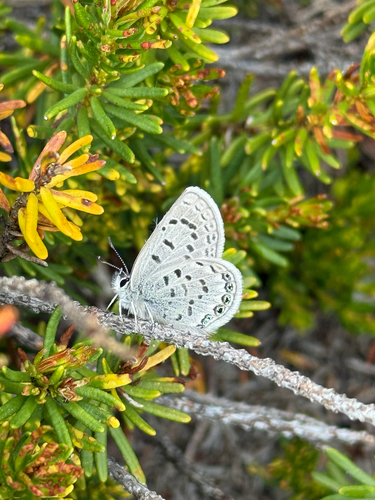
Sequoia Sphinx

Sequoia Sphinx

Sphinx sequoiae

Daily sighting probability ~10% · With luck
at Yosemite National Park

In 3 days ~20% in a week ~40%

14 Verified sightings at Yosemite National Park From 2019 to 2026
14 In 1 park
September Best month
☀️ Diurnal When it's spotted

About the Sequoia Sphinx

Sphinx sequoiae, the sequoia sphinx, is a moth of the family Sphingidae. It is found in the United States from Oregon south through California, Nevada, and south-eastern Utah to Arizona and further south into Mexico's northern Baja California. It is particularly common in juniper and cedar forests, like those east of the Cascade Range in the Pacific Northwest.

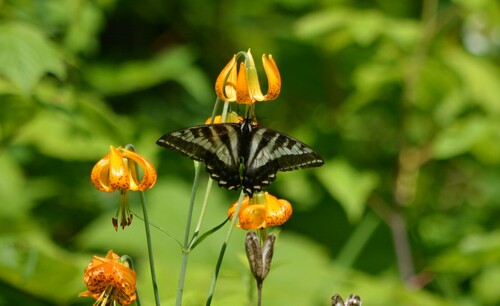
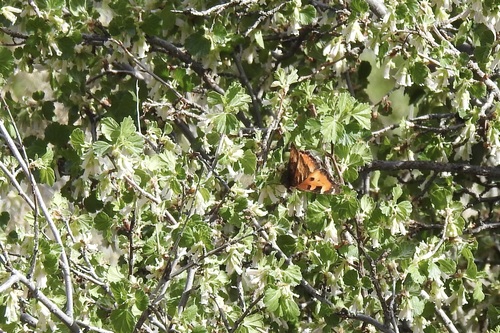
The species was first identified by Jean Baptiste Boisduval in 1868. The wingspan of the sequoia sphinx is 48–68 mm, with a forewing length of 24–26 mm. This makes it the smallest species of its genus other than Sphinx dollii, for which it is sometimes confused though they inhabit different regions. It has ash-gray, pointed forewings with several horizontal black dashes; its hindwings are a monotone ash-gray. The thorax and abdomen are likewise gray, and it has a white-and-brown checkered fringe. There is a single generation of adult moths per year which flies between May and August. Adults are nocturnal, and are attracted to light. They feed on nectar from the flowers of western chokecherry (Prunus virginiana) and California buckeye (Aesculus californica).

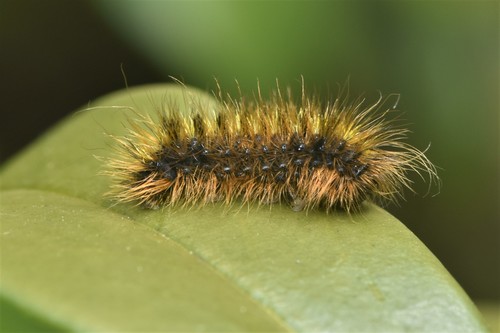
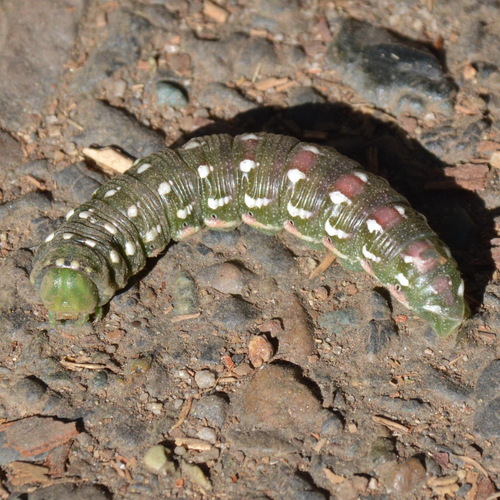
The larvae are green with white, red-brown, and yellow... Wikipedia →
Global Distribution

Parks Where Found

# Park Country Daily sighting probability
1 Yosemite National Park 🇺🇸 United States
~10%

More parks will be added in future updates.

Before you go

What are the chances of seeing a Sequoia Sphinx in Yosemite National Park?

With luck

About 10% of wildlife watchers report a Sequoia Sphinx sighting in Yosemite National Park on a given day, based on 14 verified sightings from GBIF citizen-science data from 2019 to 2026. It is the 98th most-seen of the 227 insects we can rate there. Over three days the chance rises to about 20%, and over a week to about 40%, if each day is a fresh chance.

When is the best time to see a Sequoia Sphinx in Yosemite National Park?

September

In that month about 20% of wildlife watchers report a Sequoia Sphinx in Yosemite National Park on a given day, against under 5% in November to July, the lowest months. That is one of Yosemite National Park's driest months, with about 25 mm of rain against 220 mm in January.

What time of day is best to see a Sequoia Sphinx?

Between 8 and 11 am

Across all the parks we cover, that three-hour window holds the most Sequoia Sphinx sightings with a recorded time, and about 9 in 10 of them come between 6 am and 6 pm: it is a daytime animal.

Where else can you see a Sequoia Sphinx?

Only Yosemite National Park, in our data

Yosemite National Park is the only park on Wallace's Line with enough records to rate Sequoia Sphinx sightings: about 10% of wildlife watchers there report one on a given day.

Where does the Sequoia Sphinx sighting chance come from?

GBIF citizen-science records

It is estimated from how often the Sequoia Sphinx is recorded against all the insects logged in Yosemite National Park (14 verified sightings from 2019 to 2026), calibrated against known sighting rates. Figures are rounded to the nearest 10% because citizen-science data supports honest approximations, not decimals, and months with records from fewer than five people show "—". How it works.

← Back to Yosemite National Park