Bare-Winged Aphideater

Bare-Winged Aphideater

Eupeodes perplexus

Daily sighting probability <5% · Rare
at Acadia National Park

In 3 days ~10% in a week ~30%

5 Verified sightings at Acadia National Park From 2019 to 2026
5 In 1 park
September Best month
☀️ Diurnal When it's spotted

About the Bare-Winged Aphideater

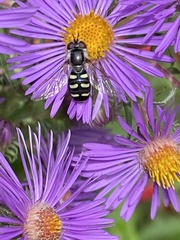
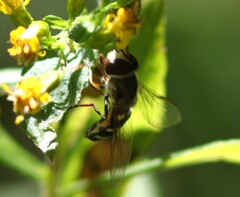
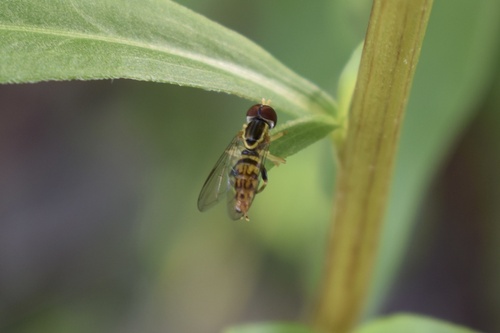
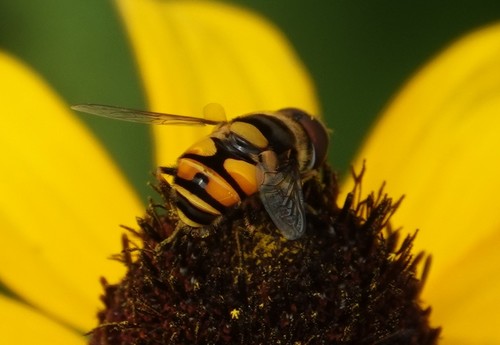
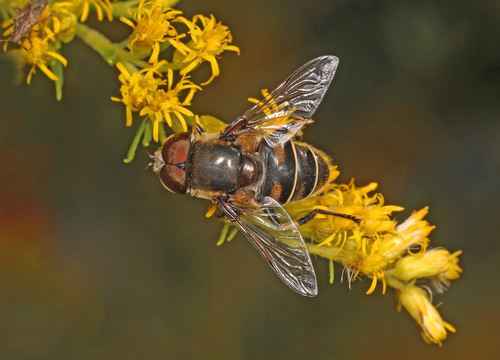
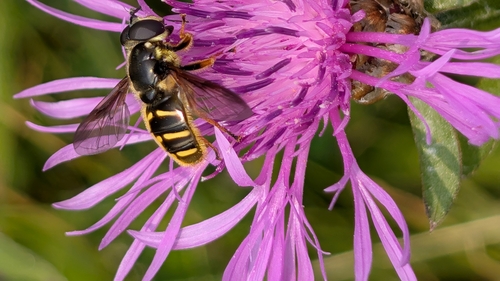
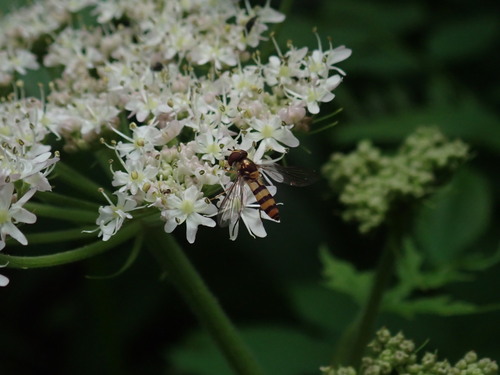
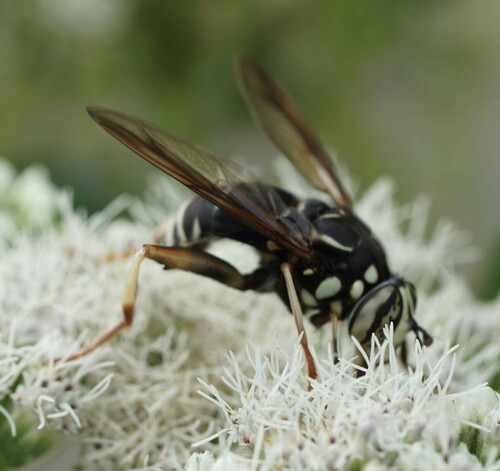
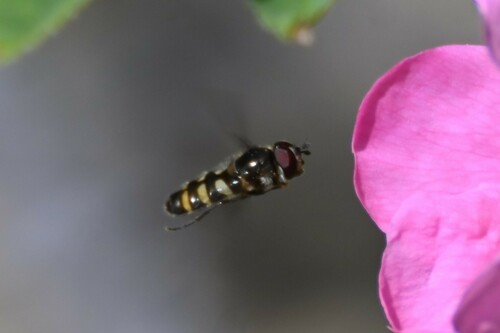
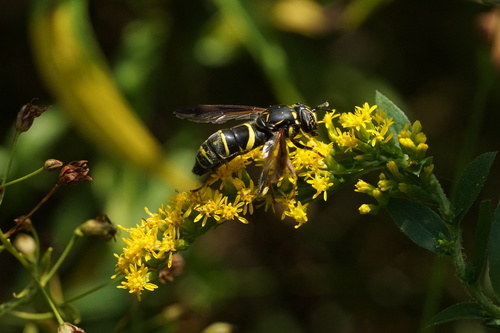
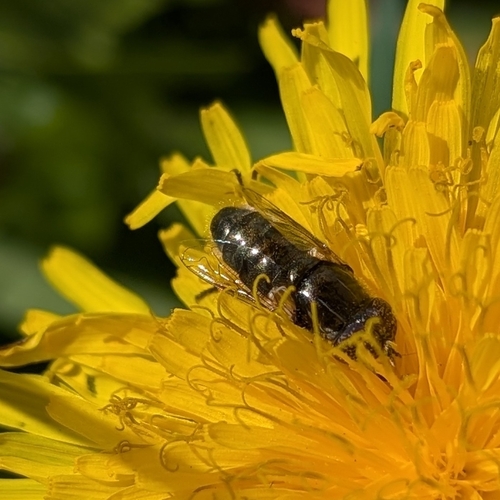
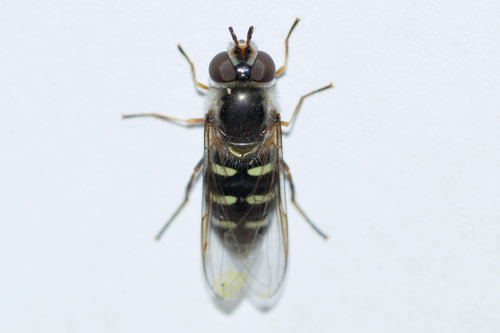
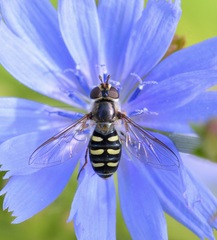
Eupeodes perplexus, the bare-winged aphideater, is a species of hoverfly native to North America. Adults feed on nectar; larvae feed on aphids and scale insects. The frons of both sexes not unusually puffed out. The third segment of antennae (flagellum) is exceptionally large. The pile of the face dominantly is pale, and the is head hemispherical; the face is slightly concave below antennae, tuberculate, whitish-yellow, with black cheeks and dark median vitta over tubercle; antennae short, third joint oval; dark crescent-shaped spot over base of each antenna; eyes bare.

The metasternum and pleura are covered with white pile. The scutellum is raised, exposing the metanotum. The anterior anepisternum, meron, and metepisternum are bare. For males the pile of scutellum yellow or black or mixed, but in females the pile is mostly black.

The abdominal spots are yellow, finger-like wide, curved and interrupted in the middle. The first segment is very narrow and all black. The spots on the second segment do not reach the sides. In the females, abdominal bands are broader. The fifth segment is yellow, sometimes with a small median black... Wikipedia →
Global Distribution

Parks Where Found

# Park Country Daily sighting probability
1 Acadia National Park 🇺🇸 United States
<5%

More parks will be added in future updates.

Cities Where Found

# City Country Daily sighting probability
1 Toronto 🇨🇦 Canada
<5%
2 New York City 🇺🇸 United States
<5%

Before you go

What are the chances of seeing a Bare-Winged Aphideater in Acadia National Park?

Rare

Under 5% of wildlife watchers report a Bare-Winged Aphideater sighting in Acadia National Park on a given day, based on 5 verified sightings from GBIF citizen-science data from 2019 to 2026. It is the 347th most-seen of the 405 insects we can rate there. Over three days the chance rises to about 10%, and over a week to about 30%, if each day is a fresh chance.

When is the best time to see a Bare-Winged Aphideater in Acadia National Park?

May and September

In those months about 10% of wildlife watchers report a Bare-Winged Aphideater in Acadia National Park on a given day, against under 5% in June–August and October–April, the lowest months.

What time of day is best to see a Bare-Winged Aphideater?

Between 9 am and noon

Across all the parks we cover, that three-hour window holds the most Bare-Winged Aphideater sightings with a recorded time, and nearly all of them come between 6 am and 6 pm: it is a daytime animal.

Where else can you see a Bare-Winged Aphideater?

Only Acadia National Park, in our data

Acadia National Park is the only park on Wallace's Line with enough records to rate Bare-Winged Aphideater sightings: under 5% of wildlife watchers there report one on a given day.

Which relatives of the Bare-Winged Aphideater live in Acadia National Park?

Same family: Syrphidae

The closest relatives of the Bare-Winged Aphideater that you can see in Acadia National Park (family Syrphidae, Hover Flies) are Margined Calligrapher (about 20%), Eastern Calligrapher (about 20%) and Common Drone Fly (about 20%), with each one's daily chance of a sighting.

Where does the Bare-Winged Aphideater sighting chance come from?

GBIF citizen-science records

It is estimated from how often the Bare-Winged Aphideater is recorded against all the insects logged in Acadia National Park (5 verified sightings from 2019 to 2026), calibrated against known sighting rates. Figures are rounded to the nearest 10% because citizen-science data supports honest approximations, not decimals, and months with records from fewer than five people show "—". How it works.

← Back to Acadia National Park