

Four-Lined Hornet Fly

Four-Lined Hornet Fly

Spilomyia sayi

Daily sighting probability ~10% · With luck
at Acadia National Park

In 3 days ~20% in a week ~50%

25 Verified sightings at Acadia National Park From 2019 to 2026
25 In 1 park
August Best month
☀️ Diurnal When it's spotted

About the Four-Lined Hornet Fly

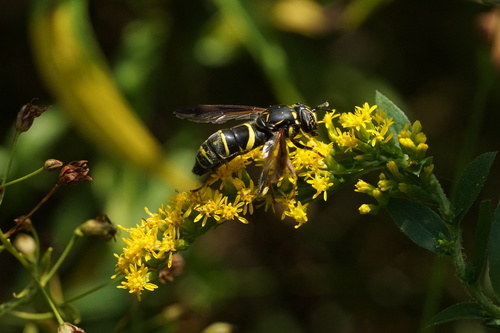
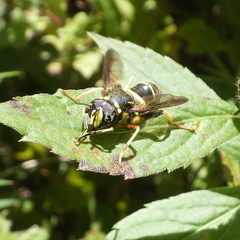
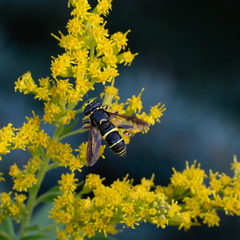
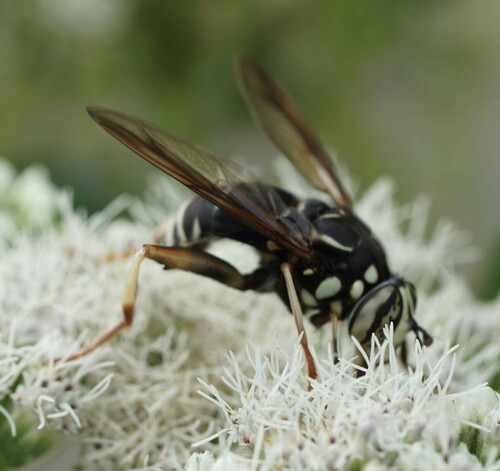
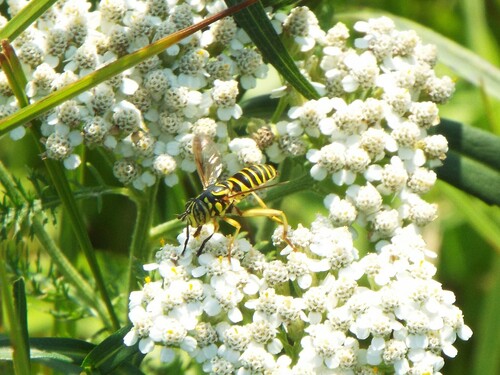
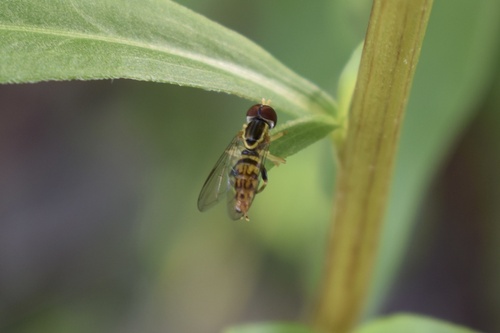
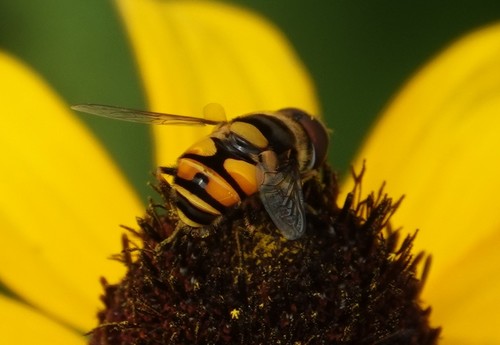
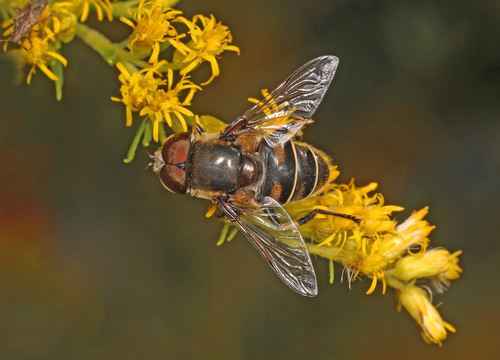
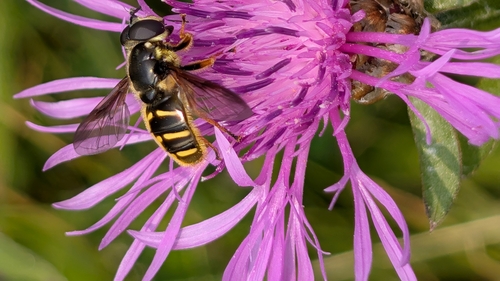
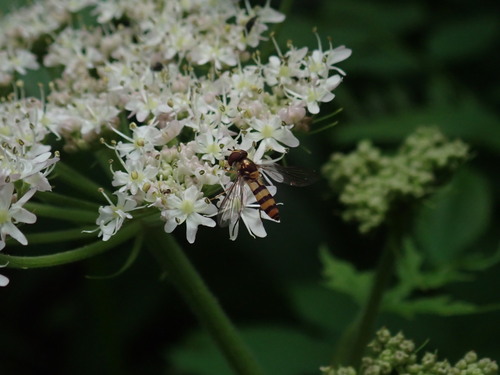
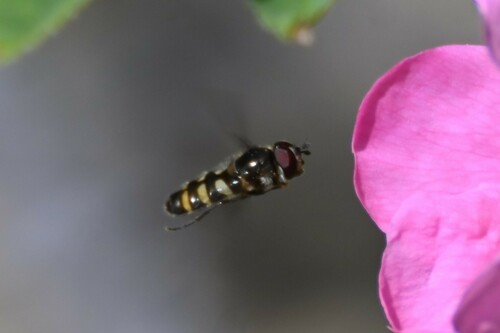
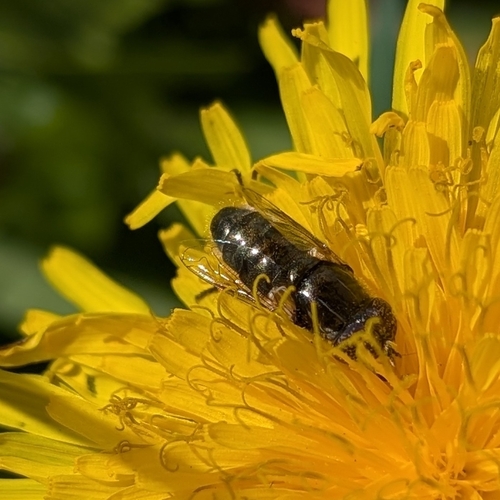
Spilomyia sayi (Goot, 1964), the Four-lined Hornet Fly, is a fairly common species of syrphid fly. This species is found from western Canada to northeastern North America. Hoverflies get their names from the ability to remain nearly motionless while in flight. The adults are also known as flower flies for they are commonly found around and on flowers, from which they get both energy-giving nectar and protein-rich pollen. The larvae are known as the short-tailed larvae, suited for moist areas such as rot holes of trees. It is a wasp mimic.

Adults are seen from June to October in the northern part of their range. Males engage in hilltopping, where they find high ground to await females. Larvae are found in decaying heartwood of deciduous trees. For terms see Morphology of Diptera.

Size 10–16 mm (0.4–0.6 in) Head The vertex is black against a black background. In the female the antennal prominece is yellow The face profile is nearly straight, yellow with a wide median black stripe. The antennae are elongate as long as the face is deep. The yellow arista is bare. The antennae are reddish brown to brownish black. The flagellum is moderately elongated. The pedicle... Wikipedia →

Global Distribution

Parks Where Found

# Park Country Daily sighting probability
1 Acadia National Park 🇺🇸 United States
~10%

More parks will be added in future updates.

Cities Where Found

# City Country Daily sighting probability
1 Toronto 🇨🇦 Canada
~10%
2 Minneapolis [Saint Paul] 🇺🇸 United States
<5%
3 Montreal 🇨🇦 Canada
<5%
4 Edmonton 🇨🇦 Canada
<5%

Before you go

What are the chances of seeing a Four-Lined Hornet Fly in Acadia National Park?

With luck

About 10% of wildlife watchers report a Four-Lined Hornet Fly sighting in Acadia National Park on a given day, based on 25 verified sightings from GBIF citizen-science data from 2019 to 2026. It is the 111th most-seen of the 405 insects we can rate there. Over three days the chance rises to about 20%, and over a week to about 50%, if each day is a fresh chance.

When is the best time to see a Four-Lined Hornet Fly in Acadia National Park?

August

In that month about 20% of wildlife watchers report a Four-Lined Hornet Fly in Acadia National Park on a given day, against under 5% in November to July, the lowest months.

What time of day is best to see a Four-Lined Hornet Fly?

Between 10 am and 1 pm

Across all the parks we cover, that three-hour window holds the most Four-Lined Hornet Fly sightings with a recorded time, and nearly all of them come between 6 am and 6 pm: it is a daytime animal.

Where else can you see a Four-Lined Hornet Fly?

Only Acadia National Park, in our data

Acadia National Park is the only park on Wallace's Line with enough records to rate Four-Lined Hornet Fly sightings: about 10% of wildlife watchers there report one on a given day.

Which relatives of the Four-Lined Hornet Fly live in Acadia National Park?

Same genus: Spilomyia

The closest relatives of the Four-Lined Hornet Fly that you can see in Acadia National Park (genus Spilomyia, Hornet Flies) are Bald-Faced Hornet Fly (about 10%) and Eastern Hornet Fly (about 10%), with each one's daily chance of a sighting.

Where does the Four-Lined Hornet Fly sighting chance come from?

GBIF citizen-science records

It is estimated from how often the Four-Lined Hornet Fly is recorded against all the insects logged in Acadia National Park (25 verified sightings from 2019 to 2026), calibrated against known sighting rates. Figures are rounded to the nearest 10% because citizen-science data supports honest approximations, not decimals, and months with records from fewer than five people show "—". How it works.

← Back to Acadia National Park