White Pearl Emperor

White Pearl Emperor

Charaxes varanes

Daily sighting probability ~10% · With luck
at Addo Elephant National Park

In 3 days ~20% in a week ~30%

6 Verified sightings at Addo Elephant National Park From 2019 to 2026
108 In all 4 parks
March Best month
☀️ Diurnal When it's spotted

About the White Pearl Emperor

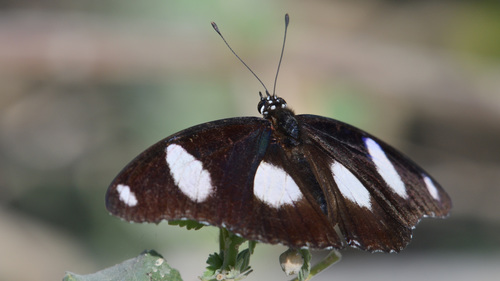
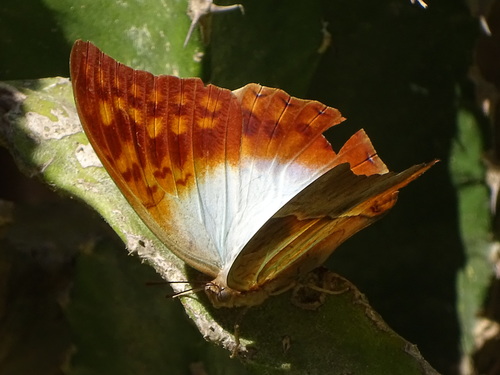
Charaxes varanes, the pearl emperor, Karkloof emperor, or pearl charaxes, is a butterfly of the family Nymphalidae, found in Africa from Saudi Arabia to South Africa. The wingspan is 65–70 millimetres (2.6–2.8 in) in males and 70–90 millimetres (2.8–3.5 in) in females. Its flight period is year round.

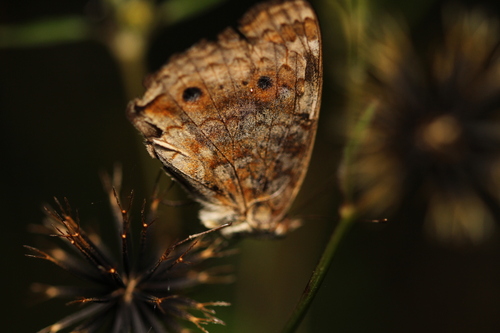
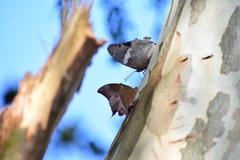
Larvae feed on Allophylus species and Cardiospermum halicacabum. The upperside of the body and roughly the inner half of the wings is white, sharply delineated on the forewings parallel to the length of the body, and diffusely delineated parallel to the margin of the hindwing. Outside the white area of the upperside, the wings are orange to brown, with a pattern of lighter and darker flecks. The underside of the body and wings mimic a dead leaf. A slightly diffuse but clear, sepia brown straight line divides the under wing in a zone next to the body and a zone near the wings' edges. The inner zone is mostly light beige with three parallel, curved, interrupted, grey-brown wavy lines, circling the wings' attachment to the body. A triangle based on the front of the forewing and bordering the division line has the dark grayish-brown color of the outer zone. The outer zone... Wikipedia →
Global Distribution

Parks Where Found

# Park Country Daily sighting probability
1 iSimangaliso Wetland Park 🇿🇦 South Africa
~10%
2 Garden Route National Park 🇿🇦 South Africa
~10%
3 Kruger National Park 🇿🇦 South Africa
~10%
4 Addo Elephant National Park 🇿🇦 South Africa
~10%

Cities Where Found

# City Country Daily sighting probability
1 Lusaka 🇿🇲 Zambia
~20%
2 Durban 🇿🇦 South Africa
~10%
3 Harare 🇿🇼 Zimbabwe
~10%

Before you go

What are the chances of seeing a White Pearl Emperor in Addo Elephant National Park?

With luck

About 10% of wildlife watchers report a White Pearl Emperor sighting in Addo Elephant National Park on a given day, based on 6 verified sightings from GBIF citizen-science data from 2019 to 2026. It is the 141st most-seen of the 198 insects we can rate there. Over three days the chance rises to about 20%, and over a week to about 30%, if each day is a fresh chance.

When is the best time to see a White Pearl Emperor in Addo Elephant National Park?

March–April and June

In those months about 10% of wildlife watchers report a White Pearl Emperor in Addo Elephant National Park on a given day, against under 5% in May and July–February, the lowest months.

What time of day is best to see a White Pearl Emperor?

Between 11 am and 2 pm

Across all the parks we cover, that three-hour window holds the most White Pearl Emperor sightings with a recorded time, and nearly all of them come between 6 am and 6 pm: it is a daytime animal.

Is Addo Elephant National Park the best place to see a White Pearl Emperor?

Among the best

Of the 4 parks where we can rate White Pearl Emperor sightings, Addo Elephant National Park ranks 4th at about 10%, level with the leaders once rounded. The best odds are in iSimangaliso Wetland Park (South Africa, about 10%), Garden Route National Park (South Africa, about 10%) and Kruger National Park (South Africa, about 10%).

Which relatives of the White Pearl Emperor live in Addo Elephant National Park?

Same family: Nymphalidae

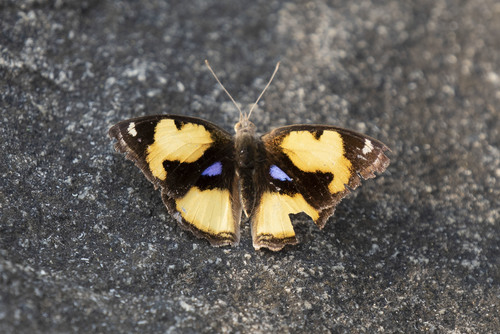
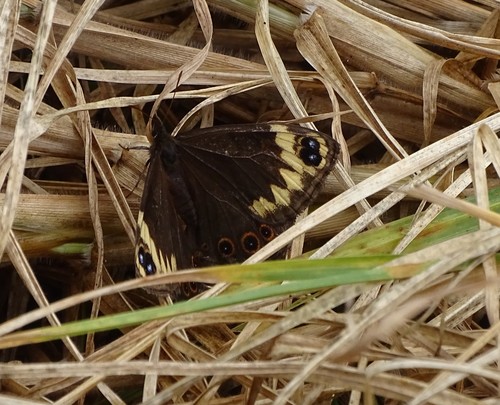
The closest relatives of the White Pearl Emperor that you can see in Addo Elephant National Park (family Nymphalidae, Brush-footed Butterflies) are Yellow Pansy (about 20%), Painted Lady (about 20%) and Junonia archesia (about 10%), with each one's daily chance of a sighting.

Where does the White Pearl Emperor sighting chance come from?

GBIF citizen-science records

It is estimated from how often the White Pearl Emperor is recorded against all the insects logged in Addo Elephant National Park (6 verified sightings from 2019 to 2026), calibrated against known sighting rates. Figures are rounded to the nearest 10% because citizen-science data supports honest approximations, not decimals, and months with records from fewer than five people show "—". How it works.

← Back to Addo Elephant National Park