Black Lava Lizard

Black Lava Lizard

Tropidurus melanopleurus

Silhouette: Heitor Campos de Sousa · PhyloPic

LCLeast ConcernNTVUENCR
Daily sighting probability ~70% · Very likely
at Amboró National Park

In 3 days >90%

20 Verified sightings at Amboró National Park From 2019 to 2026
20 In 1 park
November Best month
☀️ Diurnal When it's spotted

About the Black Lava Lizard

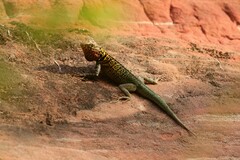
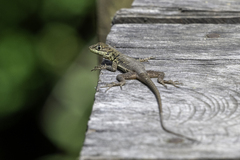
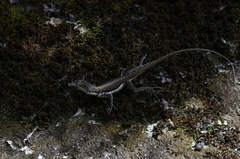
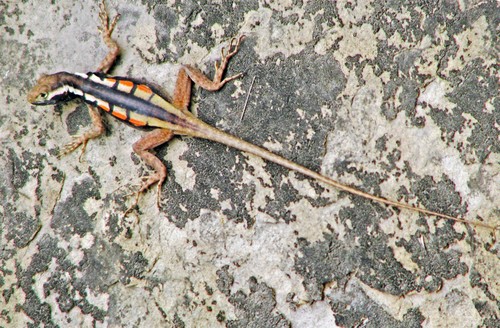
Tropidurus melanopleurus, the black lava lizard, is a species of lizard from the Andean region of western South America, ranging between the three different countries of Peru, Bolivia, and Argentina. It was described in 1902 by zoologist George Boulenger. It is fairly small in size, but is known for its different appearance and differing size between the males and females. However, while the patterns of color may be different between the sexes, both males and females have a very distinct physical color array with a patterned mix of green, orange, cream, black and or brown. This species of lizard lives in a generally warm to hot climate all year round and spends most of its day on the side of vertical rock structures in the mountains, feeding on various types of insects, with an emphasis on ants.

Female individuals of this species have a black to brown head with a prominent cream stripe across the temporal region of the head and back. The females have a black dorsum with a series of 4-6 red, cream, and green bands/large spots. The adult female SVL (Snout-Vent Length) is about 64.2 +/- 4.2 mm.

Male individuals of this species have a vertebral and dorsal crest that are... Wikipedia →
Global Distribution

Parks Where Found

# Park Country Daily sighting probability
1 Amboró National Park 🇧🇴 Bolivia
~70%

More parks will be added in future updates.

Closest Relatives at Amboró National Park

No species of the same family or order lives in Amboró National Park, so these are its closest relatives here: other reptiles.

Before you go

What are the chances of seeing a Black Lava Lizard in Amboró National Park?

Very likely

About 70% of wildlife watchers report a Black Lava Lizard sighting in Amboró National Park on a given day, based on 20 verified sightings from GBIF citizen-science data from 2019 to 2026. Over three days the chance rises to over 90%, if each day is a fresh chance.

When is the best time to see a Black Lava Lizard in Amboró National Park?

August and October–November

In those months about 80% of wildlife watchers report a Black Lava Lizard in Amboró National Park on a given day, against about 30% in June, the lowest month. February–March and December have too few records to rate.

What time of day is best to see a Black Lava Lizard?

Between 9 am and noon

Across all the parks we cover, that three-hour window holds the most Black Lava Lizard sightings with a recorded time, and about 9 in 10 of them come between 6 am and 6 pm: it is a daytime animal.

Where else can you see a Black Lava Lizard?

Only Amboró National Park, in our data

Amboró National Park is the only park on Wallace's Line with enough records to rate Black Lava Lizard sightings: about 70% of wildlife watchers there report one on a given day.

Where does the Black Lava Lizard sighting chance come from?

GBIF citizen-science records

It is estimated from how often the Black Lava Lizard is recorded against all the reptiles logged in Amboró National Park (20 verified sightings from 2019 to 2026), calibrated against known sighting rates. Figures are rounded to the nearest 10% because citizen-science data supports honest approximations, not decimals, and months with records from fewer than five people show "—". How it works.

← Back to Amboró National Park