Antarctic Tern

Antarctic Tern

Sterna vittata

Silhouette: Sharon Wegner-Larsen · PhyloPic

LCLeast ConcernNTVUENCR
Daily sighting probability ~90% · Very likely
at Antarctic Peninsula & South Shetland Islands

In 3 days >90%

2,454 Verified sightings at Antarctic Peninsula & South Shetland Islands From 2019 to 2026
3,640 In all 4 parks
November Best month
☀️ Diurnal When it's spotted

About the Antarctic Tern

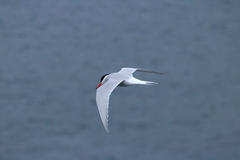
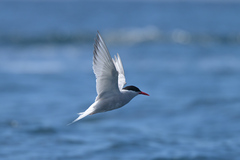
The Antarctic tern (Sterna vittata) is a seabird in the family Laridae. It ranges throughout the southern oceans and is found on small islands around Antarctica as well as on the shores of the mainland. Its diet consists primarily of small fish and crustaceans. It is very similar in appearance to the closely related Arctic tern, but it is stockier, and it is in its breeding plumage in the southern summer, when the Arctic tern has shed old feathers to get its non-breeding plumage. The Antarctic tern does not migrate like the Arctic tern does, but it can still be found on a very large range. This tern species is actually more closely related to the South American tern.

Gulls, skuas and jaegers are the primary predators of the bird's eggs and young. The Antarctic tern can be further divided into six subspecies. The total global population of this bird is around 140,000 individuals. The Antarctic tern was formally described in 1789 by the German naturalist Johann Friedrich Gmelin in his revised and expanded edition of Carl Linnaeus's Systema Naturae. He placed it with the other terns in the genus Sterna and coined the binomial name Sterna vittata. Gmelin based his description...

Wikipedia →

Sounds

Call0:13

New Zealand · 2017

© Sander Lagerveld · XC396457 · CC BY-NC-SA 4.0

Begging call0:20

United Kingdom · 2016

© Jim Holmes · XC314475 · CC BY-NC-SA 4.0

Alarm call0:40

United Kingdom · 2006

© Santiago Imberti · XC13810 · CC BY-NC-ND 2.5

Global Distribution

Parks Where Found

# Park Country Daily sighting probability
1 South Georgia and the South Sandwich Islands 🇬🇸 South Georgia and the South Sandwich Islands
~90%
2 Antarctic Peninsula & South Shetland Islands 🇦🇶 Antarctica
~90%
3 West Coast National Park 🇿🇦 South Africa
<5%
4 Table Mountain National Park 🇿🇦 South Africa
<5%

Before you go

What are the chances of seeing an Antarctic Tern in Antarctic Peninsula & South Shetland Islands?

Very likely

About 90% of wildlife watchers report an Antarctic Tern sighting in Antarctic Peninsula & South Shetland Islands on a given day, based on 2,454 verified sightings from GBIF citizen-science data from 2019 to 2026. It is the 3rd most-seen of the 29 birds we can rate there. Over three days the chance rises to over 90%, if each day is a fresh chance.

When is the best time to see an Antarctic Tern in Antarctic Peninsula & South Shetland Islands?

October to February

In those months about 90% of wildlife watchers report an Antarctic Tern in Antarctic Peninsula & South Shetland Islands on a given day, against about 70% in March, the lowest month. April to September have too few records to rate.

What time of day is best to see an Antarctic Tern?

Between 3 and 6 pm

Across all the parks we cover, that three-hour window holds the most Antarctic Tern sightings with a recorded time, and about 8 in 10 of them come between 6 am and 6 pm: it is a daytime animal.

Is Antarctic Peninsula & South Shetland Islands the best place to see an Antarctic Tern?

Among the best

Of the 4 parks where we can rate Antarctic Tern sightings, Antarctic Peninsula & South Shetland Islands ranks 2nd at about 90%, level with the leaders once rounded. The best odds are in South Georgia and the South Sandwich Islands (South Georgia and the South Sandwich Islands, about 90%).

Where does the Antarctic Tern sighting chance come from?

GBIF citizen-science records

It is estimated from how often the Antarctic Tern is recorded against all the birds logged in Antarctic Peninsula & South Shetland Islands (2,454 verified sightings from 2019 to 2026), calibrated against known sighting rates. Figures are rounded to the nearest 10% because citizen-science data supports honest approximations, not decimals, and months with records from fewer than five people show "—". How it works.

← Back to Antarctic Peninsula & South Shetland Islands