Southern Fulmar

Southern Fulmar

Fulmarus glacialoides

Silhouette: Edwin Price · PhyloPic

LCLeast ConcernNTVUENCR
Daily sighting probability ~70% · Very likely
at Antarctic Peninsula & South Shetland Islands

In 3 days >90%

1,658 Verified sightings at Antarctic Peninsula & South Shetland Islands From 2019 to 2026
1,871 In all 5 parks
October Best month
☀️ Diurnal When it's spotted

About the Southern Fulmar

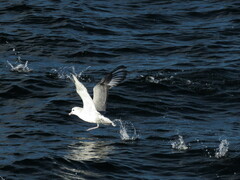
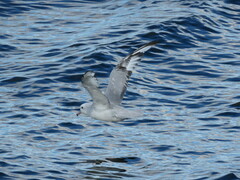
The southern fulmar (Fulmarus glacialoides) is a seabird of the Southern Hemisphere. Along with the northern fulmar, F. glacialis, it belongs to the fulmar genus Fulmarus in the family Procellariidae, the true petrels. It is also known as the Antarctic fulmar or silver-grey fulmar.

It is largely pale grey above and white below with a distinctive white patch on the wing. It breeds on the coast of Antarctica and on surrounding islands, moving north in winter. It nests in colonies on cliffs, laying a single egg on a ledge or crevice. Its diet includes krill, fish and squid picked from the water's surface.

The southern fulmar formally described and illustrated in 1840 by the Scottish zoologist Andrew Smith in his major work Illustrations of the Zoology of South Africa. He placed it with all the other petrels in the genus Procellaria and coined the binomial name Procellaria glacialoides. The southern fulmar is now placed with the northern fulmar in the genus Fulmarus that was introduced in 1826 by the English naturalist James Stephens. The genus name comes from the Old Norse Fúlmár meaning "foul-mew" or "foul-gull" because of the birds' habit of ejecting a foul-smelling oil...

Wikipedia →

Sounds

Song0:19

Argentina · 2008

© Santiago Imberti · XC20681 · CC BY-NC-ND 2.5

Global Distribution

Parks Where Found

# Park Country Daily sighting probability
1 Antarctic Peninsula & South Shetland Islands 🇦🇶 Antarctica
~70%
2 Falkland Islands 🇫🇰 Falkland Islands
~10%
3 Tierra del Fuego National Park 🇦🇷 Argentina
<5%
4 South Georgia and the South Sandwich Islands 🇬🇸 South Georgia and the South Sandwich Islands
<5%
5 Table Mountain National Park 🇿🇦 South Africa
<5%

Before you go

What are the chances of seeing a Southern Fulmar in Antarctic Peninsula & South Shetland Islands?

Very likely

About 70% of wildlife watchers report a Southern Fulmar sighting in Antarctic Peninsula & South Shetland Islands on a given day, based on 1,658 verified sightings from GBIF citizen-science data from 2019 to 2026. It is the 8th most-seen of the 29 birds we can rate there. Over three days the chance rises to over 90%, if each day is a fresh chance.

When is the best time to see a Southern Fulmar in Antarctic Peninsula & South Shetland Islands?

March and October

In those months about 80% of wildlife watchers report a Southern Fulmar in Antarctic Peninsula & South Shetland Islands on a given day, against about 50% in February, the lowest month. April to September have too few records to rate.

What time of day is best to see a Southern Fulmar?

Between 9 am and noon

Across all the parks we cover, that three-hour window holds the most Southern Fulmar sightings with a recorded time, and about 9 in 10 of them come between 6 am and 6 pm: it is a daytime animal.

Is Antarctic Peninsula & South Shetland Islands the best place to see a Southern Fulmar?

Yes

Of the 5 parks where we can rate Southern Fulmar sightings, Antarctic Peninsula & South Shetland Islands has the highest daily chance: about 70%. Next come Falkland Islands (Falkland Islands, about 10%) and Tierra del Fuego National Park (Argentina, under 5%).

Which relatives of the Southern Fulmar live in Antarctic Peninsula & South Shetland Islands?

Same family: Procellariidae

The closest relatives of the Southern Fulmar that you can see in Antarctic Peninsula & South Shetland Islands (family Procellariidae, Shearwaters and Petrels) are Southern Giant Petrel (about 90%), Cape Petrel (about 60%) and Snow Petrel (about 40%), with each one's daily chance of a sighting.

Where does the Southern Fulmar sighting chance come from?

GBIF citizen-science records

It is estimated from how often the Southern Fulmar is recorded against all the birds logged in Antarctic Peninsula & South Shetland Islands (1,658 verified sightings from 2019 to 2026), calibrated against known sighting rates. Figures are rounded to the nearest 10% because citizen-science data supports honest approximations, not decimals, and months with records from fewer than five people show "—". How it works.

← Back to Antarctic Peninsula & South Shetland Islands