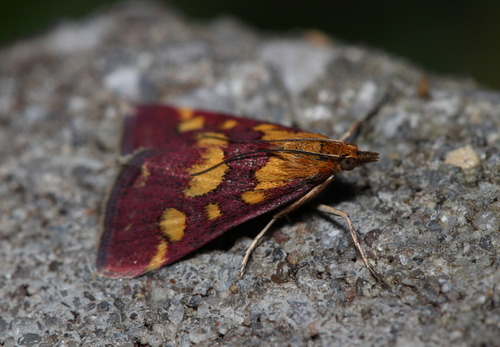
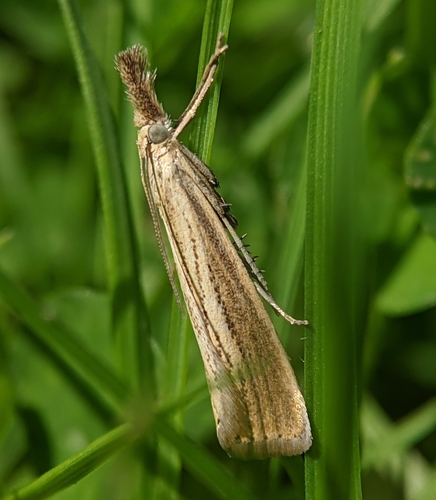
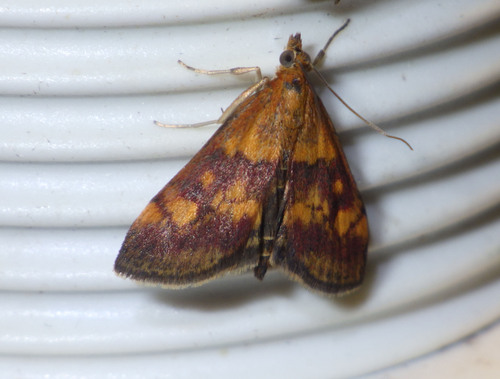
European Common Grey

European Common Grey

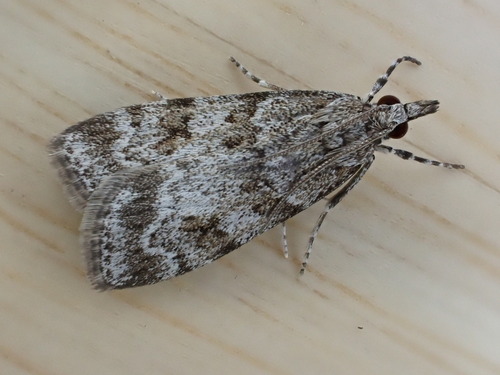
Scoparia ambigualis

Daily sighting probability <5% · Rare
at Bavarian Forest National Park

In 3 days ~10% in a week ~30%

6 Verified sightings at Bavarian Forest National Park From 2019 to 2026
11 In all 2 parks
June Best month
☀️🌙 Day & Night When it's spotted

About the European Common Grey

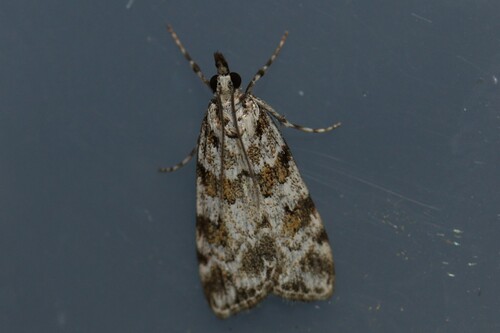
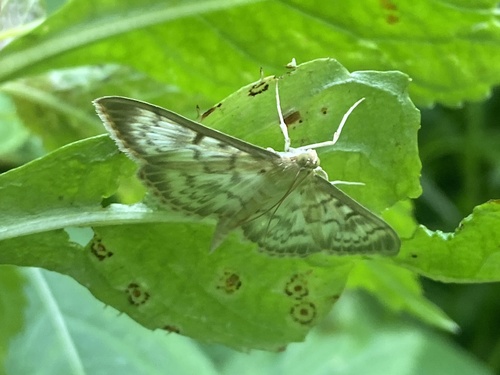
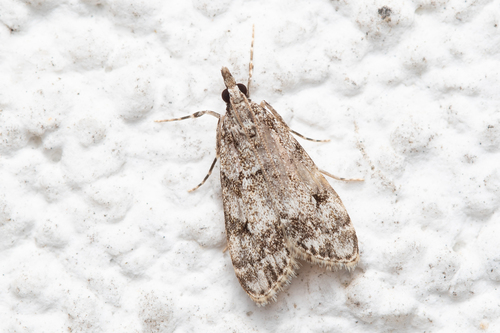
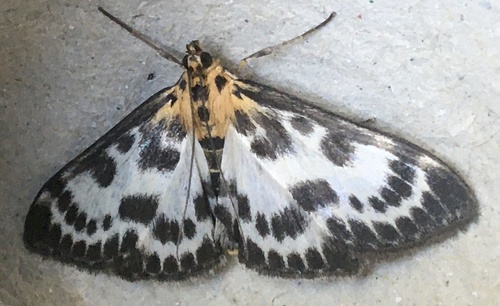
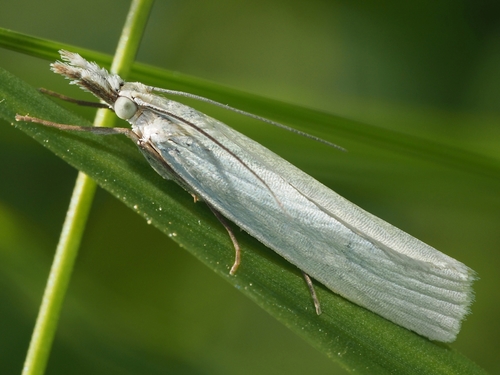
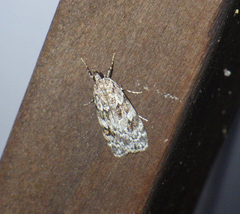
Scoparia ambigualis is a species of moth of the family Crambidae described by Friedrich Treitschke in 1829. It is found in Europe and Asia Minor and possibly in Guangdong and Shanxi in China. The wingspan is 15–22 mm. The forewings are whitish, more or less sprinkled with grey and black; a black ochreous-mixed mark from base of costa; lines whitish, dark -edged, first irregular, second angulated above middle; orbicular elongate, brownish, more or less black-edged, resting on first line; claviform dot- like, black, seldom elongated to touch first line; discal spot 8-shaped, incompletely black edged, upper and sometimes lower half pale greyish-ochreous or brownish; terminal area dark, subterminal line cloudy, whitish; a terminal series of blackish marks. Hindwings are prismatic grey-whitish, terminally suffused with grey.

The moth flies from May to September depending on the location. The larvae feed on valerian and probably also on various mosses. Wikipedia →
Global Distribution

Parks Where Found

# Park Country Daily sighting probability
1 Snowdonia National Park 🇬🇧 United Kingdom
~10%
2 Bavarian Forest National Park 🇩🇪 Germany
<5%

Cities Where Found

# City Country Daily sighting probability
1 Liverpool 🇬🇧 United Kingdom
~10%
2 London 🇬🇧 United Kingdom
<5%
3 Helsinki 🇫🇮 Finland
<5%
4 Birmingham 🇬🇧 United Kingdom
<5%

Before you go

What are the chances of seeing a European Common Grey in Bavarian Forest National Park?

Rare

Under 5% of wildlife watchers report a European Common Grey sighting in Bavarian Forest National Park on a given day, based on 6 verified sightings from GBIF citizen-science data from 2019 to 2026. It is the 822nd most-seen of the 1115 insects we can rate there. Over three days the chance rises to about 10%, and over a week to about 30%, if each day is a fresh chance.

When is the best time to see a European Common Grey in Bavarian Forest National Park?

May to July

In those months about 10% of wildlife watchers report a European Common Grey in Bavarian Forest National Park on a given day, against under 5% in August to April, the lowest months.

What time of day is best to see a European Common Grey?

Between 9 pm and midnight

Across all the parks we cover, that three-hour window holds the most European Common Grey sightings with a recorded time, and about half of them come between 6 pm and 6 am: it is seen both by day and at night.

Is Bavarian Forest National Park the best place to see a European Common Grey?

2nd of 2

Of the 2 parks where we can rate European Common Grey sightings, Bavarian Forest National Park ranks 2nd at under 5%. The best odds are in Snowdonia National Park (United Kingdom, about 10%).

Where does the European Common Grey sighting chance come from?

GBIF citizen-science records

It is estimated from how often the European Common Grey is recorded against all the insects logged in Bavarian Forest National Park (6 verified sightings from 2019 to 2026), calibrated against known sighting rates. Figures are rounded to the nearest 10% because citizen-science data supports honest approximations, not decimals, and months with records from fewer than five people show "—". How it works.

← Back to Bavarian Forest National Park