Ferruginous Bee-Grabber

Ferruginous Bee-Grabber

Sicus ferrugineus

Daily sighting probability <5% · Rare
at Bavarian Forest National Park

In 3 days ~10% in a week ~30%

5 Verified sightings at Bavarian Forest National Park From 2019 to 2026
5 In 1 park
July Best month
☀️ Diurnal When it's spotted

About the Ferruginous Bee-Grabber

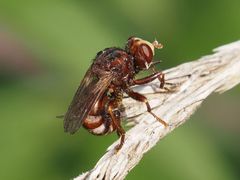
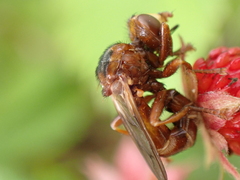
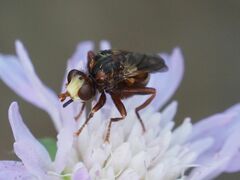
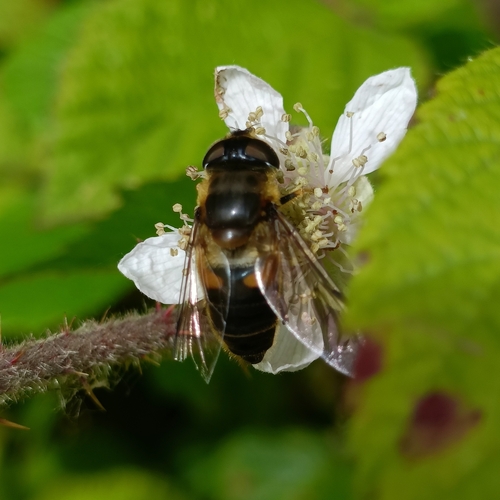
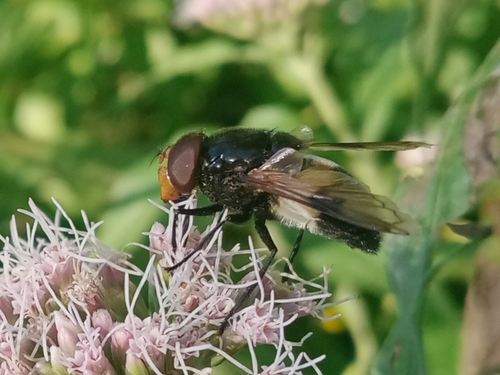
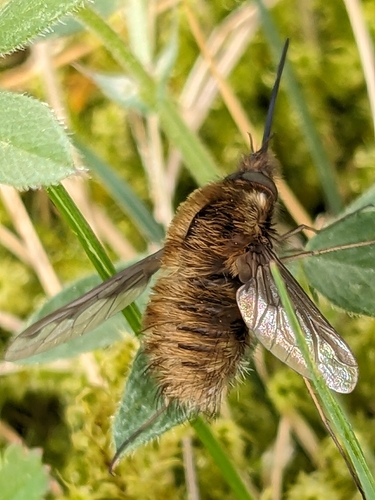
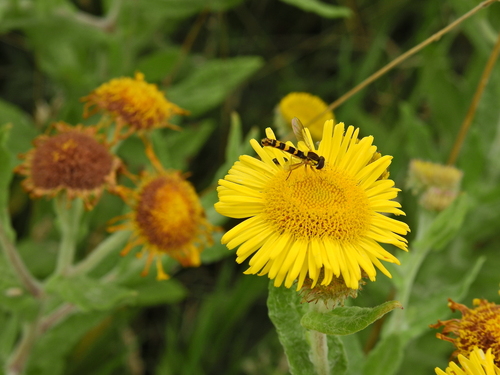
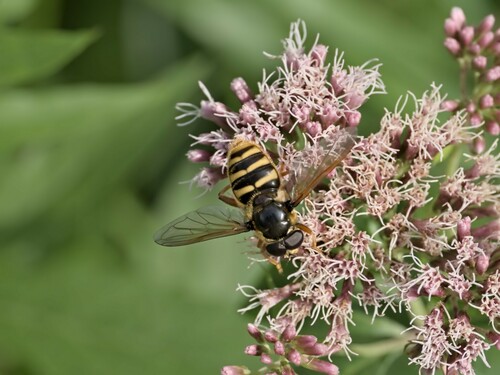
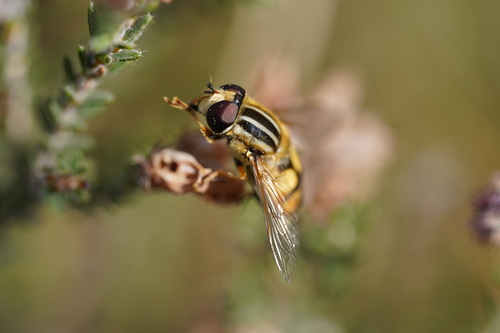
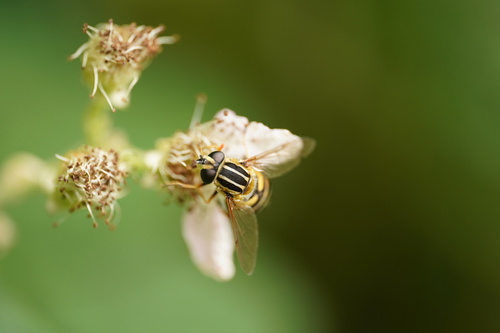
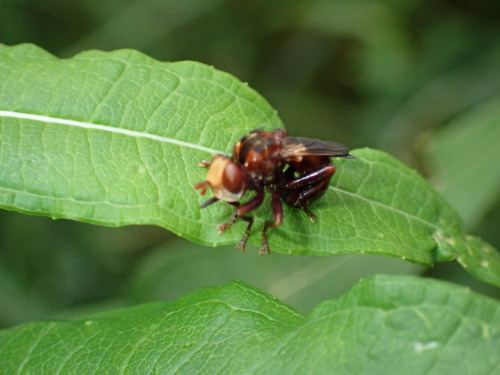
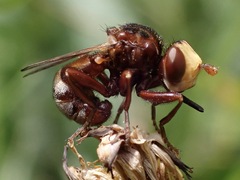
Sicus ferrugineus is a species of fly from the genus Sicus in the family Conopidae. This species is common throughout much of Europe. These conopids mainly inhabit hedgerows and flower meadows. The adults grow up to 8–13 millimetres (0.31–0.51 in) long. The body is mainly reddish-brown or yellow-brown. The head is yellow, quite large and inflated-looking, with a kind of bubble at the front and narrow cheeks. The short antennae are brown, their second segment has the same length or it is longer than the third. The large eyes are reddish. The legs and also the last abdomen segments are often darkened. The abdomen is long, round in cross-section, the seventh segment is oblong and conical. When in resting position the abdomen is usually folded forward. In the females theca is hardly distinguishable. The wings are transparent, but reddish-yellow colored at the base.

They can be encountered from May through September, feeding on nectar or pollen of various Asteraceae species (Hieracium pilosella, Thistle, Cirsium species, etc.), Apiaceae species (Parsley Petroselinum sp,. Heracleum sphondylium), Onagraceae (Chamerion angustifolium... Wikipedia →
Global Distribution

Parks Where Found

# Park Country Daily sighting probability
1 Bavarian Forest National Park 🇩🇪 Germany
<5%

More parks will be added in future updates.

Cities Where Found

# City Country Daily sighting probability
1 London 🇬🇧 United Kingdom
~10%
2 Birmingham 🇬🇧 United Kingdom
~10%
3 Liverpool 🇬🇧 United Kingdom
~10%
4 Brussels 🇧🇪 Belgium
<5%
5 Berlin 🇩🇪 Germany
<5%
6 Manchester 🇬🇧 United Kingdom
<5%
7 Helsinki 🇫🇮 Finland
<5%
8 Warsaw 🇵🇱 Poland
<5%
9 Paris 🇫🇷 France
<5%
10 Moscow 🇷🇺 Russia
<5%

Before you go

What are the chances of seeing a Ferruginous Bee-Grabber in Bavarian Forest National Park?

Rare

Under 5% of wildlife watchers report a Ferruginous Bee-Grabber sighting in Bavarian Forest National Park on a given day, based on 5 verified sightings from GBIF citizen-science data from 2019 to 2026. It is the 964th most-seen of the 1115 insects we can rate there. Over three days the chance rises to about 10%, and over a week to about 30%, if each day is a fresh chance.

When is the best time to see a Ferruginous Bee-Grabber in Bavarian Forest National Park?

July and August

In those months about 10% of wildlife watchers report a Ferruginous Bee-Grabber in Bavarian Forest National Park on a given day, against under 5% in September to June, the lowest months.

What time of day is best to see a Ferruginous Bee-Grabber?

Between 1 and 4 pm

Across all the parks we cover, that three-hour window holds the most Ferruginous Bee-Grabber sightings with a recorded time, and nearly all of them come between 6 am and 6 pm: it is a daytime animal.

Where else can you see a Ferruginous Bee-Grabber?

Only Bavarian Forest National Park, in our data

Bavarian Forest National Park is the only park on Wallace's Line with enough records to rate Ferruginous Bee-Grabber sightings: under 5% of wildlife watchers there report one on a given day.

Which relatives of the Ferruginous Bee-Grabber live in Bavarian Forest National Park?

Same order: Diptera

The closest relatives of the Ferruginous Bee-Grabber that you can see in Bavarian Forest National Park (order Diptera, Flies) are Common Drone Fly (about 20%), Marmalade Hover Fly (about 20%) and Yellow-Haired Sun Fly (about 20%), with each one's daily chance of a sighting.

Where does the Ferruginous Bee-Grabber sighting chance come from?

GBIF citizen-science records

It is estimated from how often the Ferruginous Bee-Grabber is recorded against all the insects logged in Bavarian Forest National Park (5 verified sightings from 2019 to 2026), calibrated against known sighting rates. Figures are rounded to the nearest 10% because citizen-science data supports honest approximations, not decimals, and months with records from fewer than five people show "—". How it works.

← Back to Bavarian Forest National Park