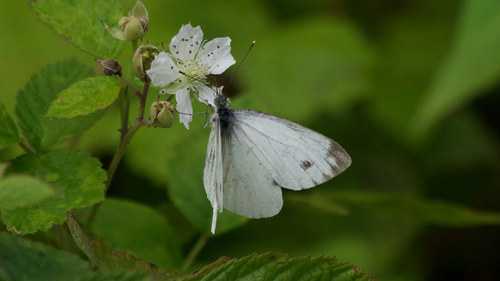
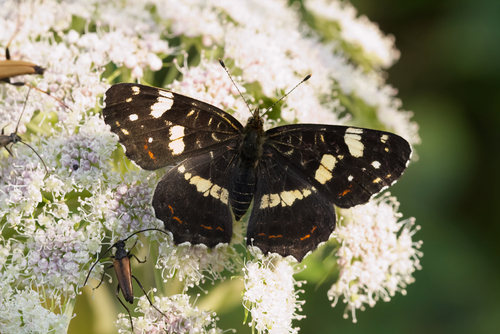
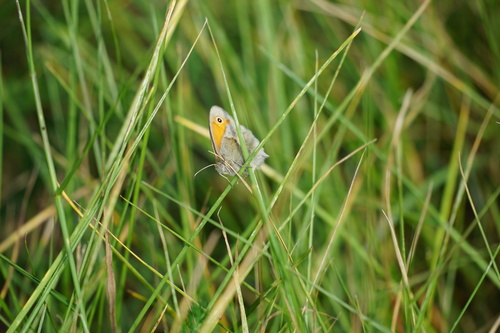
Hazel Leafminer Moth

Hazel Leafminer Moth

Stigmella microtheriella

Daily sighting probability <5% · Rare
at Bavarian Forest National Park

In 3 days ~10% in a week ~30%

5 Verified sightings at Bavarian Forest National Park From 2019 to 2026
5 In 1 park
October Best month
☀️ Diurnal When it's spotted

About the Hazel Leafminer Moth

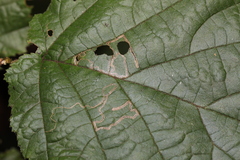
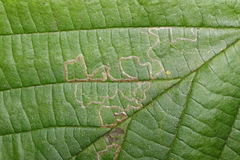
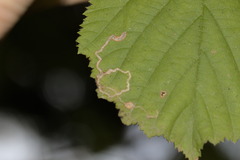
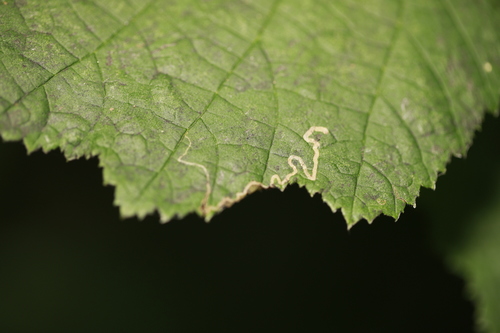
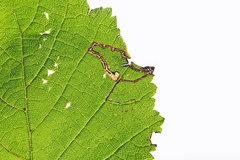
Stigmella microtheriella, the Hazel leaf miner moth, is a moth of the family Nepticulidae. It is found in Asia, Europe and New Zealand. The larvae mine the leaves of hazel (Corylus species) and hornbeams (Carpinus species). It was described by the English entomologist, Henry Tibbats Stainton in 1854 from a type specimen found in England.

This species was first described by Henry T. Stainton in 1854 and originally named Nepticular microtheriella. It was subsequently placed in the genus Stigmella. The female type specimen is held at the Natural History Museum, London.

The wingspan is 3–4 millimetres (0.12–0.16 in).The head is ochreous-yellowish, the collar ochreous-whitish. The antennal eyecaps are ochreous-whitish. The forewings are purplish-fuscous with a rather oblique shining whitish fascia beyond middle. The apical area beyond this is darker and more purple. The hindwings are grey.

Adults are on wing in May and again in August. The moths are parthenogenetic. Egg Laid on the underside of a leaf, usually near a rib on hazel (Corylus avellana) and sometimes hornbeam (Carpinus betulus). Other recorded host are Oriental hornbeam (Carpinus orientalis... Wikipedia →
Global Distribution

Parks Where Found

# Park Country Daily sighting probability
1 Bavarian Forest National Park 🇩🇪 Germany
<5%

More parks will be added in future updates.

Cities Where Found

# City Country Daily sighting probability
1 Liverpool 🇬🇧 United Kingdom
~10%
2 Auckland 🇳🇿 New Zealand
<5%
3 London 🇬🇧 United Kingdom
<5%
4 Birmingham 🇬🇧 United Kingdom
<5%
5 Berlin 🇩🇪 Germany
<5%
6 Portland 🇺🇸 United States
<5%
7 Seattle 🇺🇸 United States
<5%
8 Vancouver 🇨🇦 Canada
<5%

Before you go

What are the chances of seeing a Hazel Leafminer Moth in Bavarian Forest National Park?

Rare

Under 5% of wildlife watchers report a Hazel Leafminer Moth sighting in Bavarian Forest National Park on a given day, based on 5 verified sightings from GBIF citizen-science data from 2019 to 2026. It is the 964th most-seen of the 1115 insects we can rate there. Over three days the chance rises to about 10%, and over a week to about 30%, if each day is a fresh chance.

When is the best time to see a Hazel Leafminer Moth in Bavarian Forest National Park?

August to October

In those months about 10% of wildlife watchers report a Hazel Leafminer Moth in Bavarian Forest National Park on a given day, against under 5% in November to July, the lowest months.

What time of day is best to see a Hazel Leafminer Moth?

Between 9 am and noon

Across all the parks we cover, that three-hour window holds the most Hazel Leafminer Moth sightings with a recorded time, and about 8 in 10 of them come between 6 am and 6 pm: it is a daytime animal.

Where else can you see a Hazel Leafminer Moth?

Only Bavarian Forest National Park, in our data

Bavarian Forest National Park is the only park on Wallace's Line with enough records to rate Hazel Leafminer Moth sightings: under 5% of wildlife watchers there report one on a given day.

Which relatives of the Hazel Leafminer Moth live in Bavarian Forest National Park?

Same order: Lepidoptera

The closest relatives of the Hazel Leafminer Moth that you can see in Bavarian Forest National Park (order Lepidoptera, Butterflies and Moths) are European Peacock Butterfly (about 40%), Common Blue (about 30%) and Meadow Brown (about 30%), with each one's daily chance of a sighting.

Where does the Hazel Leafminer Moth sighting chance come from?

GBIF citizen-science records

It is estimated from how often the Hazel Leafminer Moth is recorded against all the insects logged in Bavarian Forest National Park (5 verified sightings from 2019 to 2026), calibrated against known sighting rates. Figures are rounded to the nearest 10% because citizen-science data supports honest approximations, not decimals, and months with records from fewer than five people show "—". How it works.

← Back to Bavarian Forest National Park