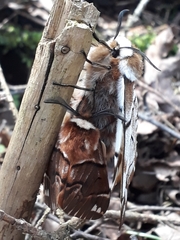
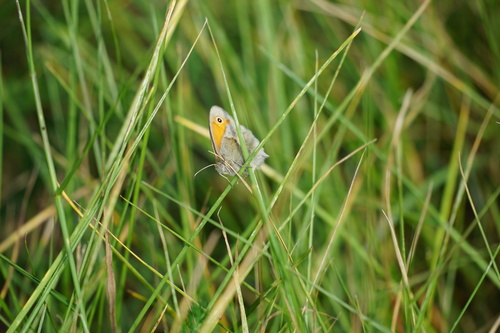
Kentish Glory

Kentish Glory

Endromis versicolora

Daily sighting probability <5% · Rare
at Bavarian Forest National Park

In 3 days ~10% in a week ~30%

6 Verified sightings at Bavarian Forest National Park From 2019 to 2026
17 In all 3 parks
April Best month
☀️ Diurnal When it's spotted

About the Kentish Glory

Endromis is a monotypic moth genus in the family Endromidae erected by Ferdinand Ochsenheimer in 1810. Its only species, Endromis versicolora, the Kentish glory, was described by Carl Linnaeus in his 1758 10th edition of Systema Naturae. It is found in the Palaearctic region.

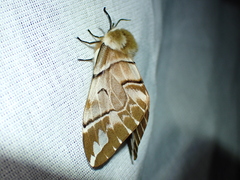
The wingspan is 50–70 mm. The adults fly from March to May. Females are much larger and paler than males and fly only at night in order to lay eggs. Males, which fly both by night and day, can detect female pheromones from a distance up to 2 km.

Yellow at first, then purplish-brown eggs are laid in two or three rows around a thin birch branch. After 10 to 14 days little black caterpillars hatch. The caterpillars primarily feed on birch (Betula species), but accept other trees and shrubs: Alnus, Corylus, Tilia and Carpinus species. It is green with paler stripes. At first it feeds in small groups of 15 to 30 larvae, but mature caterpillars feed individually and only at night.

Endromis versicolora has a single generation per year; it overwinters as a pupa in a thin loose strong cocoon buried shallowly in the soil. The Kentish Glory is primarily found in open birch woodlands, forest edges, and clear-fell areas. The species is confined to a few populations in Scotland and is listed on the Scottish Biodiversity List as being of principal conservation importance. Wikipedia →

Global Distribution

Parks Where Found

# Park Country Daily sighting probability
1 Białowieża National Park 🇵🇱 Poland
~10%
2 Cairngorms National Park 🇬🇧 United Kingdom
~10%
3 Bavarian Forest National Park 🇩🇪 Germany
<5%

Before you go

What are the chances of seeing a Kentish Glory in Bavarian Forest National Park?

Rare

Under 5% of wildlife watchers report a Kentish Glory sighting in Bavarian Forest National Park on a given day, based on 6 verified sightings from GBIF citizen-science data from 2019 to 2026. It is the 822nd most-seen of the 1115 insects we can rate there. Over three days the chance rises to about 10%, and over a week to about 30%, if each day is a fresh chance.

When is the best time to see a Kentish Glory in Bavarian Forest National Park?

April

In that month about 20% of wildlife watchers report a Kentish Glory in Bavarian Forest National Park on a given day, against under 5% in May to March, the lowest months.

What time of day is best to see a Kentish Glory?

Between 7 and 10 am

Across all the parks we cover, that three-hour window holds the most Kentish Glory sightings with a recorded time, and about 7 in 10 of them come between 6 am and 6 pm: it is a daytime animal.

Is Bavarian Forest National Park the best place to see a Kentish Glory?

3rd of 3

Of the 3 parks where we can rate Kentish Glory sightings, Bavarian Forest National Park ranks 3rd at under 5%. The best odds are in Białowieża National Park (Poland, about 10%) and Cairngorms National Park (United Kingdom, about 10%).

Which relatives of the Kentish Glory live in Bavarian Forest National Park?

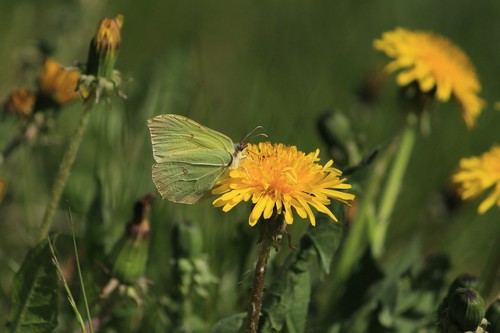
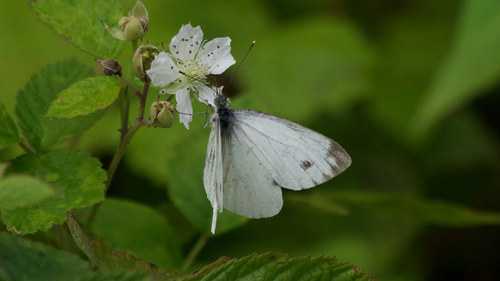
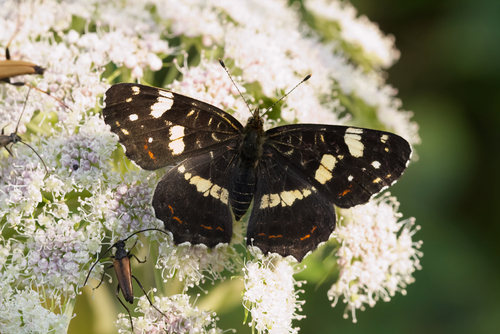
Same order: Lepidoptera

The closest relatives of the Kentish Glory that you can see in Bavarian Forest National Park (order Lepidoptera, Butterflies and Moths) are European Peacock Butterfly (about 40%), Common Blue (about 30%) and Meadow Brown (about 30%), with each one's daily chance of a sighting.

Where does the Kentish Glory sighting chance come from?

GBIF citizen-science records

It is estimated from how often the Kentish Glory is recorded against all the insects logged in Bavarian Forest National Park (6 verified sightings from 2019 to 2026), calibrated against known sighting rates. Figures are rounded to the nearest 10% because citizen-science data supports honest approximations, not decimals, and months with records from fewer than five people show "—". How it works.

← Back to Bavarian Forest National Park