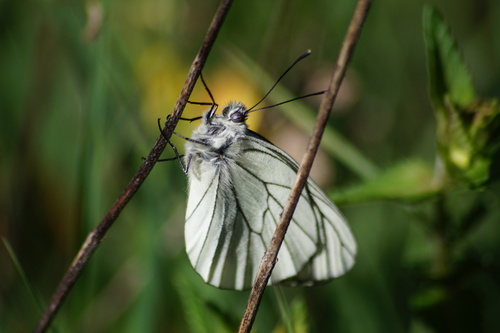
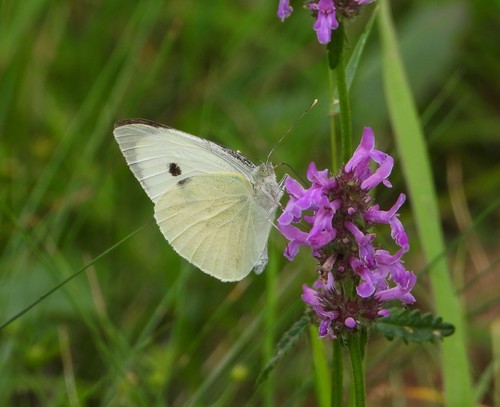
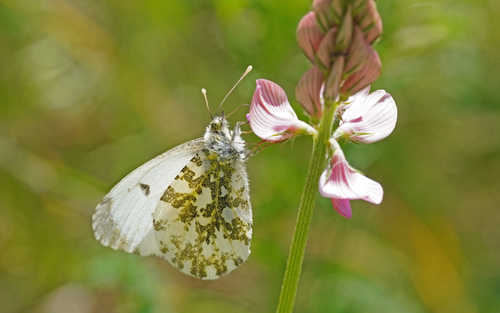
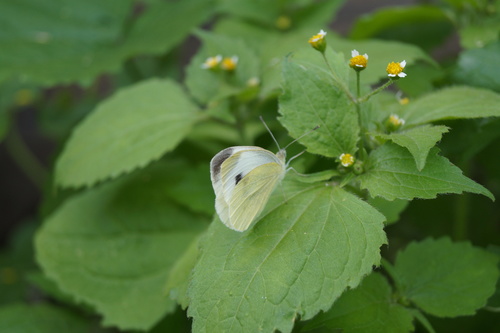
Pale Clouded Yellow

Pale Clouded Yellow

Colias hyale

Daily sighting probability <5% · Rare
at Bavarian Forest National Park

In 3 days ~10% in a week ~30%

7 Verified sightings at Bavarian Forest National Park From 2019 to 2026
7 In 1 park
September Best month
☀️ Diurnal When it's spotted

About the Pale Clouded Yellow

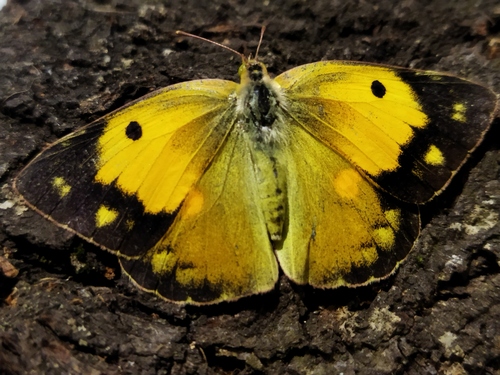
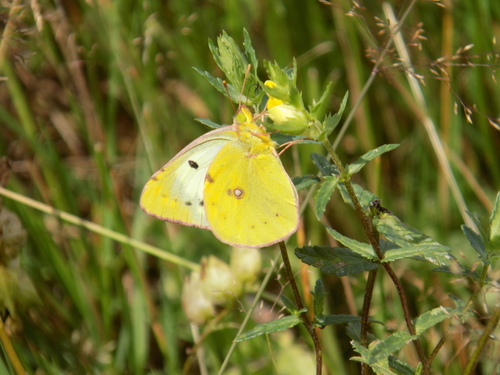
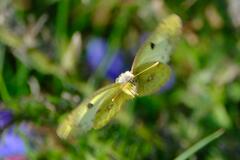
Colias hyale, the pale clouded yellow, is a butterfly of the family Pieridae, (also known as the yellows and whites) which is found in most of Europe and large parts of the Palearctic. It is a rare migrant to the British Isles and Scandinavia. The adult wingspan is 52–62 millimetres (2.0–2.4 in).

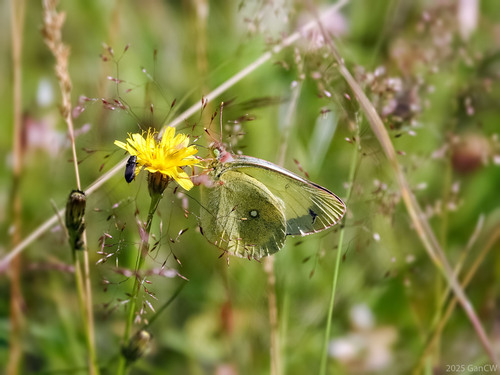
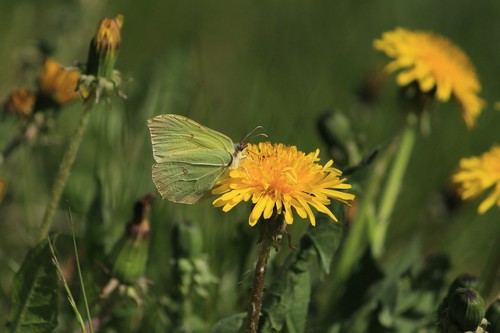
The upperside of the male is more or less light lemon yellow, with the black marginal and submarginal bands more or less complete on both wings; the black middle spot of the forewing large, in centre of hindwing an orange-yellow double spot; base of wings more or less dusted with black. The underside is bright yellow, being somewhat lighter on the forewing, with small marginal and larger submarginal red-brown spots; the middle spot of the forewing black with pale centre, the hindwing bearing a double spot which is mother-of-pearl colour, encircled by a double ring of red brown; fringes above and beneath, as well as head and antenna red brown. In the female the ground colour of the upperside and the proximal area of the underside of the forewing is white, being slightly yellowish.

The egg is bottle shaped, whitish, with yellowish-brown stripes. The larva is bluish green or... Wikipedia →
Global Distribution

Parks Where Found

# Park Country Daily sighting probability
1 Bavarian Forest National Park 🇩🇪 Germany
<5%

More parks will be added in future updates.

Cities Where Found

# City Country Daily sighting probability
1 Novosibirsk 🇷🇺 Russia
~10%
2 Warsaw 🇵🇱 Poland
~10%
3 Berlin 🇩🇪 Germany
<5%
4 Prague 🇨🇿 Czechia
<5%
5 Moscow 🇷🇺 Russia
<5%
6 Saint Petersburg 🇷🇺 Russia
<5%

Before you go

What are the chances of seeing a Pale Clouded Yellow in Bavarian Forest National Park?

Rare

Under 5% of wildlife watchers report a Pale Clouded Yellow sighting in Bavarian Forest National Park on a given day, based on 7 verified sightings from GBIF citizen-science data from 2019 to 2026. It is the 822nd most-seen of the 1115 insects we can rate there. Over three days the chance rises to about 10%, and over a week to about 30%, if each day is a fresh chance.

When is the best time to see a Pale Clouded Yellow in Bavarian Forest National Park?

May and August–September

In those months about 10% of wildlife watchers report a Pale Clouded Yellow in Bavarian Forest National Park on a given day, against under 5% in June–July and October–April, the lowest months.

What time of day is best to see a Pale Clouded Yellow?

Between 2 and 5 pm

Across all the parks we cover, that three-hour window holds the most Pale Clouded Yellow sightings with a recorded time, and nearly all of them come between 6 am and 6 pm: it is a daytime animal.

Where else can you see a Pale Clouded Yellow?

Only Bavarian Forest National Park, in our data

Bavarian Forest National Park is the only park on Wallace's Line with enough records to rate Pale Clouded Yellow sightings: under 5% of wildlife watchers there report one on a given day.

Which relatives of the Pale Clouded Yellow live in Bavarian Forest National Park?

Same genus: Colias

The closest relatives of the Pale Clouded Yellow that you can see in Bavarian Forest National Park (genus Colias, Clouded Yellows) are Clouded Yellow (about 10%) and Moorland Clouded Yellow (about 10%), with each one's daily chance of a sighting.

Where does the Pale Clouded Yellow sighting chance come from?

GBIF citizen-science records

It is estimated from how often the Pale Clouded Yellow is recorded against all the insects logged in Bavarian Forest National Park (7 verified sightings from 2019 to 2026), calibrated against known sighting rates. Figures are rounded to the nearest 10% because citizen-science data supports honest approximations, not decimals, and months with records from fewer than five people show "—". How it works.

← Back to Bavarian Forest National Park