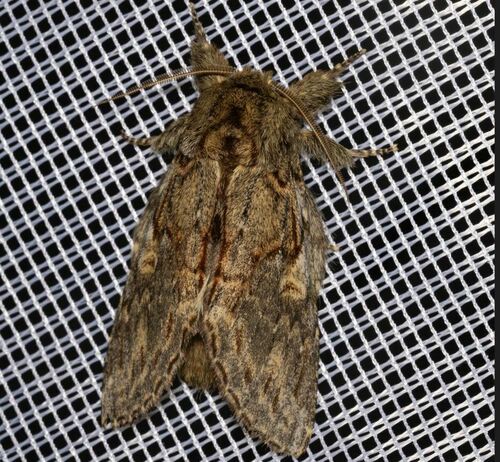
White Prominent

White Prominent

Leucodonta bicoloria

Daily sighting probability <5% · Rare
at Bavarian Forest National Park

In 3 days ~10% in a week ~30%

7 Verified sightings at Bavarian Forest National Park From 2019 to 2026
14 In all 2 parks
May Best month
☀️🌙 Day & Night When it's spotted

About the White Prominent

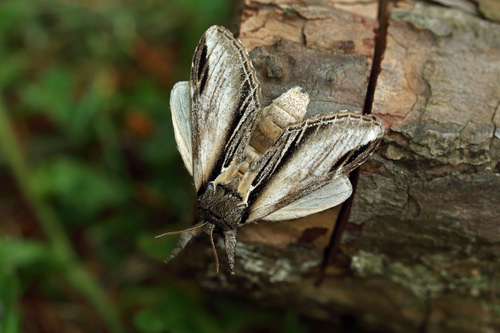
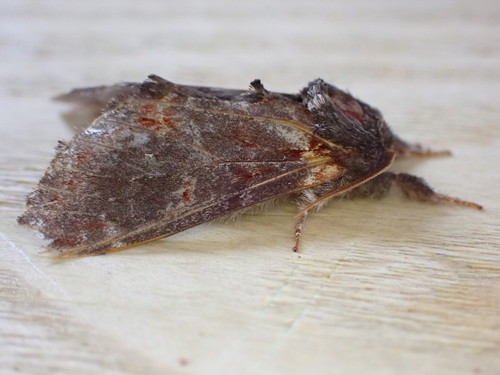
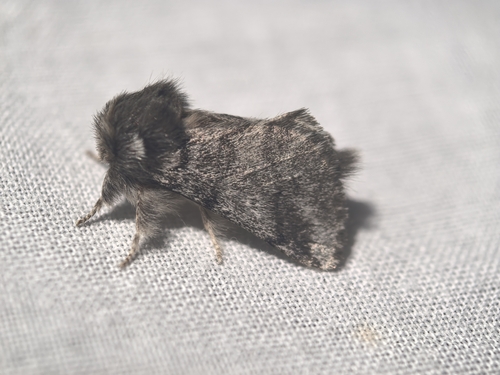
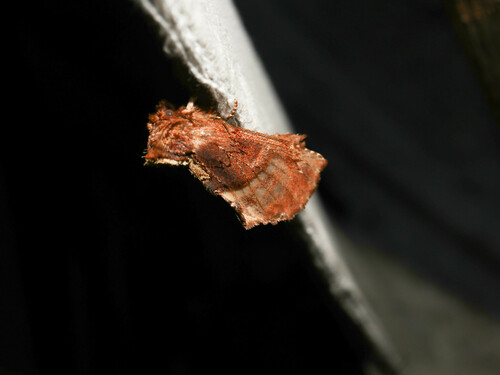
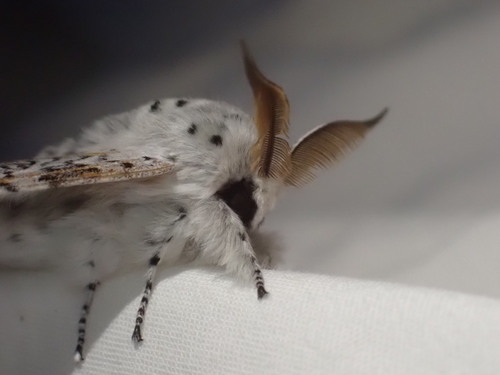
Leucodonta bicoloria, the white prominent, is a moth from the family Notodontidae. It ranges from Western Europe (Ireland) to Hokkaido (Japan) being found in the northern part of Middle Europe, Northern Europe and Russia to the Amur region. In the western parts of the range it is a local and rare species. It is likely extirpated in Britain but a population was recently rediscovered in Ireland. The habitat requirements of the species are a bit unusual, it seems to prefer locally warm deciduous and mixed forests, where birch, the sole host plant, forms the canopy (except Japan, where Sorbus reported). The moth survives winter as a pupa underground.

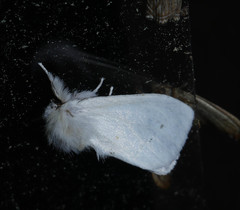
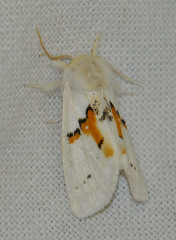
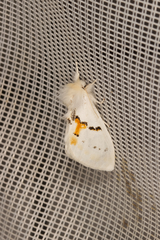
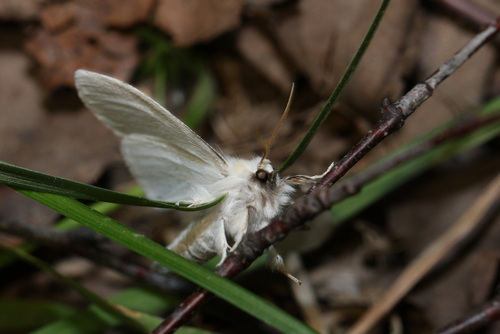
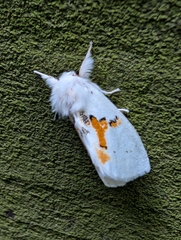
The moths reach a wingspan of 28 to 36 millimeters. They are distinctively patterned. All wings have a snow-white ground color. On the forewings there is a typical, clearly orange-yellow marking approximately in the form of a Y, framed by two other, smaller spots of the same colour. On the outer edge of the forewings there are some small black dots. The lower wings at the inner edge have very fine white hairs.

The egg is flat arched of white, yellowish or light green colour. The caterpillar is smooth with only a few hairs. It is yellow-green, with two dark green, yellowish dorsal lines, as well as black stigmas and golden yellow stripes above the feet. The head is dark green. The pupa is slender and cylindrical, rounded at the end. Wikipedia →
Global Distribution

Parks Where Found

# Park Country Daily sighting probability
1 Nikko National Park 🇯🇵 Japan
~20%
2 Bavarian Forest National Park 🇩🇪 Germany
<5%

Cities Where Found

# City Country Daily sighting probability
1 Moscow 🇷🇺 Russia
<5%

Before you go

What are the chances of seeing a White Prominent in Bavarian Forest National Park?

Rare

Under 5% of wildlife watchers report a White Prominent sighting in Bavarian Forest National Park on a given day, based on 7 verified sightings from GBIF citizen-science data from 2019 to 2026. It is the 822nd most-seen of the 1115 insects we can rate there. Over three days the chance rises to about 10%, and over a week to about 30%, if each day is a fresh chance.

When is the best time to see a White Prominent in Bavarian Forest National Park?

April and May

In those months about 10% of wildlife watchers report a White Prominent in Bavarian Forest National Park on a given day, against under 5% in June to March, the lowest months.

What time of day is best to see a White Prominent?

Between 10 pm and 1 am

Across all the parks we cover, that three-hour window holds the most White Prominent sightings with a recorded time, and about 7 in 10 of them come between 6 pm and 6 am: it is seen both by day and at night.

Is Bavarian Forest National Park the best place to see a White Prominent?

2nd of 2

Of the 2 parks where we can rate White Prominent sightings, Bavarian Forest National Park ranks 2nd at under 5%. The best odds are in Nikko National Park (Japan, about 20%).

Which relatives of the White Prominent live in Bavarian Forest National Park?

Same family: Notodontidae

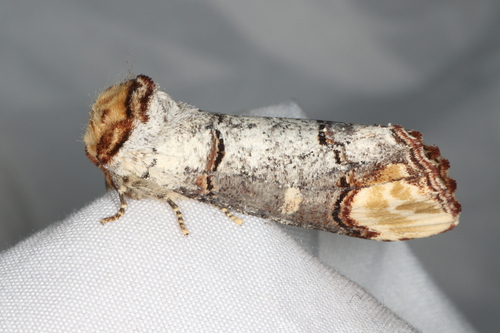
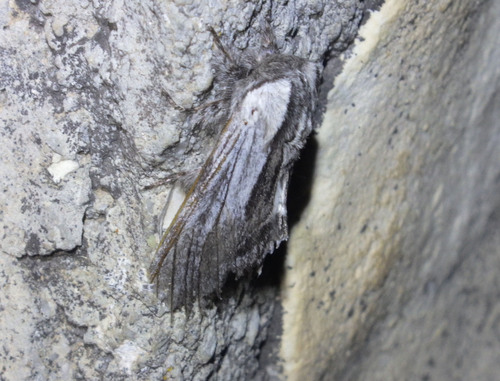
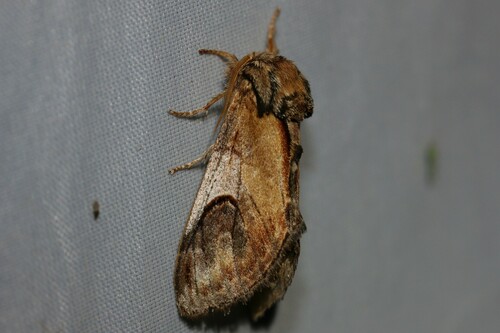
The closest relatives of the White Prominent that you can see in Bavarian Forest National Park (family Notodontidae, Prominent Moths) are Buff-Tip (about 10%), Swallow Prominent (about 10%) and Pale Prominent (about 10%), with each one's daily chance of a sighting.

Where does the White Prominent sighting chance come from?

GBIF citizen-science records

It is estimated from how often the White Prominent is recorded against all the insects logged in Bavarian Forest National Park (7 verified sightings from 2019 to 2026), calibrated against known sighting rates. Figures are rounded to the nearest 10% because citizen-science data supports honest approximations, not decimals, and months with records from fewer than five people show "—". How it works.

← Back to Bavarian Forest National Park