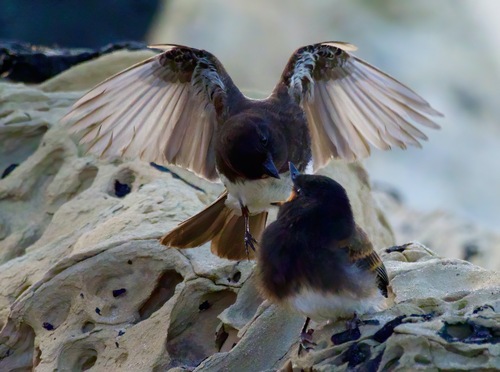
Which is the best park to see a Black Phoebe?
Channel Islands National Park
In Channel Islands National Park, United States, about 70% of wildlife watchers report a Black Phoebe sighting on a given day, the highest of the 16 parks where we can rate it, from GBIF citizen-science data.
Where else can you see a Black Phoebe?
Amboró National Park and more
After Channel Islands National Park, the next-best odds of seeing a Black Phoebe are in Amboró National Park (Bolivia, about 60%), Death Valley National Park (United States, about 40%) and Lago de Yojoa (Honduras, about 40%). Outside North America, the best options are Amboró National Park in South America (about 60%) and Lago de Yojoa in Central America (about 40%).
When is the best time to see a Black Phoebe?
It depends on the park
In the top parks, the best months are October to December in Channel Islands National Park (about 80%), March in Amboró National Park (about 70%) and October in Death Valley National Park (about 80%), as the share of wildlife watchers who report a Black Phoebe on a given day. Each park's Black Phoebe page has the full month-by-month chart.