Aquatic Warbler

Aquatic Warbler

Acrocephalus paludicola

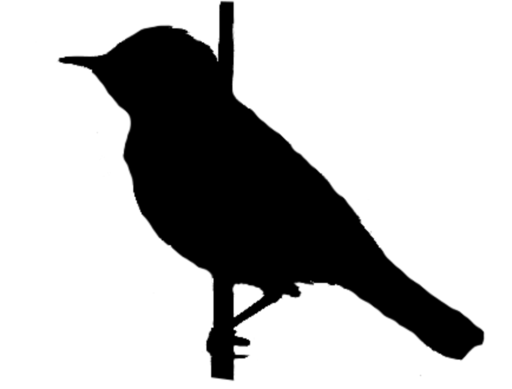
Silhouette: Yves Hoebeke · PhyloPic

LCNTVUVulnerableENCR
Daily sighting probability ~20% · Possible
at Biebrza National Park

In 3 days ~50% in a week ~80%

353 Verified sightings at Biebrza National Park From 2019 to 2026
353 In 1 park
June Best month
🌅 Crepuscular When it's spotted

About the Aquatic Warbler

The aquatic warbler (Acrocephalus paludicola) is an Old World warbler in the genus Acrocephalus. It breeds in temperate eastern Europe and western Asia, with an estimated population of 11,000-15,000 pairs. It is migratory, wintering in west Africa. After many years of uncertainty, the wintering grounds of much of the European population were finally discovered in Djoudj National Bird Sanctuary, Senegal, with between 5,000 and 10,000 birds present at this single site. Its south-westerly migration route means that it is regular on passage as far west as Great Britain and Ireland.

This small passerine bird is a species found in wet sedge beds with vegetation shorter than 30 cm (12 in). Drainage has meant that this species has declined, and its stronghold is now the Polesie region of eastern Poland and south Belarus, where 70% of the world's population breeds. 3–5 eggs are laid in a nest in low vegetation. This species is highly promiscuous, with most males and females having offspring with multiple partners.

This is a medium-sized warbler. The adult has a heavily streaked brown back and pale underparts with variable streaking. The forehead is flattened, and the bill is strong and pointed. There is a prominent whitish supercilium and crown stripe.

It can be confused with the juvenile sedge warbler, which may show a crown stripe, but the marking is stronger in this species, which appears paler and spiky-tailed in flight. The sexes are identical, as with most warblers, but young birds are unstreaked on the breast below. Like most warblers, it is insectivorous, but will take other small food items, including berries.

The song is a fast, chattering ja-ja-ja punctuated with typically acrocephaline whistles. The genus name Acrocephalus is from Ancient Greek akros, "highest", and kephale, "head". It is possible that Naumann and Naumann thought akros meant "sharp-pointed". The specific paludicola is Latin, from paludis, "swamp", and colere, "to inhabit". Wikipedia →

Sounds

Call0:53

France · 2024

Sonothèque ADVL · XC931388 · CC0

Alarm call0:53

Poland · 2024

© Romuald Mikusek · XC912912 · CC BY-NC-SA 4.0

Fledging0:30

Poland · 2023

© Krzysztof Kałużny · XC814288 · CC BY-NC-SA 4.0

Global Distribution

Parks Where Found

# Park Country Daily sighting probability
1 Biebrza National Park 🇵🇱 Poland
~20%

More parks will be added in future updates.

Before you go

What are the chances of seeing an Aquatic Warbler in Biebrza National Park?

Possible

About 20% of wildlife watchers report an Aquatic Warbler sighting in Biebrza National Park on a given day, based on 353 verified sightings from GBIF citizen-science data from 2019 to 2026. It is the 68th most-seen of the 202 birds we can rate there. Over three days the chance rises to about 50%, and over a week to about 80%, if each day is a fresh chance.

When is the best time to see an Aquatic Warbler in Biebrza National Park?

May and June

In those months about 40% of wildlife watchers report an Aquatic Warbler in Biebrza National Park on a given day, against under 5% in February–April and September, the lowest months.

What time of day is best to see an Aquatic Warbler?

Between 8 and 11 am

Across all the parks we cover, that three-hour window holds the most Aquatic Warbler sightings with a recorded time, and about 6 in 10 of them come between 6 am and 6 pm: it is most active around dawn and dusk.

Where else can you see an Aquatic Warbler?

Only Biebrza National Park, in our data

Biebrza National Park is the only park on Wallace's Line with enough records to rate Aquatic Warbler sightings: about 20% of wildlife watchers there report one on a given day.

Which relatives of the Aquatic Warbler live in Biebrza National Park?

Same genus: Acrocephalus

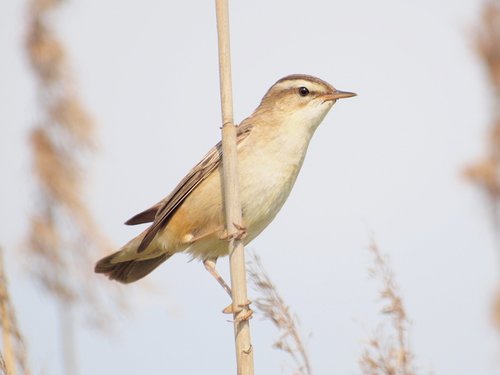
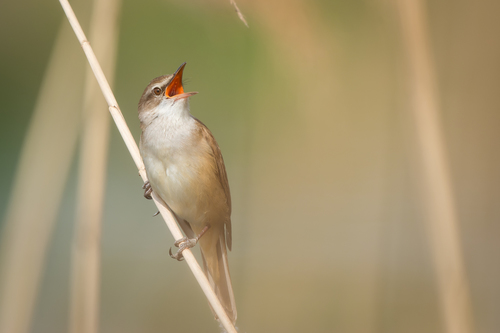
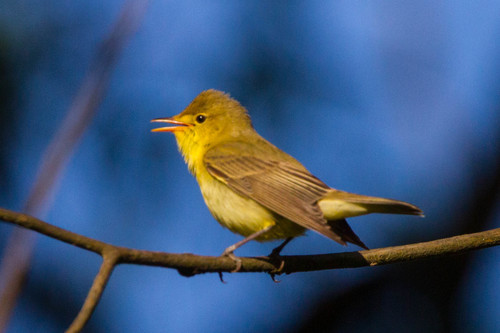
The closest relatives of the Aquatic Warbler that you can see in Biebrza National Park (genus Acrocephalus, Reed Warblers) are Sedge Warbler (about 50%), Great Reed-Warbler (about 20%) and Marsh Warbler (about 10%), with each one's daily chance of a sighting.

Where does the Aquatic Warbler sighting chance come from?

GBIF citizen-science records

It is estimated from how often the Aquatic Warbler is recorded against all the birds logged in Biebrza National Park (353 verified sightings from 2019 to 2026), calibrated against known sighting rates. Figures are rounded to the nearest 10% because citizen-science data supports honest approximations, not decimals, and months with records from fewer than five people show "—". How it works.

← Back to Biebrza National Park