Black-capped Vireo

Black-capped Vireo

Vireo atricapilla

Silhouette: Caleb Gordon · PhyloPic

LCNTNear ThreatenedVUENCR
Daily sighting probability <5% · Rare
at Big Bend National Park

In 3 days <5% in a week ~10%

65 Verified sightings at Big Bend National Park From 2019 to 2026
76 In all 2 parks
September Best month
☀️ Diurnal When it's spotted

About the Black-capped Vireo

The black-capped vireo (Vireo atricapilla) is a small bird native to the United States and Mexico. It was listed as an endangered species in the United States in 1987. It is the only Vireo that is sexually dichromatic. Recovery of the species' population contributed to its delisting in 2018. The IUCN lists the species as "near threatened."

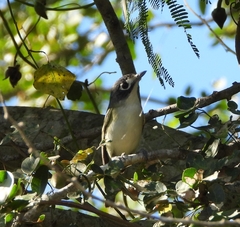
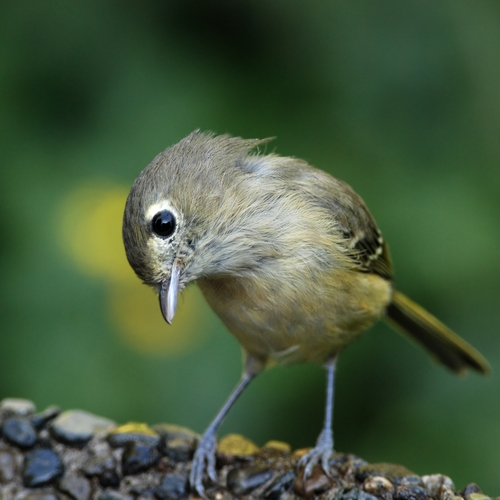
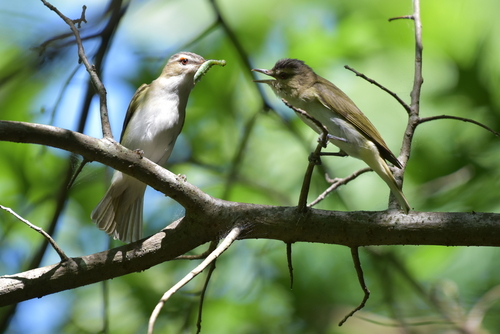
The black-capped vireo is a songbird about 12 cm (4.5 inches ) in length. Sexually mature males are olive green above and white below with faint yellow flanks. The crown and upper half of the head is black with a partial white eye ring and lores. The iris is brownish-red and the bill is black. Females are duller in color than males and have a slate-gray crown and underparts washed with greenish yellow. First-year males often have more extensive gray in the cap, similar to adult females.

The male and female in a pair assist in nest construction and incubation. Typically, the female lays three or four eggs. The incubation period is 14 to 17 days, and the nestling period is 10 to 12 days. The female broods over the young, while the male supplies most of the food during the nestling phase. Breeding pairs are capable of... Wikipedia →

Sounds

Song0:23

United States · 2026

© Sue Riffe · XC1091752 · CC BY-NC-SA 4.0

Call0:36

Mexico · 2022

© Pritam Baruah · XC773206 · CC BY-NC-SA 4.0

Alarm call0:21

United States · 2018

© Nick Komar · XC428771 · CC BY-NC-SA 4.0

Global Distribution

Parks Where Found

# Park Country Daily sighting probability
1 Big Bend National Park 🇺🇸 United States
<5%
2 Cumbres de Monterrey National Park 🇲🇽 Mexico
<5%

Cities Where Found

# City Country Daily sighting probability
1 Guadalajara 🇲🇽 México
<5%

Before you go

What are the chances of seeing a Black-capped Vireo in Big Bend National Park?

Rare

Under 5% of wildlife watchers report a Black-capped Vireo sighting in Big Bend National Park on a given day, based on 65 verified sightings from GBIF citizen-science data from 2019 to 2026. It is the 178th most-seen of the 270 birds we can rate there. Over three days the chance rises to under 5%, and over a week to about 10%, if each day is a fresh chance.

When is the best time to see a Black-capped Vireo in Big Bend National Park?

Any time of year

In every month with enough records, under 5% of wildlife watchers report a Black-capped Vireo in Big Bend National Park on a given day, so our monthly data shows no clear season.

What time of day is best to see a Black-capped Vireo?

Between 8 and 11 am

Across all the parks we cover, that three-hour window holds the most Black-capped Vireo sightings with a recorded time, and about 9 in 10 of them come between 6 am and 6 pm: it is a daytime animal.

Is Big Bend National Park the best place to see a Black-capped Vireo?

Yes

Of the 2 parks where we can rate Black-capped Vireo sightings, Big Bend National Park has the highest daily chance: under 5%. Next come Cumbres de Monterrey National Park (Mexico, under 5%).

Which relatives of the Black-capped Vireo live in Big Bend National Park?

Same genus: Vireo

The closest relatives of the Black-capped Vireo that you can see in Big Bend National Park (genus Vireo, Vireos) are Bell's Vireo (about 40%), Hutton's Vireo (about 20%) and Plumbeous Vireo (about 10%), with each one's daily chance of a sighting.

Where does the Black-capped Vireo sighting chance come from?

GBIF citizen-science records

It is estimated from how often the Black-capped Vireo is recorded against all the birds logged in Big Bend National Park (65 verified sightings from 2019 to 2026), calibrated against known sighting rates. Figures are rounded to the nearest 10% because citizen-science data supports honest approximations, not decimals, and months with records from fewer than five people show "—". How it works.

← Back to Big Bend National Park